Masirah Island.

Masirah (مصيرة) is an Indian Ocean island off the east coast of Oman which is 95 km long and approximately 12 to 14 km wide. I know because I ran it as part of a ten man relay team on the 27th April 1990. I think this was the first time anyone was mad enough to do it! We followed a track that ran very close to the sea for most of the route, making the whole run more than 160kms……

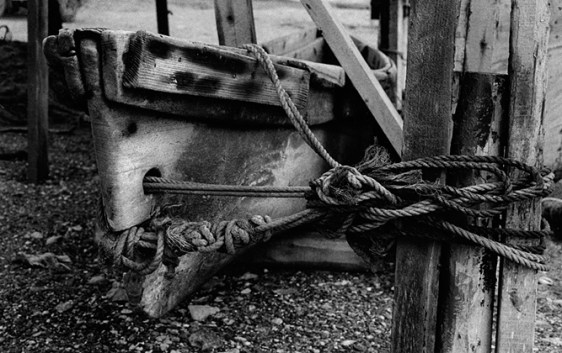
The rugged terrain of the island and surrounding coastline has led to the appearance of many wrecks.

There is a quite  famous shell called “Acteon Eloiseae” which is found on one beach area of the island only – a place called Sur Masirah which is approximately half way down the west side .

It was first identified by Dr Bosch and his wife Eloise; unfortunately it has become rather a desired shell by visitors, some of whom are not particular about conservancy.

Four species of turtle use Masirah’s beaches for nesting, with the loggerhead turtle population being the most important of these, and probably the most important nesting area in the entire world.

The birdlife of Masirah is mainly made up of species from the Arabian Peninsula, but it is also a haven for some migratory species. Located at the crossroads of some important migration routes, Masirah can attract birds from India, Pakistan, Africa and wintering birds from as far north as Siberia.

Archaeological discoveries on the island indicate habitation going back at least four thousand years. Areas for the production of copper in the prehistoric period have been found; with sites dated to the second millennium, first millennium and probably the Late Iron Age.

Shell middens and flint artefacts used for scraping the shells can be found at a number of sites.

Hilary Hahn.

For anyone that has wondered what Hilary Hahn has to do with photography and why I would put her site on my blogroll – they have never heard her play Bach and Stravinsky.

Other than that nothing…….

Her interpretation of Bach’s Concerto for violin is simply superb. She plays without pretension and has an intuitive musical understanding that is rarely seen.

Oh and she does not use excessive vibrato! The Barber Violin Concerto is maybe the exception; although she does generally try to control it. But double stops with two fingers can be interesting if one is trying to follow such things as fingering – don’t ask I just have a long time interest in the violin.

The Master Photographer’s Toning Book.

Occasionally a photography book comes on to the market that becomes a ‘must have’ and this is one of them.

The Master Photographer’s Toning Book: by Tim Rudman.

Unfortunately for the buyer it proved so popular that it has sold out and the odd copy that does become available can reach the dizzy price of $1000. And no, I did not add an extra zero by mistake.

Fortunately Tim has decided to reprint the book himself at a far more affordable price. So if it is maybe of interest then visit the link below, or just go and look at his photography – excellent.

http://timrudman.com/content/toning-book-reprint

Photography in Oman.

There is a misunderstanding about Oman and that is ‘it is in the Middle East so mostly desert’ Yes I admit that a very large proportion of it is.

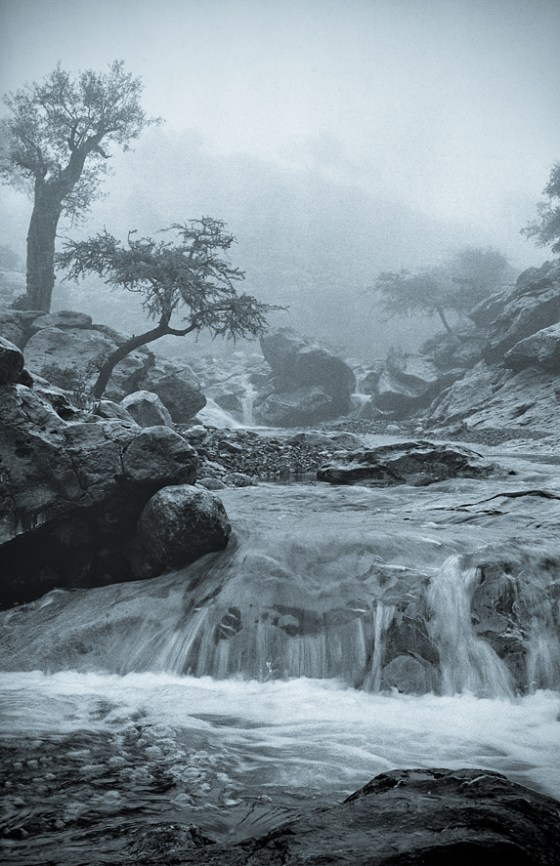
I have some very good friends who go trekking with me on a regular basis and when we first started, I would suggest that they bring a change of clothing. They came to realise that it was because they would most likely get wet! There is water here in abundance 365 days a year, if you know where to look…..

Snow, now that is stretching the imagination but no, almost every year there will be some; ok so it is on the top of Jebel Shams but you cannot have everything.

The point I am trying to make is that for a county perceived as mostly desert, Oman has a very ecologically diverse environment.

The opportunities for photography are only limited by the imagination.

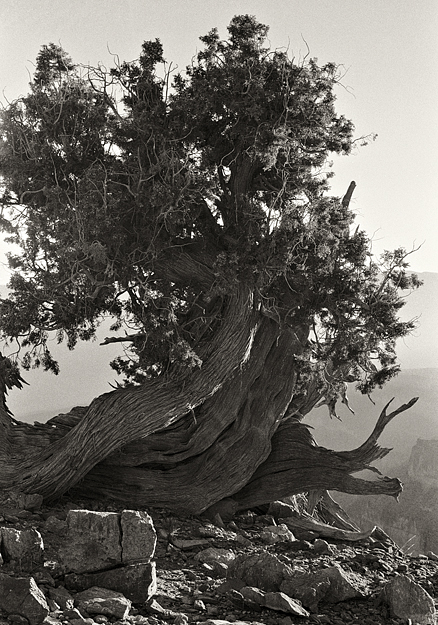
Juniper tree.

Juniper tree taken on Shams at about 9000ft.

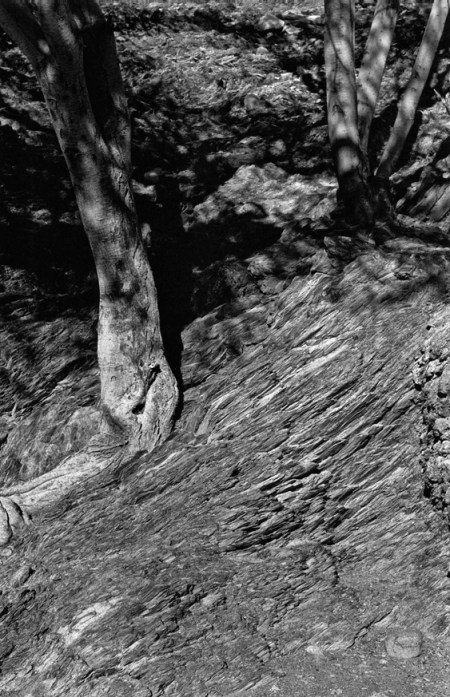
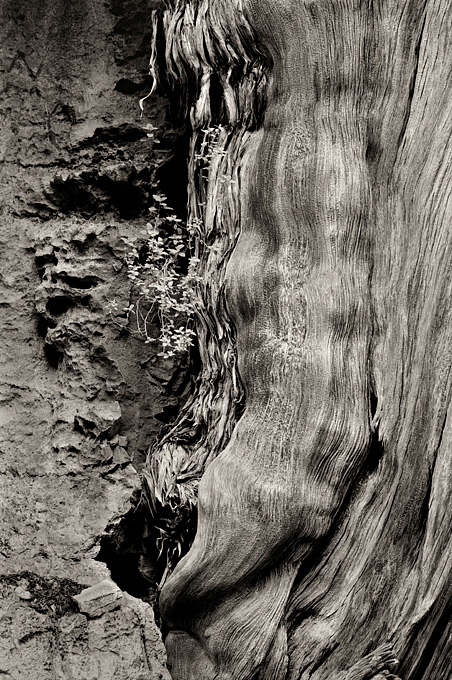
Root & Plant – Shams.

The Juniper is widely distributed throughout the northern hemisphere although its birthplace is obscure. They can be found in Europe, North America, North Africa, Middle East and northern Asia; it is a very slow growing tree (bush) and can live many hundreds of years.

A papyrus from ancient Egypt was discovered which showed Juniper berries as an ingredient for a medicine.

The number of juniper species is in dispute, being somewhere between 52 and 67 species.

Many of the earliest prehistoric people lived in or near juniper forests which gave them food, fuel, and wood for shelter.

Berries have a bitter-sweet taste and aroma which goes particularly well with strong meats and game, it also compliments chicken and certain fish such as Salmon; many Elizabethan food recipes mentioned the berries and I suspect that had a two fold reason, hide the taste of suspect meat and help with digestion.

Khawr Barr al Hikman.

Barr al Hikman.

Khawr Barr al Hikman, is one of if not the largest khawr in Oman and very important for birds, because the area is rather isolated and sparsely populated.
A total of 119 species has been recorded according to ′Bird Life International’ and the area is proposed as a national nature reserve (288,000 ha).
It is in the Ash Sharqiyah: الشرقية‎ / Al Wusta : الوسطى‎ area of Oman.

The Wonderful World of Albert Kahn

A very interesting book on ‘The Autochrome Lumière’ which was a very early colour process patented in 1903.

It is an additive colour ‘screen-plate’ process: the medium contains a glass plate, with a random mosaic of microscopic grains of potato starch and lampblack filling the space between grains. This was covered by a form of shellac on which was spread an impermeable black-and-white, panchromatic silver halide emulsion. The grains are a mixture dyed orange, green and violet, which act as colour filters.

The plate is processed in a similar manner to slide film.


A philanthropist ‘Albert Kahn’ embarked on an ambitious project to create a colour photographic record from some 50 countries. His collection of around 72,000 Autochromes had been largely forgotten, this book helps to redress that.

The Wonderful World of Albert Kahn: Colour Photographs from a Lost Age.

ISBN-10: 978-1846074585.

The Wonderful World of Albert Kahn.

Why I use film and chemicals.

Traditional Black & White photography here in Oman using film, chemicals and silver gelatin papers does not get the following that I think it should.

The problem being not the lack of photographers, there are some very good ones; but of equipment and supplies, as most outlets just stock ‘digital’ materials with the comment that “there is not the demand”.

If it is not stocked there will not be the demand…!

I bring most of my paper and raw powder chemicals back from visits to the UK; postage charges getting them delivered is outrageous.

As for darkroom equipment – well all I can say is that I am thankful that I have all I need. It was collected over the early years when photography did not involve electronic equipment that at the very least requires a computer, monitor and printer.

Cameras; who thought of doing away with the viewfinder on some of them…. and if you have tried looking at the screen on a mobile phone in sunlight, well need I say more.

Scanners are about my limit, I have a Canon 9950F for 6×6 and larger, along with a Plustek 7600i for 35mm, which was a lovely gift from my wife at the beginning of the year.

Photography has now joined with consumer electronics ‘there is always a better model coming in the next six months’. Try selling a Nikon D3 for a good price twelve months after it was bought.

End of rant……