
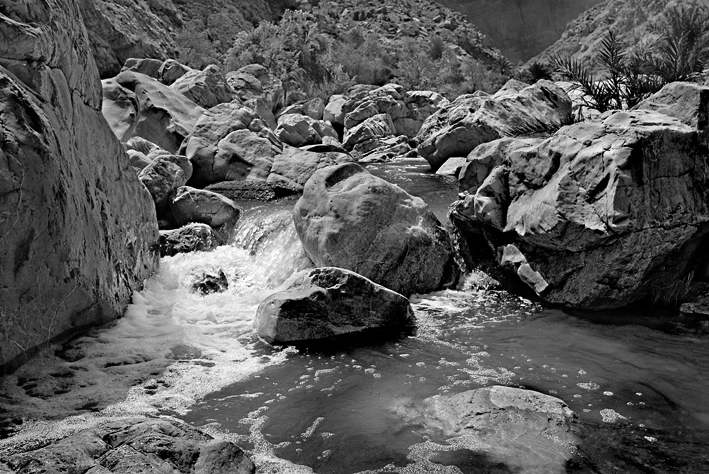
Wet feet for this one…..fortunately I have a Uni-loc tripod with water tight legs!
Wet feet for this one…..fortunately I have a Uni-loc tripod with water tight legs!

The old and new – this clearly shows the falaj and the fact that it is open. There are very strict social and cultural rules about aflāj systems as they are communal supplies of water in an arid climate. No one pollutes it; the whole village will have contributed to the cost of construction and up-keep, in most areas the amount of water is divided up between each family on a ‘timed’ basis. A form of sun-dial clock (post in the ground with graduated lines) was and in some cases still is used for this purpose.
In very arid areas, the falaj can travel for many kilometres underground with entrance holes so that it can be maintained; finding water, construction and maintenance is skilled and costly work.
A quote from that well known on-line encyclopædia –
In Oman from the Iron Age Period (found in Salut, Bat and other sites) a system of underground aqueducts called Falaj were constructed, a series of well-like vertical shafts, connected by gently sloping horizontal tunnels. There are three types of Falaj: Daudi (داوودية) with underground aqueducts, Ghaili (الغيلية) requiring a dam to collect the water, and Aini (العينية) whose source is a water spring. These enabled large scale agriculture to flourish in a dry land environment. According to UNESCO, some 3,000 aflaj (plural) or falaj (singular), are still in use in Oman today. Nizwa, the former capital city of Oman, was built around a falaj which is in use to this day. These systems date to before the Iron Age in Oman.
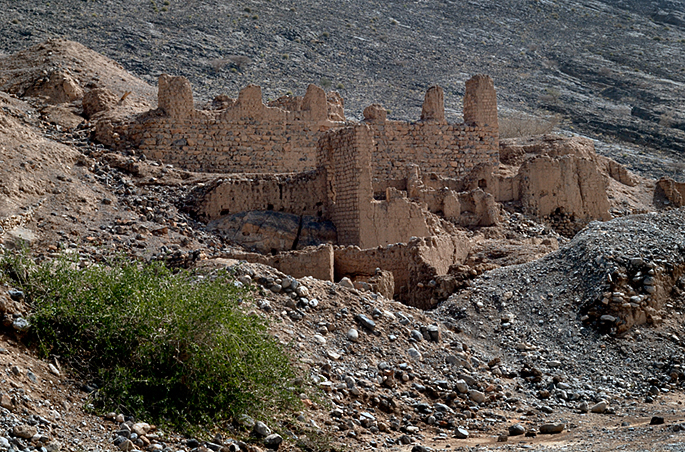
Tanuf ruins (another little altercation with the help of the Brits)

Then around the corner for this one – always a very scenic place after rains.
Just a thought – for those that are not very familiar with water movement in Oman, the wall that can be seen along the cliff face is a ‘Falaj’ basically a trough for carrying water.
Of this type, it is probably one of the best preserved that I know of; maybe because the ‘Tanuf bottled water plant’ is only about a klick away.

Continuing my water theme; it was still raining at 5am, the planned trip has been put off for 24 hours. Now this is a very rare thing here in Oman (trips planned, being put off for inclement weather) I know from experience (a rather uncomfortable night was once had due the weather) that there are at least two wadis that will almost certainly be in full flood on the way to Jebel Shams.
Hay ho – there is always tomorrow……..


I seem to be having a run on my stocks of 6×6 film at the moment – using up some of the stuff I have in my freezer!


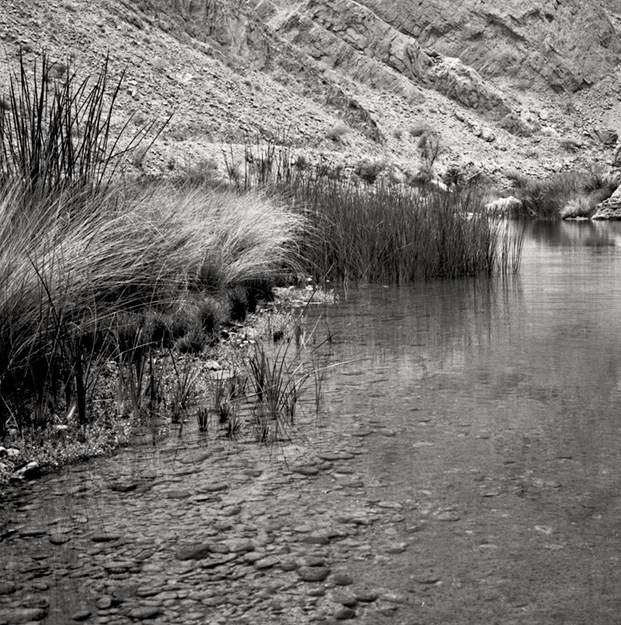

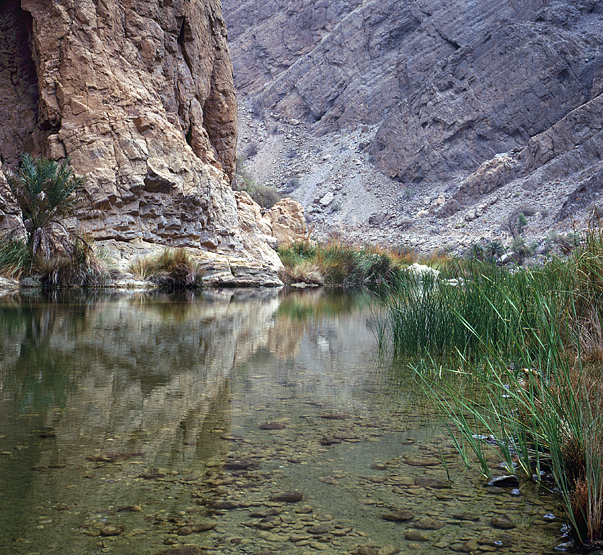
 Wadi Arbean (Qurayat) – one of those places in Oman that I never fail to enjoy when visiting.
Enter this location on Google Earth search.
231’ 55.31” N 5859’ 26.69” E

Another Wadi near by – this whole area is very photogenic.
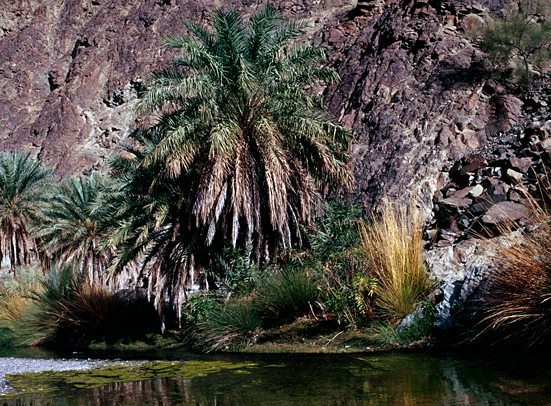 Wadi Al Abyad.
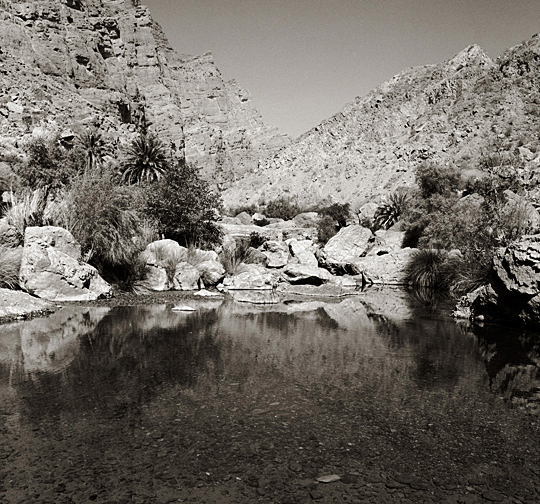 Wadi Bani Habib.
 David A Lockwood