
Author: David A Lockwood
Amateur photographer with an interest in Prehistory (Rock Art).
Jóhann Jóhannsson.
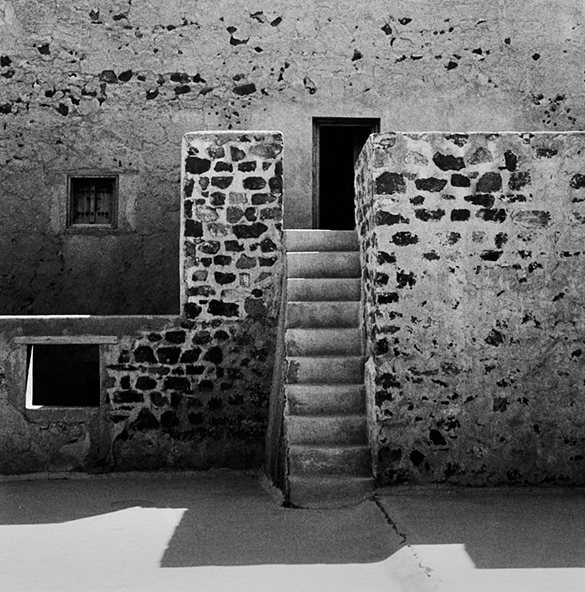
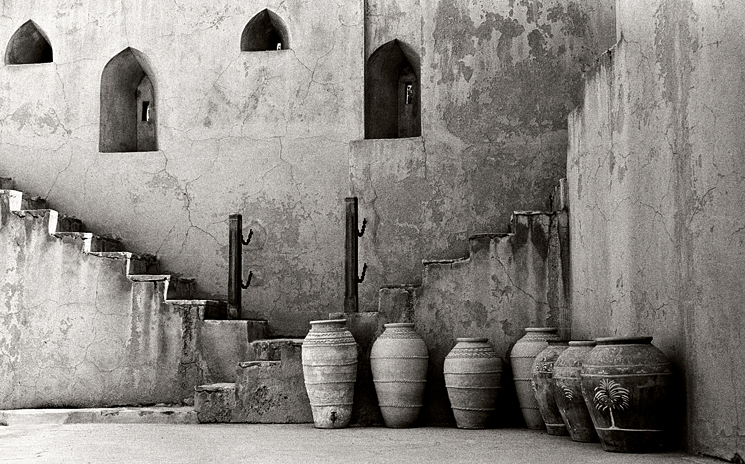
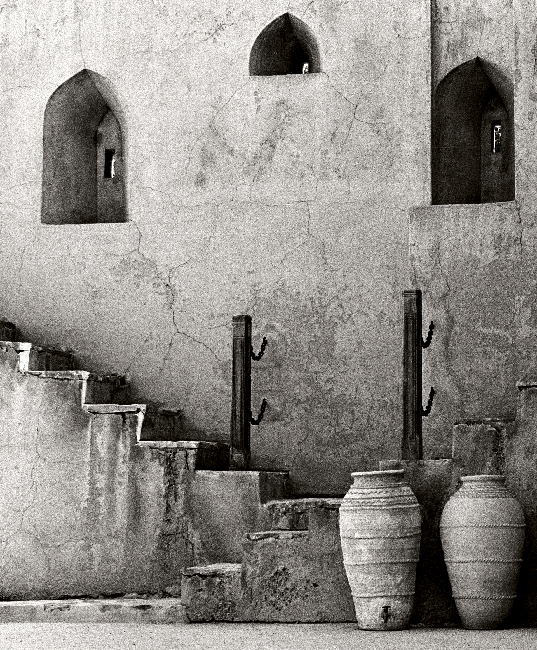
Jabrin fort – Shadows 2.

NASA images.
Have a look at these links:-
It makes one feel quite small and insignificant…….
Well worth having a look at this site (if you have a few hours!) for some spectacular images of the Cosmos.
Nikon F2 SB.
The F2 was the second of a long line of Nikon F ‘professional’ 35 mm SLRs that began with the Nikon F (famous because of the many iconic images taken during the Vietnam war) and may have ended with the F6.
The Nikon F2 is an all-metal, mechanically controlled, manual focus SLR with manual exposure control; it was completely usable without batteries, as they were used for the meter only (2 SR76 silver button cells).
The F2’s interchangeable viewfinders also known as “heads” marked it out as a truly professional level SLR.
By providing updated heads every few years, Nippon Kogaku was able to introduce new versions of the F2 with the latest technology, but keep the same body in production until the end of 1980.
The F2 SB Photomic with the DP-3 head became available between 1976 and 1977. The DP-3 introduced three new innovations: a silicon photodiode light meter for faster and more accurate light readings, a five stage ‘centre-the-LED’ exposure control system using 3 LEDs (+/o/−) and an eyepiece blind.
The Nikon F2 was probably one of the best cameras ever produced and is still available today through the used market. A word of warning! This camera will give years of service but it is getting on in life and some ‘TLC’ will not go amiss for it to give of its best.
I was very pleased with what Sover Wong has done for mine and anyone contemplating a service would probably do no better than contact him and see what he has to offer. See link ‘F2 repair’.
Jabrin fort.
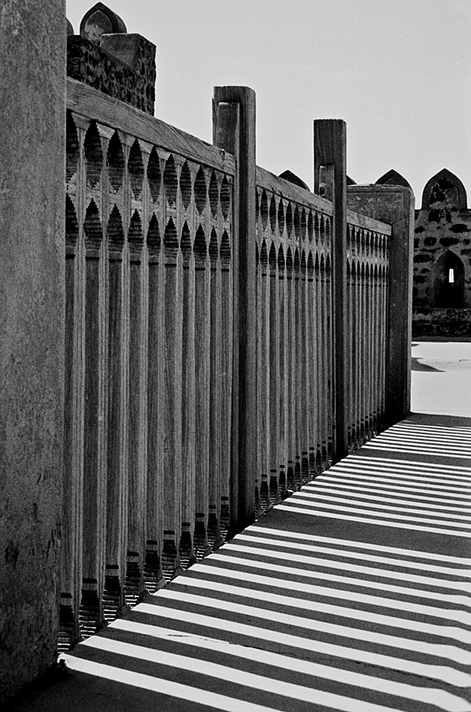
Taken with my Nikon F2 SB and Tokina 35-70 F2.8 AT-X zoom lens.
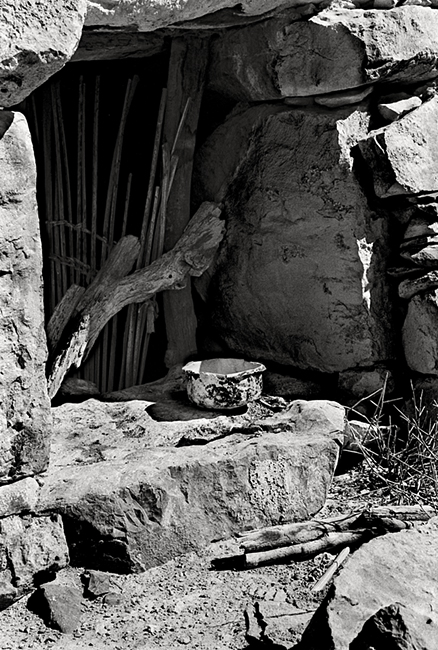
Tin bowl.
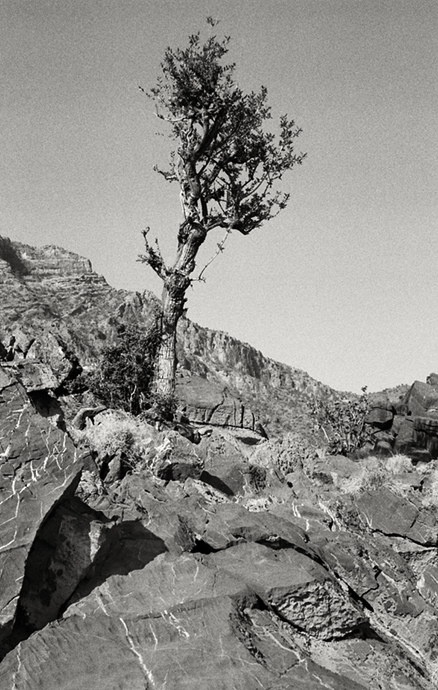
Lone tree.
Jebel Misht.
 Jebel Misht (out of the mist).
Jebel Misht rises to over 2,000m, it is one of Oman’s ‘exotics’; an outcrop of rock that is unrelated to the rocks surrounding it and is probably the country’s finest rock climbing venue. First climbed by a French team led by Raymond Renaud in 1979, this was the first major rock route in Oman and still attracts many climbers trying to forge new routes.
See these links from:
Jebel Shams – ‘Mountain of sun’.
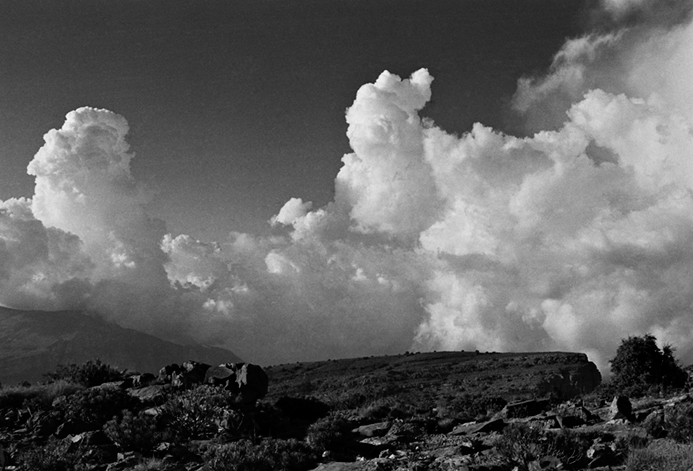
About the 9500ft mark.
Good music.
Just for a change see link …..
Roger Waters – Comfortably Numb LIVE.
Old village at Bani Habib – Jebel Akhdar.
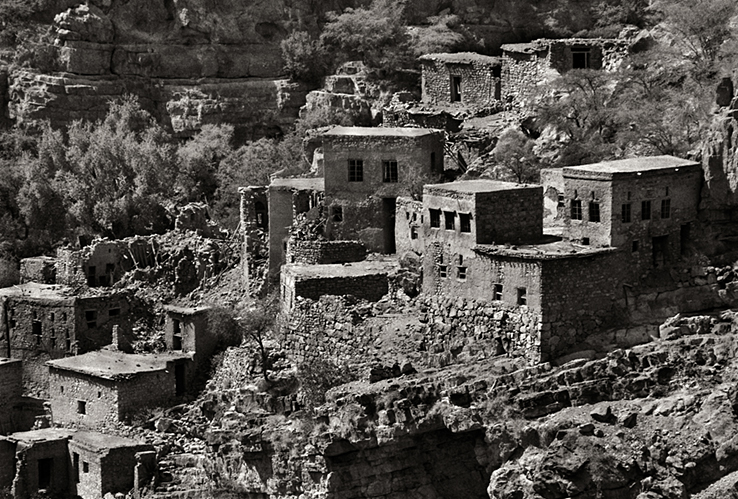
Jebel Shams.

Nakhal Fort.
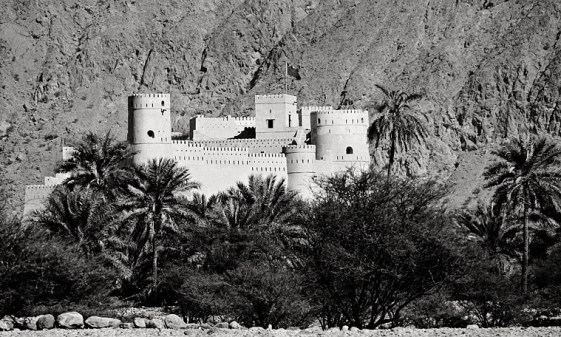 Nakhal Fort in the Batinah region has pre-Islamic origins, with major contributions by both the Ya’aruba and Al Bu Said dynasties.
In 1995 the fort was repaired; but up until then it was described as the ‘Black’ fort and that is what I saw on my first visit back in 1986. Even in its dilapidated state it was still an impressive building with dark grey almost black walls. Now it is a rather nice honey colour and is somehow less ominous as it looks down on the surrounding area.
Wadi Ghul.
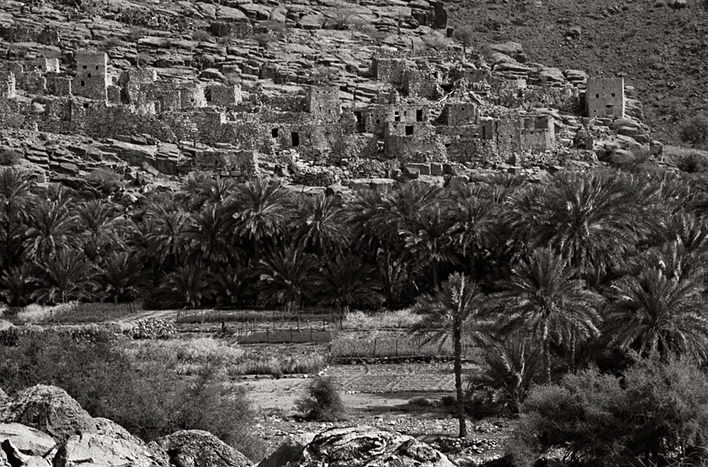
Abandoned village at the junction of Wadi Ghul & Wadi Nakhr.
This village has seen progressive abandonment, starting at the top of the ridge and going down three levels; until all the families moved across to the other side of the wadi.
Abandoned village Jebel Akhdar.

Jebel Akhdar.
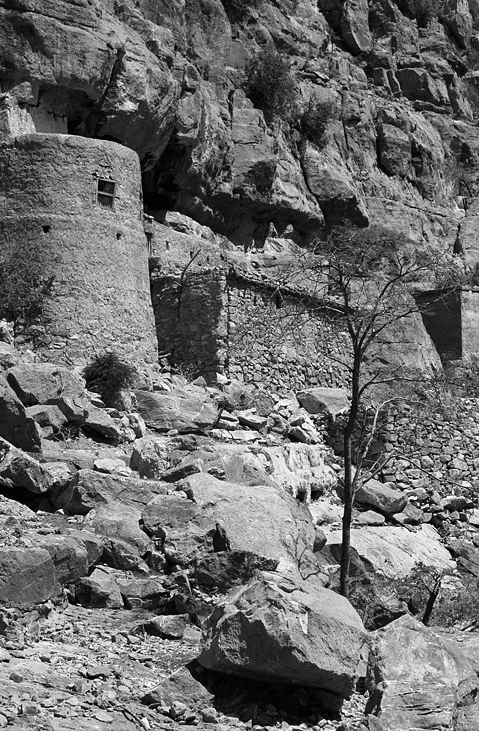
Jebel Akhdar – الجبل الأخضر
Famous for its rose-water; taken from the petals of a small rose grown, along with pomegranate, apricot, peach and walnut.
A wonderful retreat during the summer months: when the temperature at sea level can get unbearably hot.
There are a number of very old abandoned villages, left unoccupied when the local population moved for the trappings of modernity.
Old grinding stone – Jebel Harim.

“bait al qufl” Jebel Harim.
The photograph below shows the door of a building called a “bait al qufl” (house of locks) built for protection from the elements. The floor, a metre or so below ground, has raised stone slabs for eating, sleeping and storage. The recessed door has a double locking system and opens inwards, one does not get in without being asked!
When I first came across one of these while trekking on Jebel Harim; the door was not locked and the place seemed abandoned, so what a shock I had when pushing the door open and stepping from bright sunshine into the dark interior – I fell in! Luckily my camera was on a tripod and not in my hands.
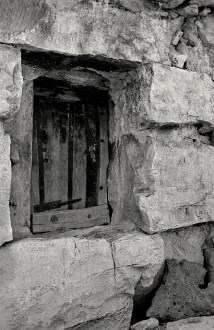
Abandoned house – Jebel Harim: Musandam
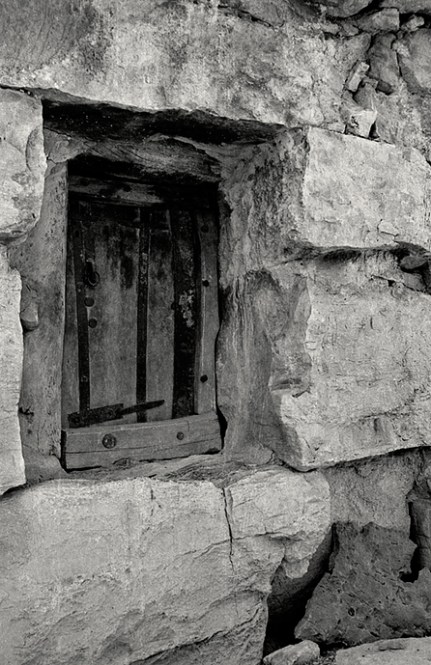
A Samovar from Iran ?.

Jabrin Fort.
This can only be described as a Samovar; no one can tell me otherwise: (I think the Arabic word is? سماور ) It could have been made in Iran.
All conjecture I am afraid.
Jabrin Fort.
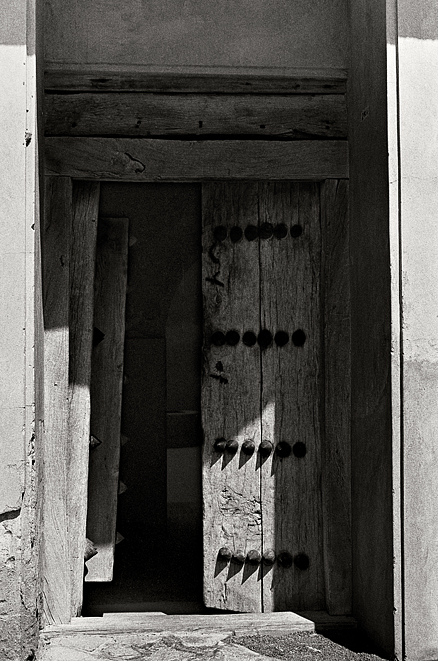
Equipment and paper long gone.
A little information about the image below:- ‘as the sun goes down’ taken on Jebel Harim.
I used my Nikon F4 and a very good Tokin AT-X 35 to 70 – F2.8 manual focus zoom lens; extremely sharp and very well made. The lens is constructed to a very high quality which was typical of this type of lens. None of the plastic parts and ‘f’ stop ring being left off that one finds these days.
I am afraid that scanning and a monitor screen has not produced the effect that I was trying to get when I made this photograph, but hay ho….
Due to the abundance of small stones and rather harsh evening sun; the whole area took on what I can only describe as almost ‘Pointillism’ and that is what I tried to capture.
Ilford FP4 @ my preferred ISO of 100 , developed in Kodak Microdol-X at 1+3, printed on a now sadly gone Ilford Matt RC paper using Dektol 1+2.
This was and is the only paper that I have managed to use that gave me the visualisation that I required.
Jebel Harim the Musandam.
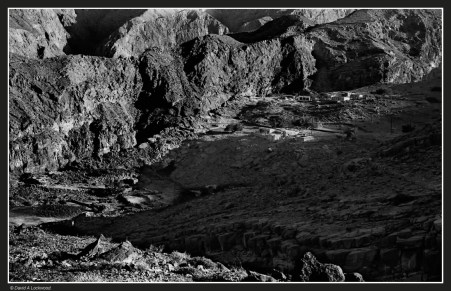 As the sun goes down.
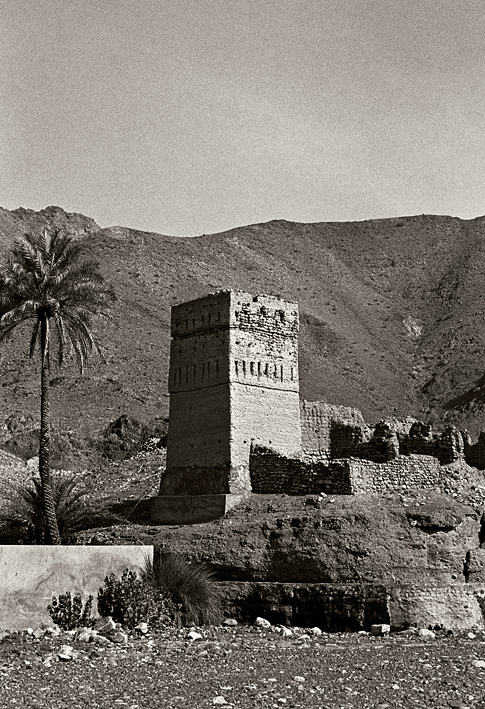
Wadi Tayeen.
 David A Lockwood