
 Doorway with steps – Ludlow castle.
Category: Black & White.
Statue of Edward Elgar – Great Malvern.
 Edward Elgar Statue – Great Malvern.
Buried in Little Malvern cemetery.
1st Movement of Elgar’s Cello Concerto as performed by cellist Jacqueline Du Pre with Daniel Barenboim
P.S – sorry about the video pop-ups – it’s the only version I can find.
Decorated Fountain – Malvern.
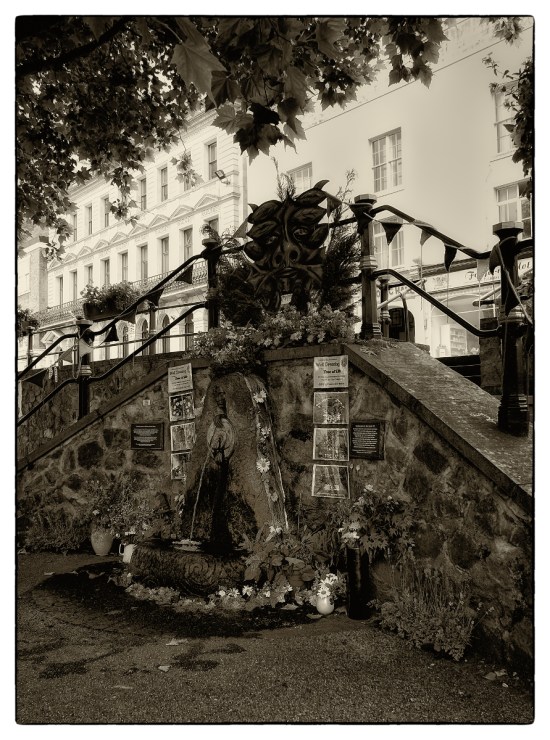 Decorated water fountain – Malvern.
Gas Lamp early evening.
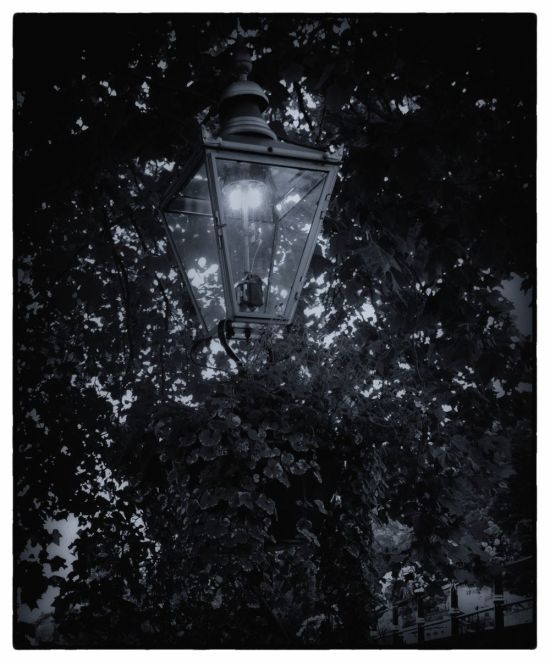 Gas Lamp early evening: Malvern.
Malvern Gas Lamps.
 Malvern Gas Lamps.
Anyone who has read or knows ‘The Lion, The Witch & The Wardrobe’ by C S Lewis, maybe interested in a little story about the Malvern gas lamps. Apparently, Lewis & some friends had been drinking in what is believed to have been the The Unicorn public house (Beer and all things drinkable, for those not familiar with the term) on the corner of Belle Vue Terrace Malvern. It had been snowing and on the journey home, Lewis is said to have been inspired by the sight of these lamps glowing in the falling snow, he is quoted as saying “that would make a very nice opening line to a book” The Lion, the Witch and the Wardrobe used that image as the children enter the realm of Narnia.
Both C S Lewis and J R R Tolkien regularly visited and walked in the Malvern Hills.
Many of the lamps have been restored and listed as historical items; so although at one point ‘Bean Counters’ decided they were costly & should be removed, common-sense prevailed and about 109 were saved.
I can find old doors anywhere.
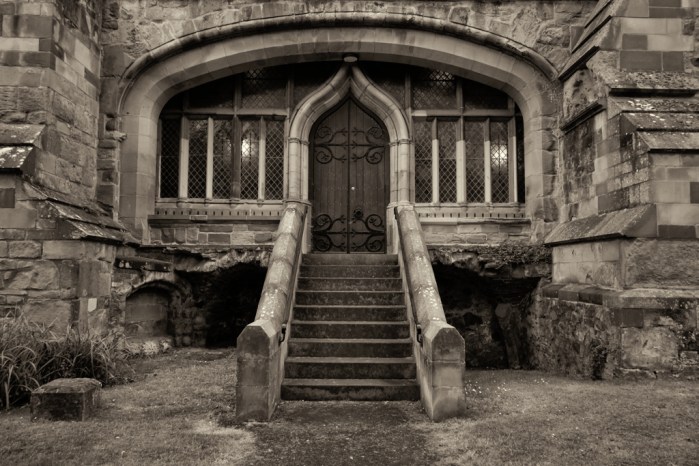 I maybe in UK now but I can still find doors that appeal. This image is looking up at a side door: taken yesterday on a rather dull wet morning.
Au Revoir for now.
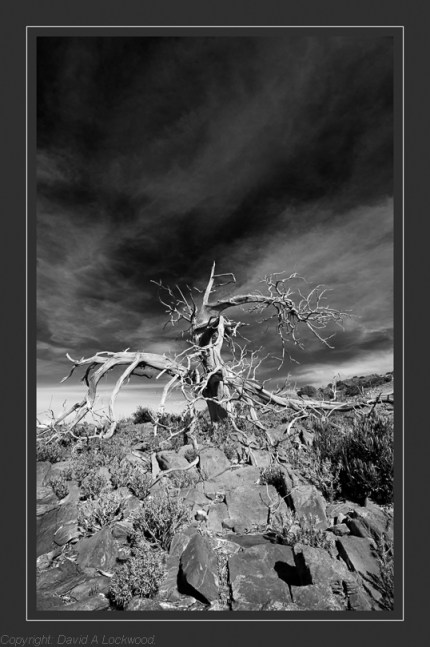 From a series of images I made back in 2012 – where has the time gone !
Sorting & checking backup files before I pack my dark-room & computer plus printer for its return to the UK. It’s been a great adventure, even if work got in the way sometimes.
I should not complain because it was through work that I did my first trip into the desert. Someone told me about an airstrip abandoned just after WWII, where Kittyhawk engines could still be found on the shore at the end of what was left of the runway. The Kittyhawk was famous for its ‘Shark mouth’ on the engine air intake: made famous by No. 112 Squadron of the Royal Air Force who first painted this on their aircraft during the North Africa campaign in 1941. They copied the idea from Luftwaffe Messerschmitt Bf 110’s which had been painted with similar markings.
Given a military ‘Ragtop’ Land rover & basic directions, with instructions that I could get fuel from any military base I passed (free) and not to get lost because it would be a long walk; off I went. Directions back then were rudimentary and consisted of things like “follow the sand track until you see a pole with a tin can on it” or “at the hill with 3 old towers, turn right”…… and so it went. I say this to people now and they stare at me in disbelieve, but anyone who had been here in the early days will confirm my comments on this. The only black-top roads were around Muscat.
I was away two days and although I got rather lost a couple of times, I did find it. Unfortunately the only engines were rusty and not really identifiable as coming from an aircraft. But I was hooked and eventually got my own Series 200 Discovery, two spare tires, tool kit, air-jack and a proper tent with lots of old Ordinance Survey maps. It has been non-stop ever since.
Still a couple of weeks left and I’m now in the ‘Where do I put everything & how have I acquired so much stuff !! most of it being books & camera equipment that cannot be easily replaced, so must be shipped back.
I still have lots of negatives that need scanning, so am not about to close this blog, but there will not be much more than the odd image until I am settled back in UK.
I started this blog on the 21st May 2010 with this image:
 Tomb Umm an-Nar period at Shir/Jaylah in the eastern Hajjar
Here we are 18th June 2017 and 2159 images later, more comments & likes than I ever expected, which made it all worthwhile and has been much appreciated: but enough is enough & time I put my feet up with a good book & the odd glass or two of Laphroaig. Well that’s the plan but, we shall see 😎
Ruins.
 Ruins.
Hornet’s nest.
 Exposed Hornet’s nest – I think ? Probably from the little beast shown below.
 Image provided by Wiki – click on it for more info.
If stung by one of these, it hurts !!
A small step into history.
 A small step into history.
Khor Rori – a walk around the archæological site of Sumhuram.


Sumhuram.
A site on the coast near Mirbat Dhofar.
It has always been assumed that Sumhuram was founded in the 1st century CE, for the trade of frankincense between the Mediterranean Sea and India. The latest discoveries by archæologists from the Italian University of Pisa using pottery assemblage & C14 dating, put its foundation back to the 4th century BCE; it looks like it was an important stopping place on the trade route between south-eastern Arabia and the northern coast of Oman.
Tree against rock face.
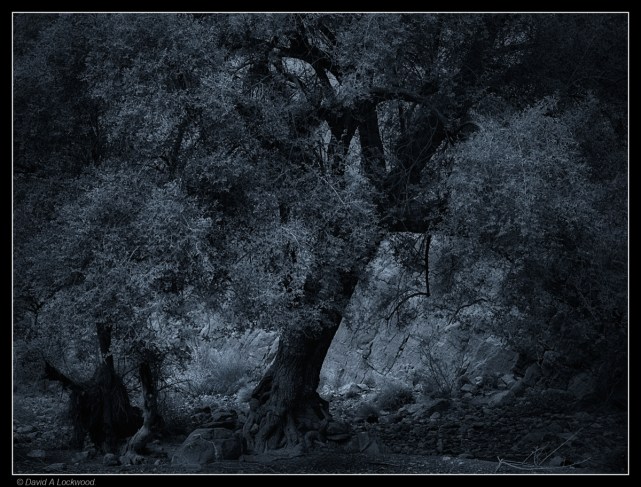 Nikon F4 with Nikkor 50mm f1.8 lens: Kodak T-max 400 @ iso320 in D76 1+1.
Another for my tones print series.
Rushes.
 Rushes against jebel.
Yashica 124G on T-max 400 (old style emulsion) another for my toned print project.
Big old tree – Wadi Darbat.
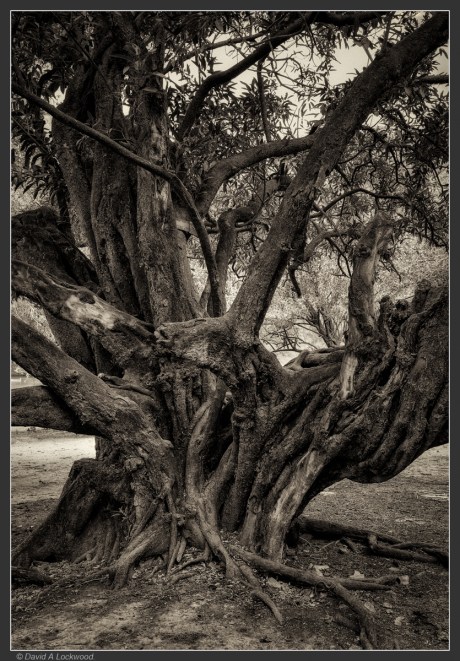 Big old tree -Wadi Darbat.
Grassy oasis.
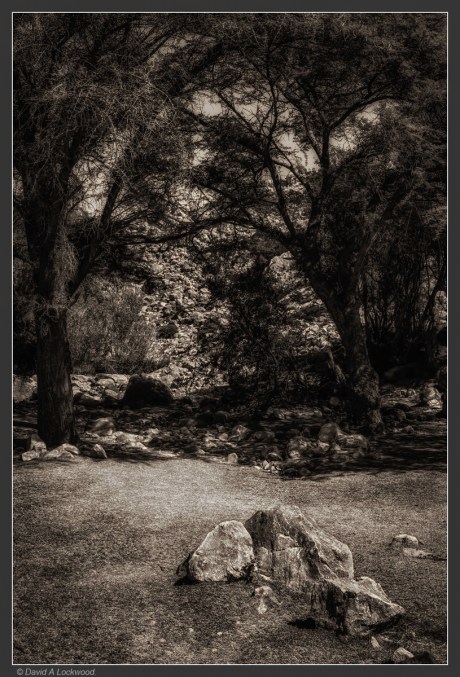 Grassy oasis.
Garden gate – Nikkor QC Auto f2.8 – 135mm.
 Garden gate.
Nikkor QC Auto f2.8 – 135mm Non Ai lens: made from 1973 to Mar 1975.
As my lens has a Sno: 402987 it’s probably about 43 years old !
Erosion.
 Rillenkarren – Erosion of rock during Oman’s wetter phase.
The technical description from my geology book says:
Rillenkarren.- Are forms of dissolution on the surface of the rocks that consist of small channels separated by sharp crests configuring a network of tight more or less parallel gullies next to each other. Its Genesis is linked to the dissolution of the rock by the sheet of water that forms on it as a local run-off.
Wood with rope.
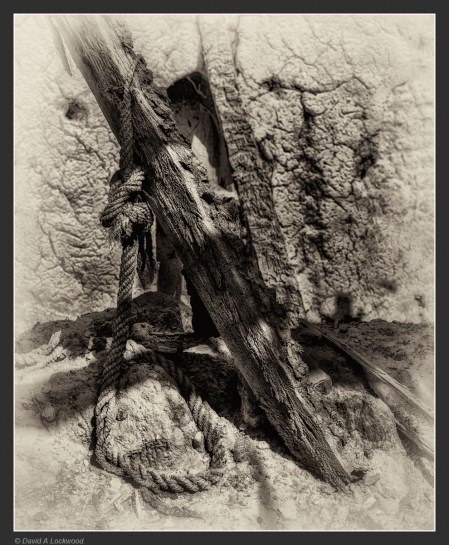 Wood with rope.
Stick & bowl.
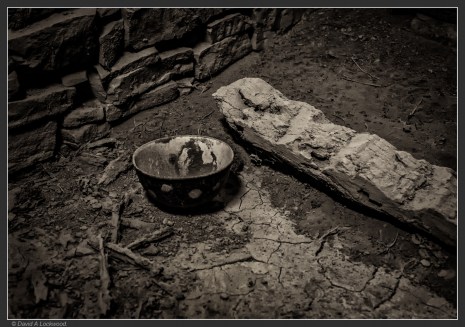 Stick & bowl.
Broken.
 Broken & abandoned.
The Ghubrah Bowl depression No2.
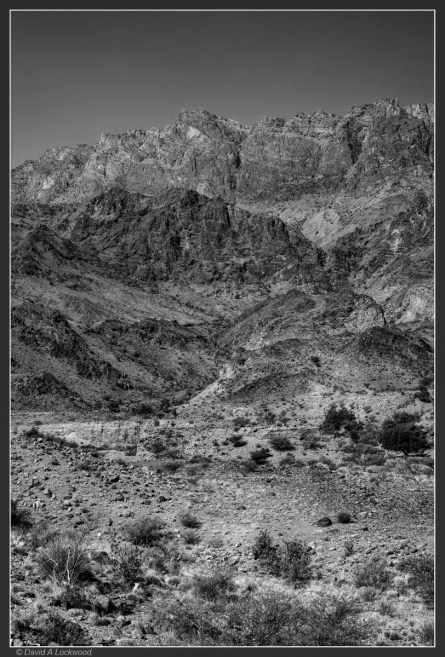 The Ghubrah Bowl depression.
In the Ghubrah Bowl.
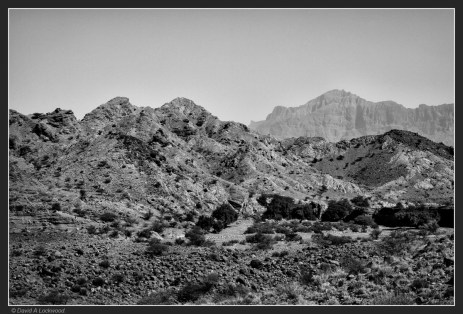 Part of Wadi Mistall and the Ghubrah Bowl depression.
More from Al Baleed.
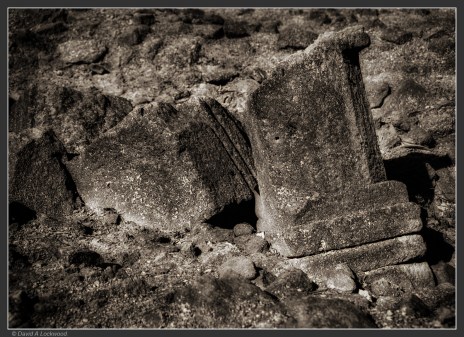


Al Baleed or Al Balid (from the Jibbali Arabic for ‘town’) is what is now known as the Al Baleed Achæological Park & Frankincense museum.
This extensive site described in great detail by Dr Paolo M. Costa, working with the Ministry of Heritage & Culture between 1976/86 can be found in The Journal of Oman Studies Vol:5. [The Study of the city of Zafar (al Balid) ] unfortunately I have not been able to find a link for this publication – Oman does not seem to make these publications easily available on the internet.
Al Baleed (Zafar, the city where the name Dhofar comes from) was an ancient port located near what is now Salalah. Recent excavation has shown that the site was inhabited from around the 5 millennia BCE. It continued its development in the late Iron Age through the Middle Ages until it fell into decline for a number of reasons; the reduced need for trade in Frankincense & then its horses. The silting-up of the harbour didn’t help: As the deep water receded, the big trading vessels were not able to dock. Arab and European historical references indicate that it was rebuilt several times from the early 10th century CE until its decline around the middle 1200s CE.
The city & its ‘Great’ mosque with over 140 pillars, minaret & associated outbuildings was still in use until the 17th centenary CE.
Marco Polo described the city as prosperous and one of the main ports on the Indian Ocean trade route. Although like a lot of other places (Masirah for instance) that he is supposed to have visited, it could be just word of mouth as the saying goes. Ibn Battuta visited this site in 1329 and commented on its beauty. In 1846, HJ Carter wrote about the city, pointing to its architecture and grand mosque, which he described as exceptional; he is now questioned for being rather ‘picturesque’ with his description of what was there when he visited. Reports from Miles (1880) and Bentes (1890) are also available describing their visit to Al Baleed.
Considering that the site was robed of stone for many years; it is only because of H.M the Sultan and his desire for the protection of Oman’s heritage, that there is anything left of the site. Fortunately, a lot of building structures and artefacts lay beneath mounds of rubble & sand; so with the on going archæology, more is being discovered every year.
Al Baleed Archæological site.
 Al Baleed Archæological site.
Windows in abandoned house – Mirbat.


Windows in abandoned house.
 David A Lockwood