
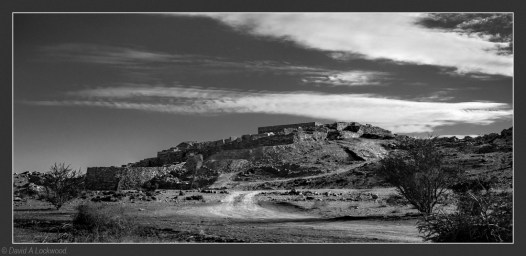
 Approaching the Walls of the Iron Age fort of Salut.
I loved the horse-tail clouds – only there for about half an hour so rush back to the car for my circular polarizing filter !
Approaching the Walls of the Iron Age fort of Salut.
I loved the horse-tail clouds – only there for about half an hour so rush back to the car for my circular polarizing filter !
Visit to the Archaeological site of Salut.


 As the sun goes down – in need of a camp site……
 As could be seen from an earlier image – quite a climb getting here: definitely worth the effort.
 My friendly tree 🙂
 Looking towards the opposite hill from the one posted yesterday – two things about this: I made friends with the tree on the left, so more of that later because it was almost the same colour as the background hills.
The other is the tower tomb & alongside, the columned structure which seems oddly out of character !
 Nizwa Fort.
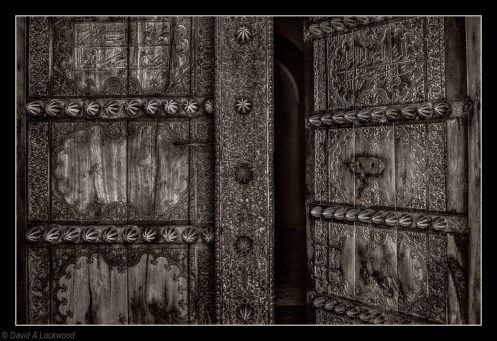 Come in said the spider to the fly 🙂
“Will you step into my parlour?” said the spider to the fly;
“’Tis the prettiest little parlour that ever you did spy.
The way into my parlour is up a winding stair,
And I have many pretty things to show when you are there.”
“O no, no,” said the little fly, “to ask me is in vain,
For who goes up your winding stair can ne’er come down again.”
Part of a poem by Mary Howitt (1829)
 Another flower.
 Steps to where ?
 Darkness.
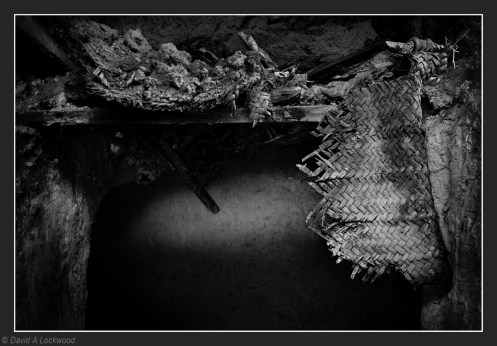 Abandoned & decaying.
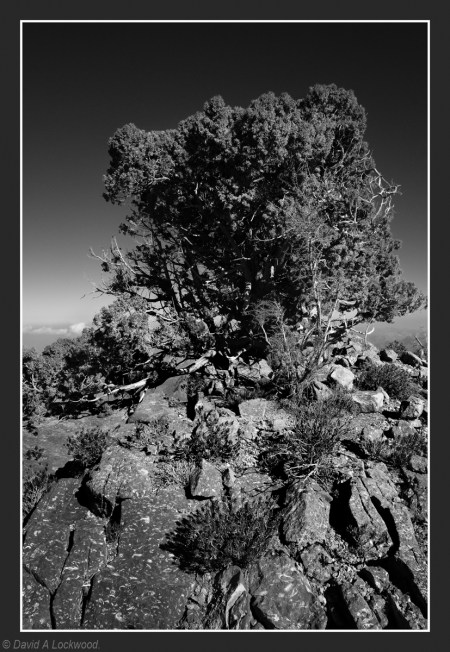 The Juniper has done very well this year – lots of new growth, helped by plenty of rain & some snow.
This one is at about 9900ft. Note the fossils in the rocks; from when this area was under the Tethys sea, its come a long way since then.
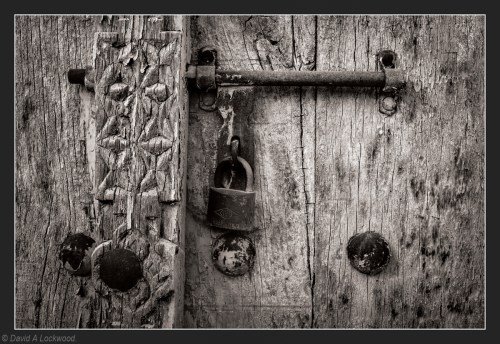 Old door fittings.
 Nikon D800 at ISO 6400. Tokina 35-70 f2.8 Ais AT-X lens.
A Date storage area on the ground floor of Al Hazm fort.
The raised channels that can be seen in the image above were used for storing Hessian type sacks of dates. They were stacked one on top of the other and as the juice was forced out of the lower sacks, it ran through the channels into a catchment area.
This juice had a number of uses; a very nutritious food, medicinal qualities both internal as medicine & external in the form of salves, can be used as a sweetener like honey and I am sure in the case of Al Hazm Fort, a military use! Boiled and poured through the murder holes above entrances.
From that well-known on-line encyclopædia.
Dates have been a staple food of the Middle East and the Indus Valley for thousands of years. They are believed to have originated around Iraq, and have been cultivated since ancient times from Mesopotamia to prehistoric Egypt, possibly as early as 4000 BCE. The Ancient Egyptians used the fruits to make date wine, and ate them at harvest. There is archaeological evidence of date cultivation in eastern Arabia in 6000 BCE. (Alvarez-Mon 2006).
There is also archaeological evidence of date cultivation in Mehrgarh around 7000 BCE, a Neolithic civilization in what is now western Pakistan. Evidence of cultivation is continually found throughout later civilizations in the Indus Valley, including the Harappan period 2600 to 1900 BCE.
In later times, traders spread dates around South West Asia, northern Africa, and Spain. Dates were introduced into Mexico and California by the Spaniards in 1765, around Mission San Ignacio.
Fossil records show that the date palm has existed for at least 50 million years.
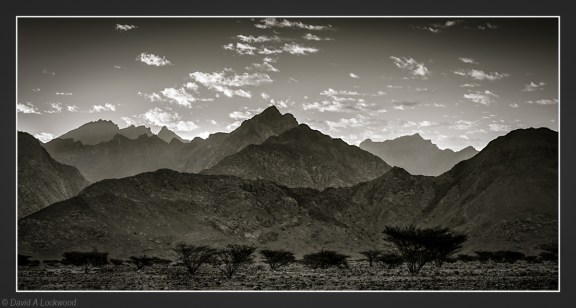 Sundown.
 Mountain road from Al Hamra.
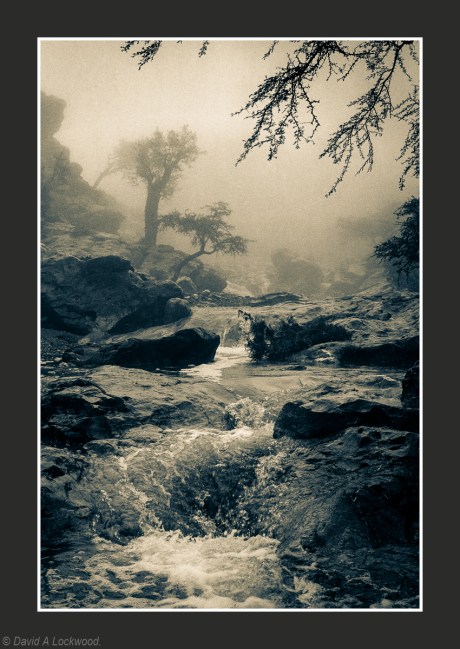 Nikon F4. Kodak T.max ISO 400 @ 320.
Back in the dark-room after a nice long (cold, wet & snowy) holiday.
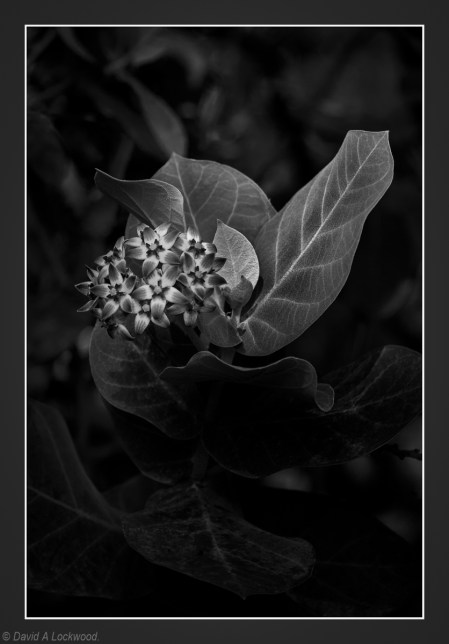 Leaf & flower
 New beginning .
 Palm frond tray.

 Nakhal Fort.
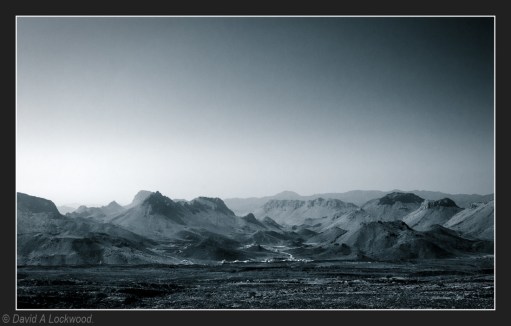 Hamra Al Abryeen – Bilad Sayt rd
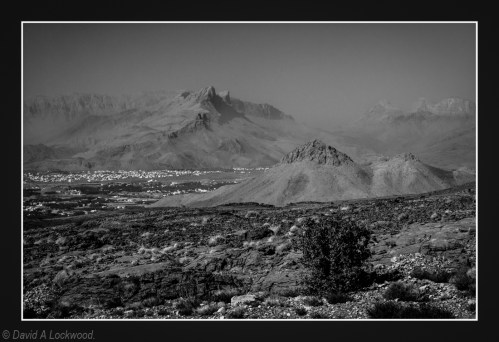 Misty mountains.
 David A Lockwood