Photography in Oman.

There is a misunderstanding about Oman and that is ‘it is in the Middle East so mostly desert’ Yes I admit that a very large proportion of it is.

I have some very good friends who go trekking with me on a regular basis and when we first started, I would suggest that they bring a change of clothing. They came to realise that it was because they would most likely get wet! There is water here in abundance 365 days a year, if you know where to look…..

Snow, now that is stretching the imagination but no, almost every year there will be some; ok so it is on the top of Jebel Shams but you cannot have everything.

The point I am trying to make is that for a county perceived as mostly desert, Oman has a very ecologically diverse environment.

The opportunities for photography are only limited by the imagination.
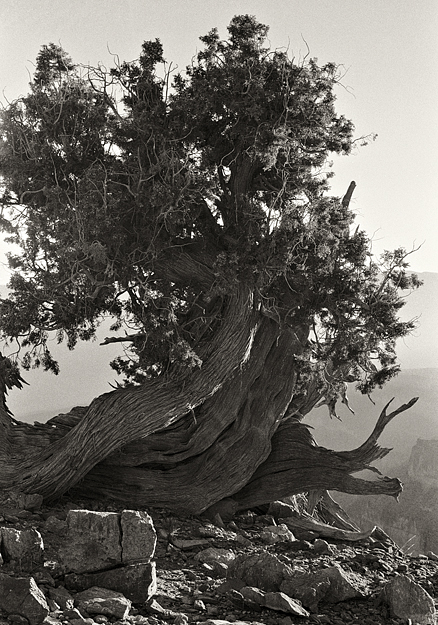
Juniper tree.

Juniper tree taken on Shams at about 9000ft.

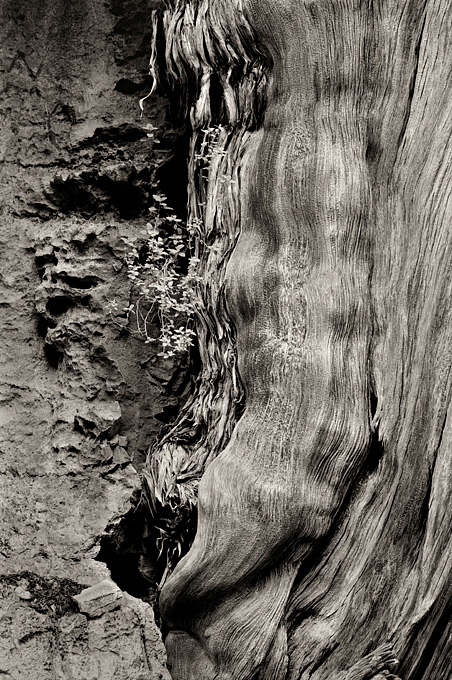
Root & Plant – Shams.

The Juniper is widely distributed throughout the northern hemisphere although its birthplace is obscure. They can be found in Europe, North America, North Africa, Middle East and northern Asia; it is a very slow growing tree (bush) and can live many hundreds of years.

A papyrus from ancient Egypt was discovered which showed Juniper berries as an ingredient for a medicine.

The number of juniper species is in dispute, being somewhere between 52 and 67 species.

Many of the earliest prehistoric people lived in or near juniper forests which gave them food, fuel, and wood for shelter.

Berries have a bitter-sweet taste and aroma which goes particularly well with strong meats and game, it also compliments chicken and certain fish such as Salmon; many Elizabethan food recipes mentioned the berries and I suspect that had a two fold reason, hide the taste of suspect meat and help with digestion.

Why I use film and chemicals.

Traditional Black & White photography here in Oman using film, chemicals and silver gelatin papers does not get the following that I think it should.

The problem being not the lack of photographers, there are some very good ones; but of equipment and supplies, as most outlets just stock ‘digital’ materials with the comment that “there is not the demand”.

If it is not stocked there will not be the demand…!

I bring most of my paper and raw powder chemicals back from visits to the UK; postage charges getting them delivered is outrageous.

As for darkroom equipment – well all I can say is that I am thankful that I have all I need. It was collected over the early years when photography did not involve electronic equipment that at the very least requires a computer, monitor and printer.

Cameras; who thought of doing away with the viewfinder on some of them…. and if you have tried looking at the screen on a mobile phone in sunlight, well need I say more.

Scanners are about my limit, I have a Canon 9950F for 6×6 and larger, along with a Plustek 7600i for 35mm, which was a lovely gift from my wife at the beginning of the year.

Photography has now joined with consumer electronics ‘there is always a better model coming in the next six months’. Try selling a Nikon D3 for a good price twelve months after it was bought.

End of rant……

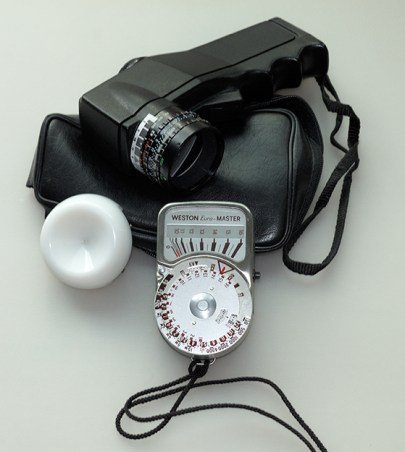
Weston Euro-Master light meter.

Meters

I have this thing for old well-engineered equipment that is not meant to fail six months after the warranty runs out. Hence the Nikon F2, F4 and Bronica S2a cameras.

This includes my light meters, the Pentax digital spotmeter and a really nice Weston Euro-master.

The Weston Euro-master was made until 1984 I think, it has a look and feel that denotes quality and can be found for very little money on the used market.

Have a look at this link that opens a site dedicated to the meter: westonmaster

Some of the films I use.

Ilford HP5 plus – a good all round 400 ISO film that is quite forgiving when it comes to exposure latitude.

Fuji Neopan 400 – a very nice film that prints well, but rather more critical with exposure.

Kodak T-Max 400 – this film needs very critical exposure control but is excellent if personal film speed is worked out first. (More about that later).

Don’t just follow the tourist routes for photographs.

Having been in Oman since 1986, I have combined my love of photography with my second great passion, exploring.

Get off the beaten track and find out what this country has to offer…..!

Until Google Earth opened, the only way of finding places of interest was to pick a route and find out where it goes or word of mouth.

But with the help of old Ordinance Survey maps (if you can find them, because they give footpaths used prior to the tarmac road) along with such publications as ‘The Journal of Oman Studies’ it was easy building up a list of places worth a visit. Then it was down to a good 4×4 and two legs!

The Journal of Oman Studies was launched in 1975 by the then Ministry of Information and Culture. It is a publication for archaeologists and historians to present academic articles about the Sultanate (but do not let that put you off). The Journal includes such diverse subjects as the porcelain trade with China, mangrove lagoons, the Kuria Muria (Halaaniyaat Islands) a very important breeding site for seabirds, as well as archaeology and architecture; it has now expanded to cover natural history.

All are available from the bookshop at the Ministry of Heritage and Culture in Muscat.

A little information on the Shir/Jaylah tombs.

These are on a plateau at an altitude of approximately 1758m. and in various degrees of decrepitude some 92 in total (some being only a circle/oval seen from the air): the one I photographed is probably the best preserved on the site at a position:

22°48’55.31″N   59° 3’17.74″E  it can be seen quite clearly if you copy this to Google Earth or this link to maps.

The Tomb itself has a preserved height of approximately 6m and is probably late Chalcolithic/Early Bronze Age (3500–2500 BC). Construction must have taken many months not to mention dressing the blocks first; as they have been ‘chipped’ with hammer stones to make the shape needed for construction.

I first visited the site in 1992 or 1993 if I remember correctly, using directions given by a friend and from the nearest town Ibra  (Arabic: ابراء‎ ) in the Ash Sharqiyah region of Oman (a 1980’s ordinance survey map & compass – no GPS at that time!). The drive was quite rough going because it involved a lot of off road work searching for a route over or around obstacles. Great fun……

It is still a difficult drive in 2010 but at least the approach from Ibra is now tarmac road.

Some of the cameras I use.

A little bit of information about some of the cameras I use:

Nikon F2 SB.

The Nikon F2SB was introduced in 1976 to 1977; The F2 range was Nippon Kogaku’s second professional SLR, aimed to replace the highly successful Nikon F.

Nikon F4.

The Nikon F4 (1988 to probably 2000) was the first professional Nikon to offer autofocus and is able to accept any of Nikon’s manual focus or AF lenses from 1959 to the present day. It is probably the best manual focus camera ever to be released as it will meter with just about any lens that Nikon has ever made.

Bronica S2a.

The Bronica S2a introduced in 1969 was one of a number of medium format cameras that used both Nikon and Bronica lenses.