


It is surprising how resilient some of my garden flowers have been with temperatures over 40deg C.
It is surprising how resilient some of my garden flowers have been with temperatures over 40deg C.
 The lonely lock.
 Abandoned food processor.
Last noon beheld them full of lusty life,
Last eve in Beauty’s circle proudly gay,
The midnight brought the signal-sound of strife,
The morn the marshalling in arms, the day
Battle’s magnificently-stern array!
The thunder-clouds close o’er it, which when rent
The earth is covered thick with other clay
Which her own clay shall cover, heaped and pent,
Rider and horse,—friend, foe,—in one red burial blent!
from
THE EVE OF WATERLOO
by: Lord Byron (1788-1824)
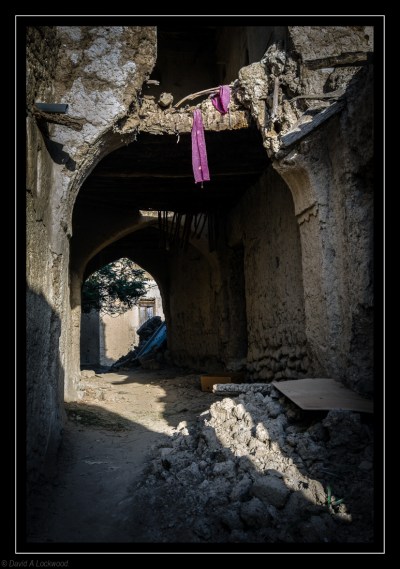 Abandoned scarf.
English Common Law –
The right to a trial by jury, habeas corpus, and the right against self-incrimination. By contrast, France and many other nations have a system based on Roman Law, commonly known as Napoleonic.
We have it because of the following three sections (38,39 & 40) of Magna Carta, maintained through revisions made in 1225 & 1297:
Nullus ballivus ponat decetero aliquem ad legem simplici loquela sua, sine testibus fidelibus ad hoc inductis.
Nullus liber homo capiatur, vel imprisonetur, aut disseisiatur, aut utlagetur, aut exuletur, aut aliquo modo destruatur, nec super eum ibimus, nec super eum mittemus, nisi per legale judicium parium suorum vel per legem terre.
Nulli vendemus, nulli negabimus, aut differemus rectum aut justiciam.
Runnymede: 15 June 1215.
It has been described as:
“the greatest constitutional document of all times – the foundation of the freedom of the individual against the arbitrary authority of the despot”
The implications of this are that in common law countries – people tend to act until the law says they cannot; while in civil law countries – people tend to wait for the state to tell them whether they can act and, if so, how.
N.B.
The original charter does not have numbered sections, it was a single, long unbroken text. Numbered sections; 63 in all, were introduced by Sir William Blackstone in 1759.
See link for text in both Latin & English: Documents/Magna_Carta.html
 Abandoned suitcase.
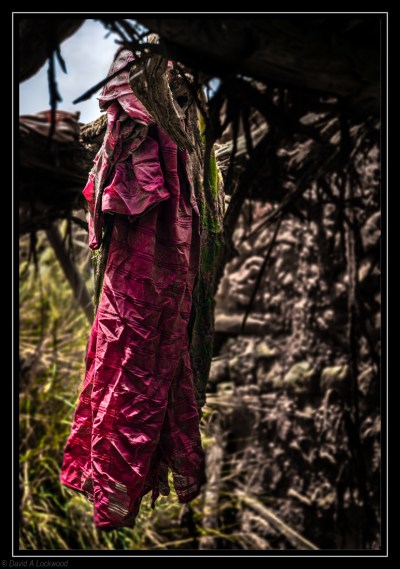 Things Abandoned.
Depending on the age of the village when the last occupant left, but more importantly because the people occupying it had traditional values; theft or putting it rather more euphemistically ‘ borrowed on a permanent basis’ other than in very rare instances, did not exist.
Two observations with this statement: tribal custom means that any of the community uses items that are not of a personal nature and is often misunderstood as theft by outsiders. Modernity brings its own problems.
As a consequence, all sorts of stuff can be found, old storage containers (1950’s ammunition boxes – very popular on the Jebel) pots, bottles, clothes and even the odd suitcase. Don’t get me wrong, there was not a cornucopia full and overflowing, just that old or unusable items just got left and were never touched by anyone else.
A small anecdotal story from my time in Jeddah – I was wandering around an open-air market and saw a stall which was obviously a footwear sellers, but covered in dust (lots !) so I asked about it. The answer was – He died a year or so back & none of the family have claimed the items……. nothing had been touched !
P.S
I made the mistake of editing this post in the ‘new editor’ it took all the paragraphs away !!!!!!
👿
 Detritus.
 It’s hot outside – not as bad as it has been but there is about 75% humidity so going nowhere today………
Will stay comfortable and maybe forced into quenching my thirst ! 
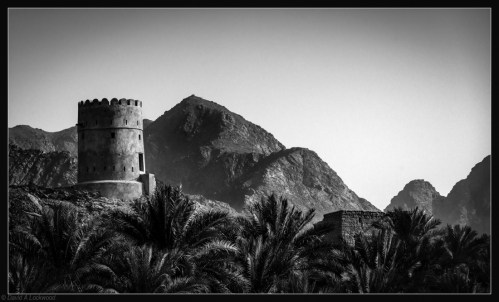 Hill Watchtower.
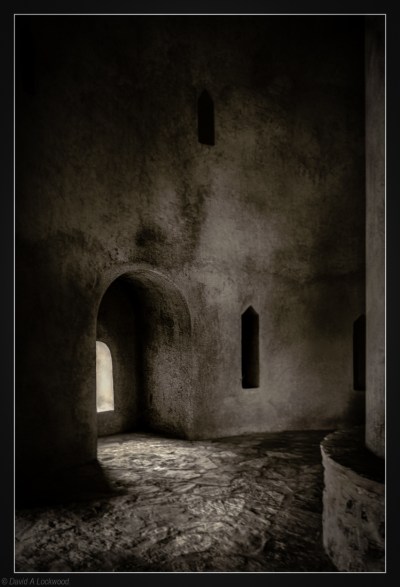 Curved tower windows.
 Multiple Angles.
A few quick snaps while I was waiting for some work to be carried out – taken from the very top of Shams: where the tourists can’t get 😉


 Yesterdays cloud build-up over Wadi Sahtan – made from jebel Shams.
 Pot & Bench Samail
 Samail fort entrance.
 Samail Fort – lower level tower.
 Samail Fort
 Beyond the Door.
“It’s a dangerous business, Frodo, going out your door.
You step onto the road, and if you don’t keep your feet, there’s no knowing
where you might be swept off to.”
J.R.R. Tolkien, The Lord of the Rings.
Wadi Samail from its largest fort: considered to be the biggest valley in Oman.


Note all the different ‘transliterations’ of the name – this can make it very difficult researching information, not to mention the total change in a village name over the years.
Samail, Sumail, Samaiyl, Semail………….. سمائل
In 1845, Lieutenant C.S.D.Cole, one of the East India Company’s Surveying crew on the Brig Palinurus, made a journey overland from al-Ashkhara to Muscat via Bidyyah, Sinaw, Manah, Nizwa, the Green Mountain (Al Jabal Al Akhdar) and Samaiyl.
Despite being disguised under the name of ‘Salim’, Cole was always, during his journey, surrounded by immense crowds with great curiosity.
Wherever he went in Oman, he was accommodated and received courteously. In Jalan, he ‘was nearly suffocated with the great quantities of milk’ which the native ideas of hospitality compelled him to swallow.
Leaving Nizwa, on his final route to Muscat, Cole tells us that he halted for a night at a traveller’s bungalow in a village named Mettee (probably Muti or now Imti), noticing that most places in Oman had a building set apart solely for the use of travellers.
His comments on a visit to Sumaiyel (sic) were very complimentary:
I found the place of considerable extent and the most flourishing of any I had seen in Oman. Water was plentiful; the data groves, which are extensive, were in the best condition and everything about looked green and healthy.
Contrast this with an account by Lieut; Colonel S.B. Miles 1885.
In the month of March of this year 1885, a cyclone storm of unprecedented violence had burst over central Oman, causing widespread destruction and misery. It had been followed by a deluge of rain, which had swept down the valleys and poured a devastating flood of water through the villages & settlements and had done incalculable damage to houses and cultivation, while hundreds of thousands of date trees had perished.
Dashed by the cyclone against the precipitous walls of Jebel Akhdar, the clouds had broken and fallen in torrents of rain down the steep gorges and ravines, and had concentrated a mighty wave down the Semail valley, which had carried everything before it.
Makes Gonu (1st to 7th June 2007) sound like a pussy cat by comparison – having lived through it (just) I can tell you it was not good !! so this must have been absolutely dreadful.
In 1876 on a previous visit: Miles also noted that Semail ‘Fard’ dates, one of the finest varieties of this fruit produced anywhere. Is the kind most appreciated and esteemed by the Americans, who are good judges and a very large quantity of boxed Fard dates are annually shipped to New York & Boston markets.
Most of the above found from either the Royal Geographic or National Archives UK.
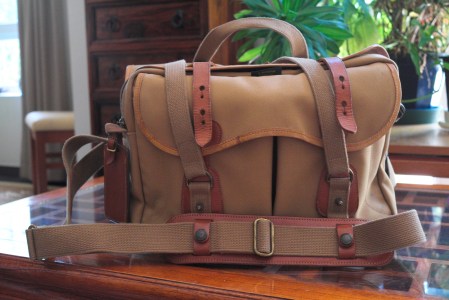 One of the original Billingham series 335 camera bags.
My camera bag has jumped up & down asking for its picture to be taken 🙂
This bag is at least 28 years old and still going strong – other than a little leather cream and brushing dirt away, it has not needed and still does not need any repairs: maybe the brass needs a clean but that’s probably going a bit far !
One of the best investments I have ever made; it will probably see me out.
They are rather expensive as camera bags go, but as the saying indicates “you get what you pay for” and with 28 years of use, it is the cheapest bag I have ever owned.
It has seen rain, snow, sandstorms and been in & out of more Land rovers than I care to remember, planes & at least one Helicopter (never a nice experience at the best of times) with all my gear safe & sound.
There…… now maybe it will shut-up & just go back to being a silent container for my precious camera gear.
P.S no velcro or plastic (one makes a noise & the other goes brittle in the sun!) both of which are almost de rigueur on things today.
 Sand dunes – toned.
 Another from my diffused & toned tree images.
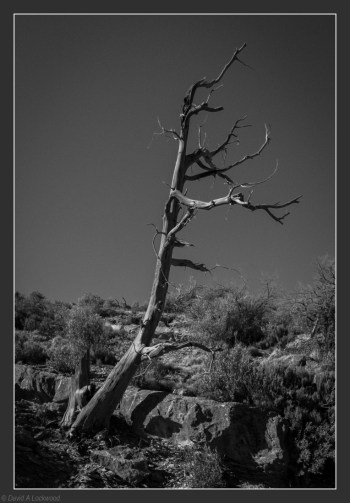 I have made an image of this tree before – several years ago.
It is still standing majestically & avoiding all that time can throw at it.
 David A Lockwood