
 Jebal Ghubrah – part of the Jebel Akhdar range of mountains.
Category: colour.
Tree roots in the extreme !
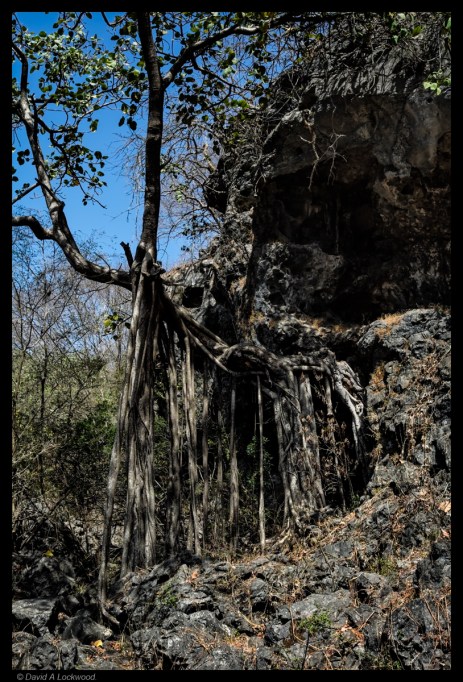 This tree is not taking any chances – it will get water come what may !
Tree roots over rock.
 Tree roots over rock.
Looking again at this image, the bottom right was not desaturated, it is a thick film of dust & grey dirt.
More mineral deposit images – Dhofar.


Both of these found in a deep overhang at the top of a wadi in the mountains above Mirbat.
Frankincense bush – Dhofar.
 A young Frankincense bush – they do not produce the sap that is used (& at one time, more valuable than gold) until about the 8 or 10 year mark.
Wakan flowers No3.
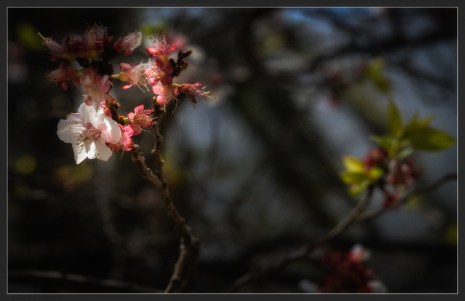 More flowers from Wakan – that’s it I promise, for now anyway 😉
More flowers -Wakan.
 More flowers -Wakan.
Leaves – Wakan.
 Leaves – Wakan.
Wakan is famous for its colourful flowers & plants.
A flower – Wakan.
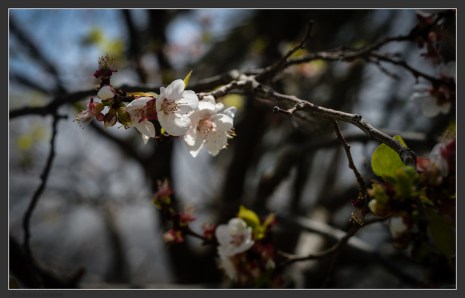 A Flower – Wakan.
On the way to Wakan.
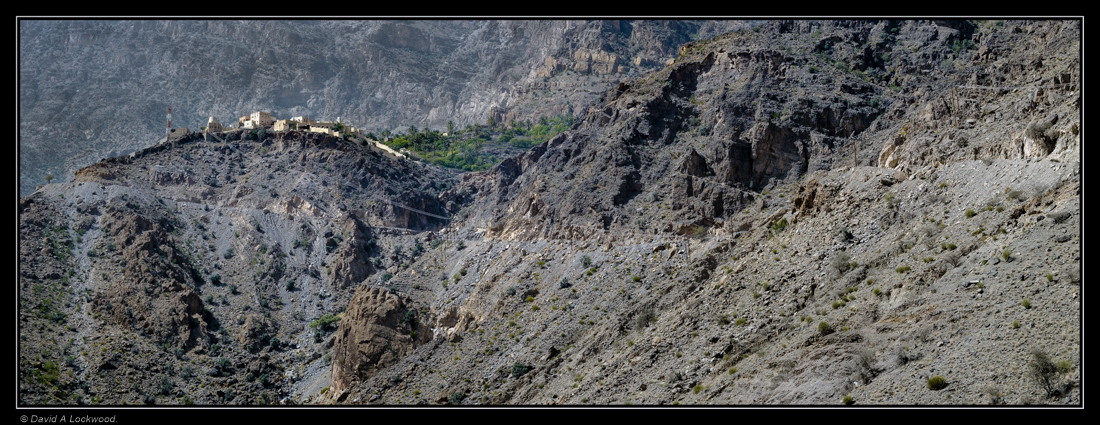 On the way to Wakan.
Wakan mountain village.

For a quick change of location:
Here is a view of the mountain village of Wakan, more later 🙂
Click on ‘View larger map’ it will give you a better understanding of where in the mountains this place is.
A possible Rock Art location – Dhofar.
 This is the sort of place where Dhofar Rock Art can be found.
Pictographs – Dhofar.


All images have been colour shifted to try & enhance the art for viewing – several being very faint and smudged through weathering & age. As can be seen, these pictographs are a form of rock art that is totally different from that found in northern Oman. It portrays images of the camel interspersed with horses and their rider: there are clusters of dots & lines seen as well; the significance of these is not known, although it has been suggested by some, probably notational.
Domesticated by humans in southern Arabia, the Camel seems to have arrived around 3,000 BCE and following a 2010 discovery of artefacts dated between 6590 and 7250 BCE in south-western Saudi Arabia, which appeared to portray horses, they arrived much earlier.
The age of this art is not really known but probably first or second millennium BCE.
This is only a small representation of the art found in Dhofar: it would need more time than I had available for a comprehensive presentation.
Coconut palm – Salalah.
 Coconut palm – Salalah.
Cannot visit Dhofar (Salalah) without at least one Coconut Palm picture. 🙂
Mineral deposits – Dhofar.
 Mineral deposits from a deep cleft in the rock: found while looking for Rock Art.
Trilith image No3.
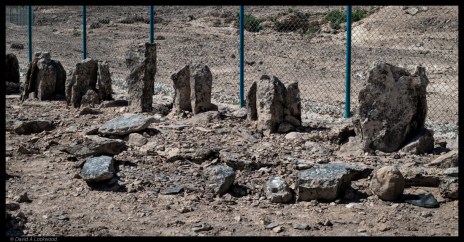 Here is a colour image of a Trilith group – unfortunately, taken in very harsh sunlight.
Mirbat near Salalah.


Mirbat near Salalah – Dhofar.
Dhofar No3.
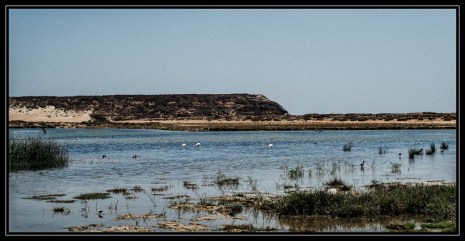 Flamingos and the wrong lens (never the right lens when it is wanted !) ho well, it was nice seeing them.
It was a great week with lots of archaeological sites visited: Triliths which are unusual rows of stones from the Iron Age, within the period 400 BCE. – 300 CE. Rock Art from about the second millennium BCE.
Three trading centres of both frankincense and horses from around 1st century CE, and back to the 2nd century BCE.
Dhofar No2.
 Dhofar No2.
Dhofar – just a taster.
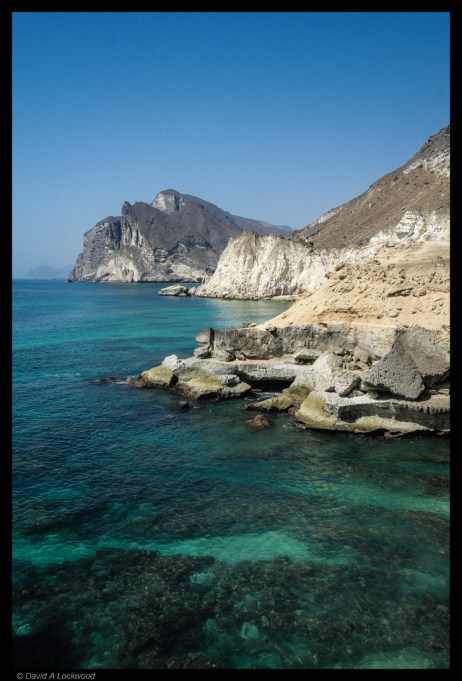 Just a taster of Dhofar: a long (10 hours) drive back to Muscat yesterday with temperatures in the desert leg reaching 35C !
Abandoned farm.
 Abandoned farm.
My Nikon 35Ti camera.

Note 28Ti flash control.


Nikon 35Ti Quartz Date compact camera, introduced in 1993. giving the ultimate in analogue technology (almost) more of this later
The titanium metal casing covers the motors and camera’s microelectronics, the top incorporates a unique, analogue display system. It shows all the important camera settings and the scales give a quick and easy guide during use. The Command Input Control dial, full 3D matrix metering and a superb f2.8 35mm lens, all add to the control over picture making that this camera gives. There is one caveat to this statement: the Iso is only set by the film canister coding (not changeable by the user, unless modification of the films DX coding) why this was done I have no idea.
There was another problem on early models of the 35mm but not the later 28mm cameras: the flash was difficult to control as it only had two buttons ‘on or fill’ switching off permanently meant a menu function needed to be selected (a forerunner of the nightmare found on some digital cameras) mine has the newer three button selection method not often seen when looking for one of these cameras in the used market.
A couple of other things it can do (not used by me) it will imprint data on the film !! not in the space between frames as seen with most professional SLR data backs. It can modify the framing for a form of panoramic image (crops top & bottom of the 35mm frame) a novelty and not worth using.
It also looks nice – like a well crafted piece of 50’s engineering, the Weston Euromaster meter from the 70’s is another; if you have not seen or used one then Google it.
Once blue door – Ibri.
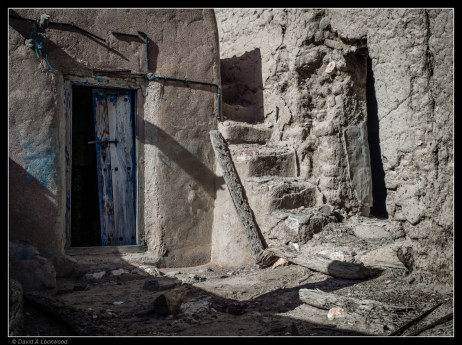 A once bright blue door in the abandoned village of Ibri.
(It looks like the walls had been painted at one time)
Things abandoned – Ibri.


Left behind.
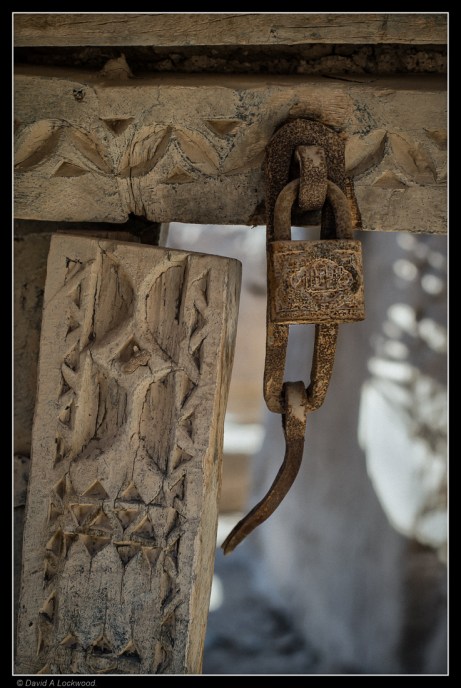
Two locks – abandoned village of Ibri.
 I slipped up on the depth of field with this one – concentrated on getting the ‘EGRET’ in focus, missed the bottom edge of the lock. Hay ho, such are the tribulations of photography 😉
 David A Lockwood