
 A nice footpath until you look over the edge!
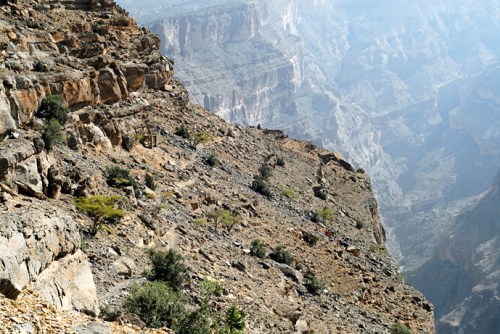
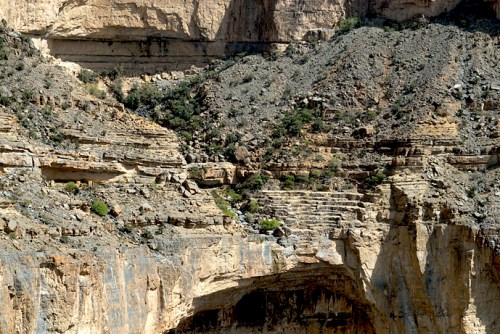 Note the terracing near centre just above the drop………!
A nice footpath until you look over the edge!
Note the terracing near centre just above the drop………!
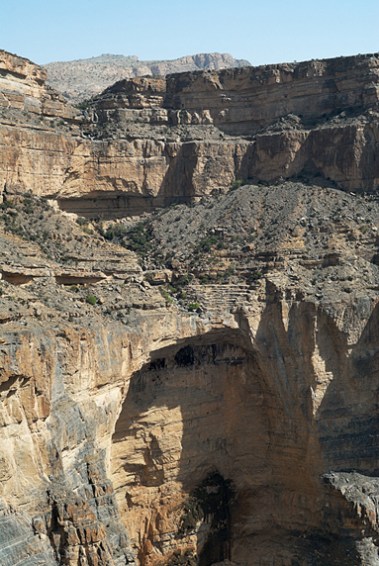 A return visit to the abandoned village of Sap Bani Khamis (As Sab) on ledges above a large overhang at the top end of Wadi Nakhr Gorge.
Altitude 1900m to 1800m: and it was a lot easier 10 or 12 years ago when I was last there 🙂 it’s also got somewhat of a tourist thing now; the route has been marked which takes all the fun out of it. The path at times is only a couple of metres away from a rather large drop! but if one does fall it must be a great view until the abrupt halt……
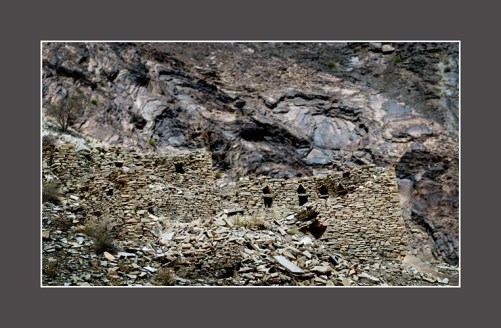 Muti (Imti) Ruins.

 Muti ruins.

The old and new – this clearly shows the falaj and the fact that it is open. There are very strict social and cultural rules about aflāj systems as they are communal supplies of water in an arid climate. No one pollutes it; the whole village will have contributed to the cost of construction and up-keep, in most areas the amount of water is divided up between each family on a ‘timed’ basis. A form of sun-dial clock (post in the ground with graduated lines) was and in some cases still is used for this purpose.
In very arid areas, the falaj can travel for many kilometres underground with entrance holes so that it can be maintained; finding water, construction and maintenance is skilled and costly work.
A quote from that well known on-line encyclopædia –
In Oman from the Iron Age Period (found in Salut, Bat and other sites) a system of underground aqueducts called Falaj were constructed, a series of well-like vertical shafts, connected by gently sloping horizontal tunnels. There are three types of Falaj: Daudi (داوودية) with underground aqueducts, Ghaili (الغيلية) requiring a dam to collect the water, and Aini (العينية) whose source is a water spring. These enabled large scale agriculture to flourish in a dry land environment. According to UNESCO, some 3,000 aflaj (plural) or falaj (singular), are still in use in Oman today. Nizwa, the former capital city of Oman, was built around a falaj which is in use to this day. These systems date to before the Iron Age in Oman.
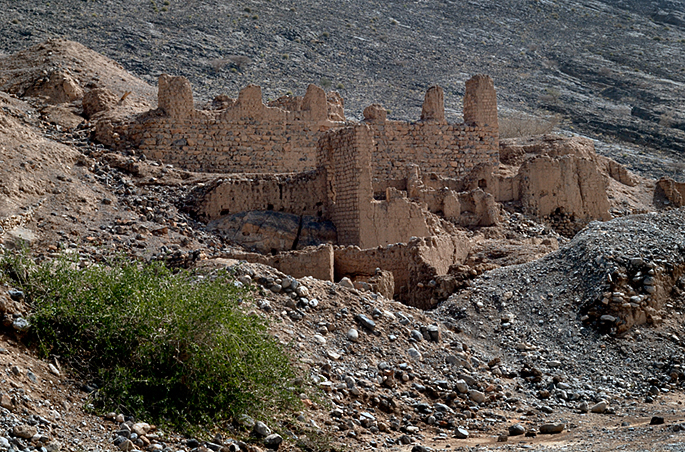
Tanuf ruins (another little altercation with the help of the Brits)

Then around the corner for this one – always a very scenic place after rains.
Just a thought – for those that are not very familiar with water movement in Oman, the wall that can be seen along the cliff face is a ‘Falaj’ basically a trough for carrying water.
Of this type, it is probably one of the best preserved that I know of; maybe because the ‘Tanuf bottled water plant’ is only about a klick away.
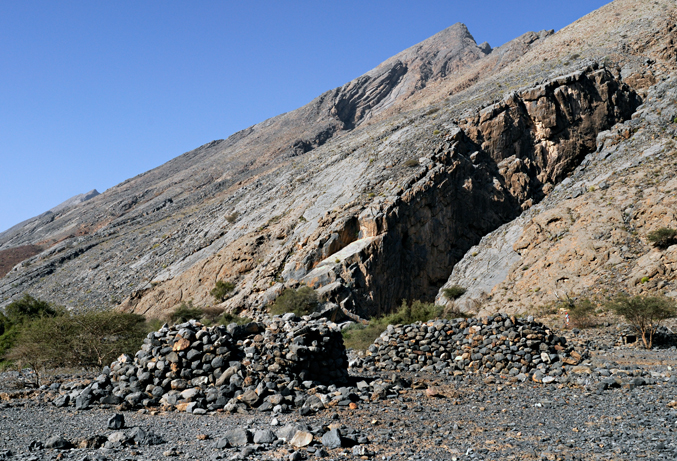
I am fairly certain that these are the remains of a form of Bee-Hive tomb; the doubt is because they could be a type of ‘round-house’ were the stones have just been robbed from tombs.
Today has seen a wind blowing in from the desert with temperatures reaching 360c that’s a change of 16 degrees in a week!
A good walk though; because the gorge I was in gets quite narrow in places, the sun does not reach right in until around midday so keeping the heat lower.
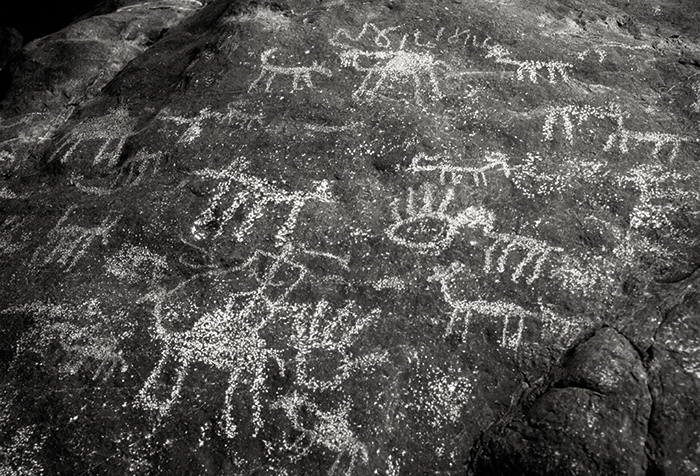
Lots of rock art and pottery shards, eventually reaching the abandoned habitation that I was heading for.
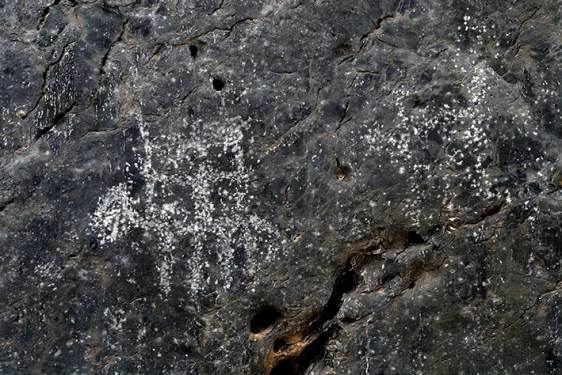

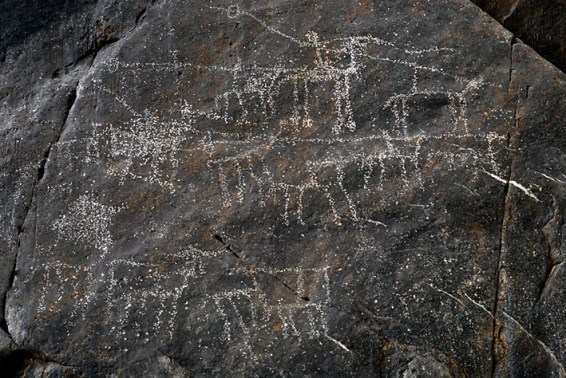 This looks like herding cattle?
 Looks like ‘antlers’? So I do not have a clue!
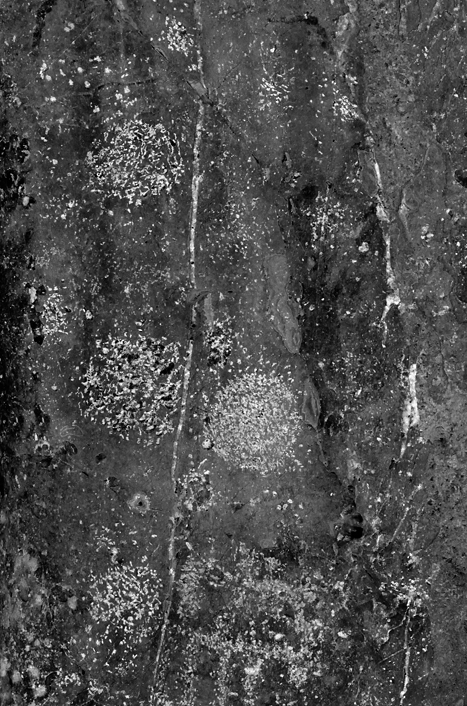 I think these are symbols for the sun not ‘Wusum’ or tribal markings.
 This one is well endowed!……


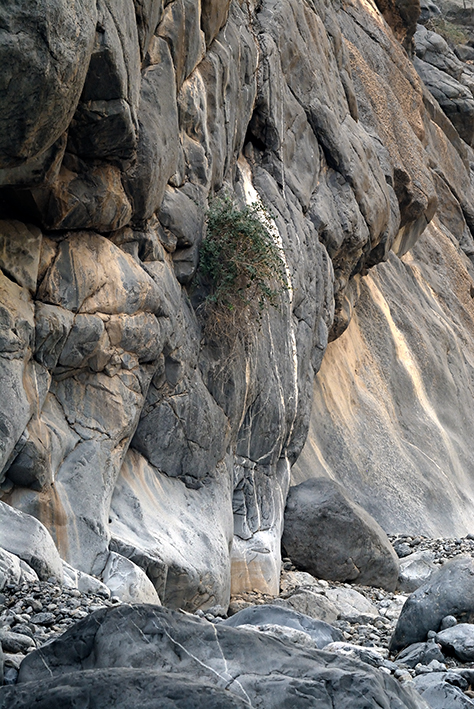


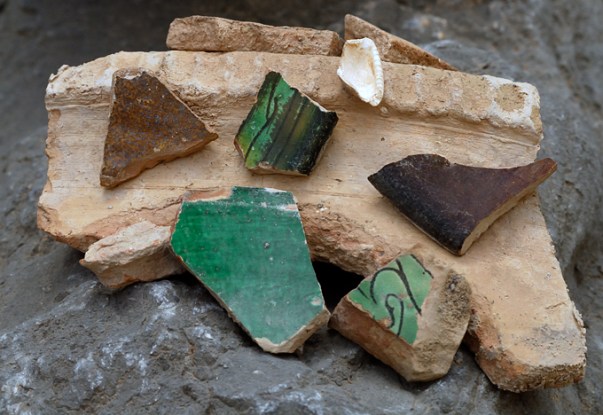 The broken cowrie shell – used in some cultures as currency, but in this case was probably a decorative item. Still, quite unusual so far from the sea. All found at the abandoned site in the next two images.


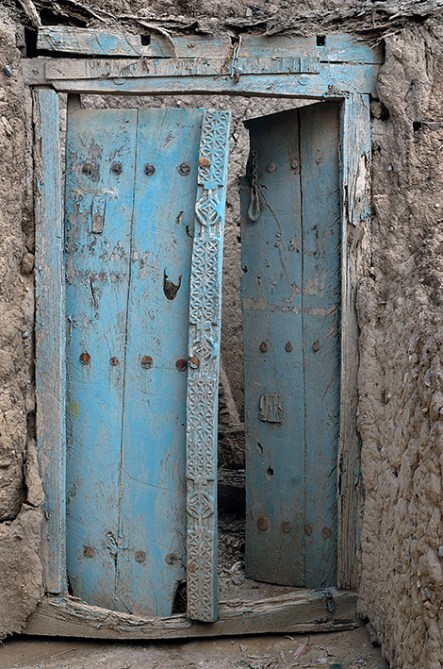


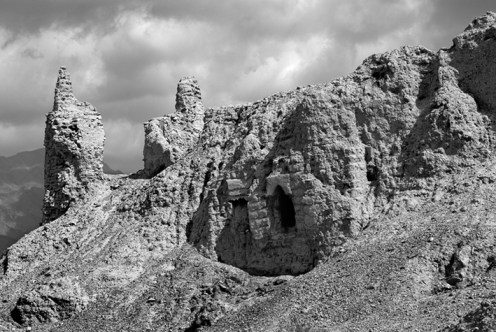
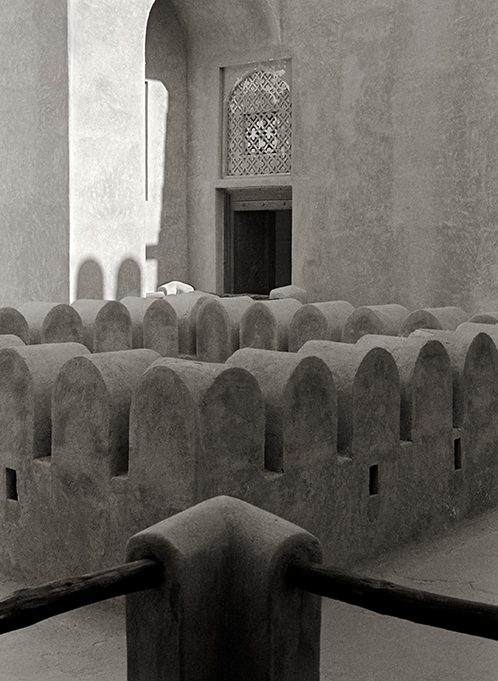
July 1957: at the request of the previous Sultan, RAF Venom jets flew 12 sorties against this fort; the results can still be seen.
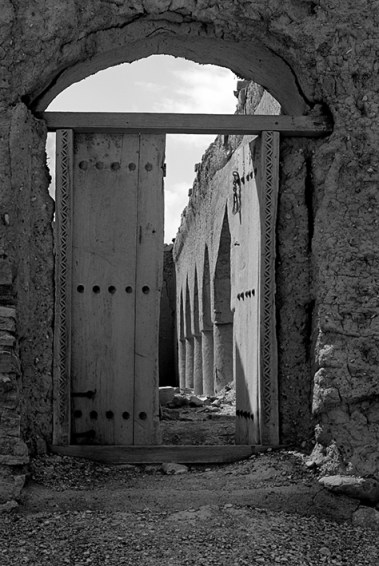
Izki (Ziki or Zikki) was described by Colonel S.B.Miles in the year 1876 as having “some beautiful plantations of palms and extensive cultivation, and stands in a very picturesque location” he also described the castle as being of a lofty construction and walls some 5 feet thick.
It is claimed to be one of the oldest towns in Oman and the falaj ‘Al-Mulik’ alleged to be older than the one built by Malik Bin Fahm near Nizwa.
In 1682 the town was taken by Malik Bin Fahm of the Yaruba dynasty, as part of his campaign to stabilise a large area of the country.
Over the years it has seen many a conflict, either between sections of the town; occupied by two different tribes (which is never a good idea) or just establish a power base.
In 1957 RAF Venoms stationed at Sharjah attacked the fort at Izki with rockets and cannon.
See this link for further interesting infomation on this campaign. Jebel Akhdar Muscat and Oman 1957-59
In 1970 there was a rebel attack near the town which precipitated the succession of His Majesty the Sultan.
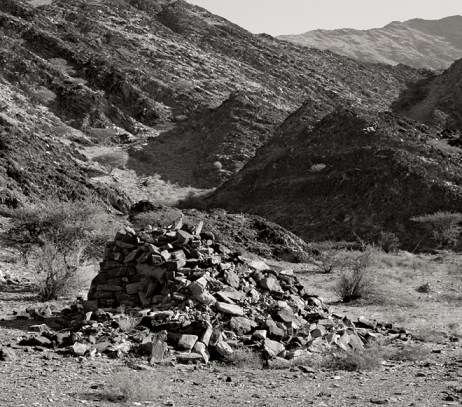
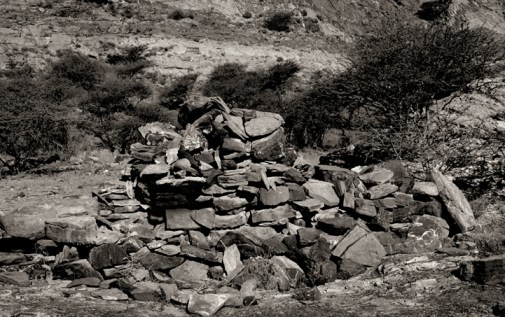 These tombs are two of a number on the side of the dirt road half way through Wadi Bani Auf: they will more than likely get destroyed if and when the new tarmac road reaches that far in….. it all depends on how knowledgeable the surveyors are !
 Update to the above:
I have been doing a little research on the inscription and with the help of Omani friends and colleagues; we have a fair translation. Please correct me if I have got the translation totally wrong (I don’t think I have but who knows) 3rd of Dhu AlHijjah 1237 H is 23/08/1822 G.
“On Thursday the 3rd of Dhu AlHijjah 1237 Hijri the scholar father of Nabhan. Jaiid bin Khamis bin Mohammed bin (?) bin Zaid bin Mansour Al Kharoosi Al Abadhi Al Omani has died. Written by his son Khamis”
But why it was inscribed high up on a rock in the dark entrance to a narrow wadi, we are not sure, it could be that this is where he died….?
He was a very famous Omani scholar of the Ibadi religion.
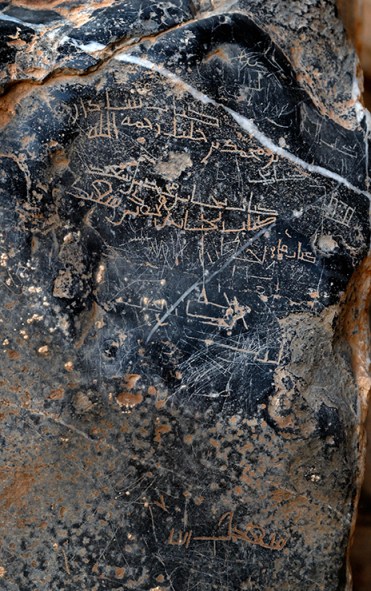
 An interesting example – but what it represents is anyone’s guess!
Update:
This site should come under the Ministry of Heritage and Cultures protection, but probably like the one at Hasat Bani Salt; a fence will be put up and the site promptly forgotten!
The following series of images are from a rock art site quite close to Qabil Al BuSaid in the Ash Sharqiyah Region.
A friend who lives in Al Mudaybi gave me directions to the area (also thanks to Google Earth which I used to pin-point probable rock outcrops) he said that there is some rock art that I might be interested in: how right he was….
This is the first site where I have seen ‘Finger Painted’ art outside the Salalah area.
I will have to do some more research, because so far I have not come across any reference in the literature that I have, which refers to finger painting, other than in Salalah.
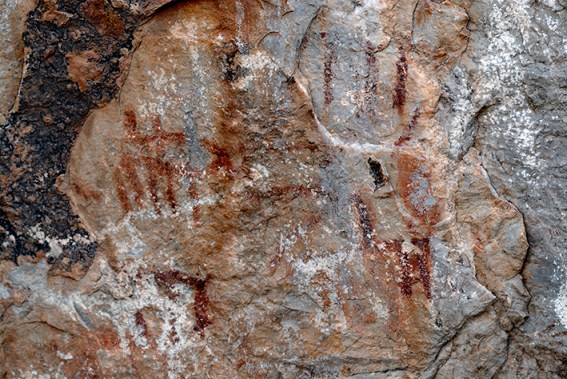 Note the Red Ochre coloured finger painting; some of the images have become very faint with age.

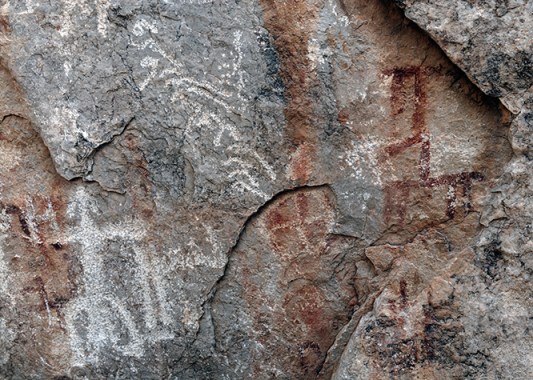

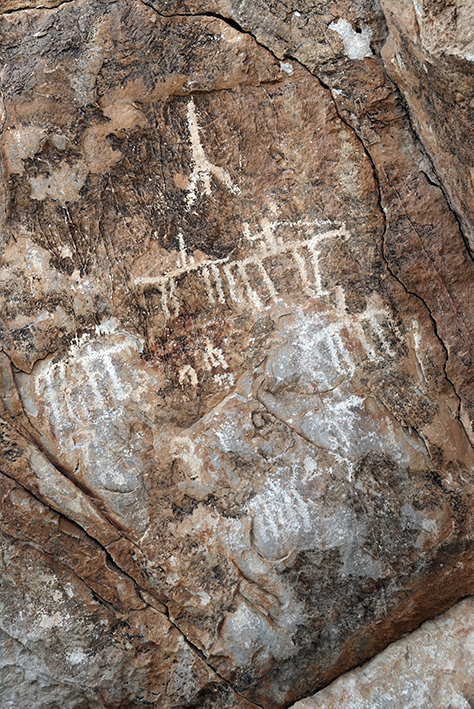

The above image shows a number of ‘Wusum’ or tribal markings: Dr Majeed Khan, a leading authority on Arabian rock art, has produced a book on the subject that is available for download from these two links Wusum-The-Tribal-Symbols-of-Saudi-Arabia-Part-1 and Wusum-The-Tribal-Symbols-of-Saudi-Arabia-Part-2 a very interesting read.
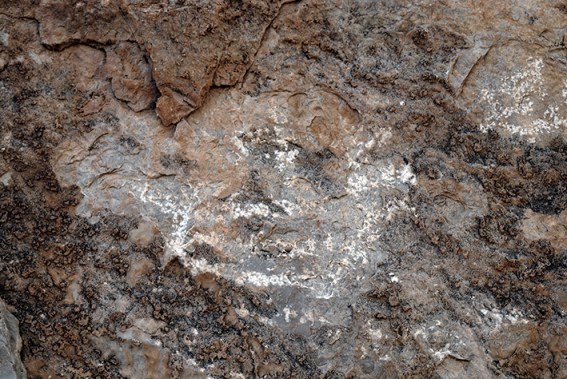 This looks like a 1600’s Galleon, but why would someone peck it out on a rock so far inland?

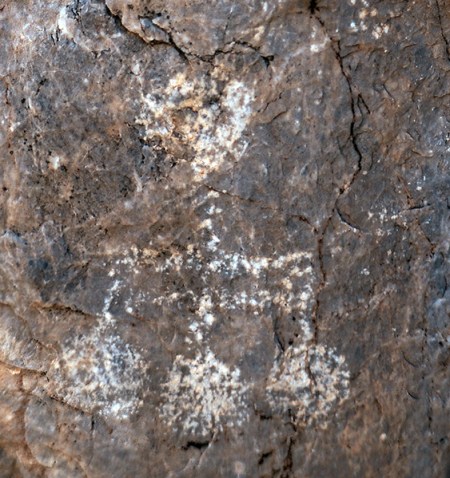
I need to go back! I did not get the focus quite right on this one…… That will teach me; when working in B&W I always take at least 3 just in case I mess up. Trying to conserve materials is never a good idea.
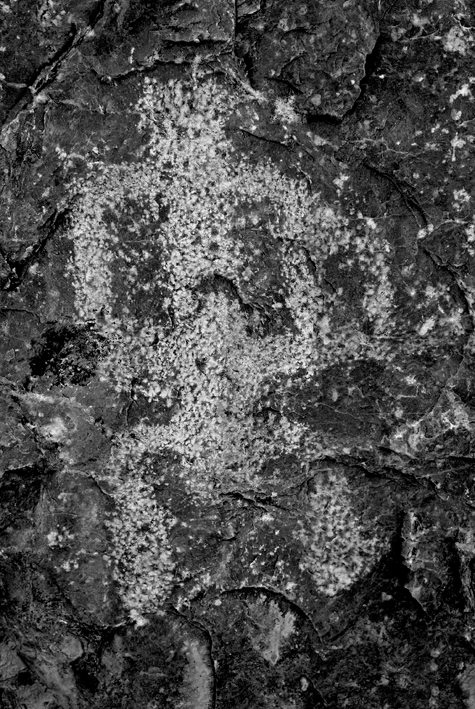

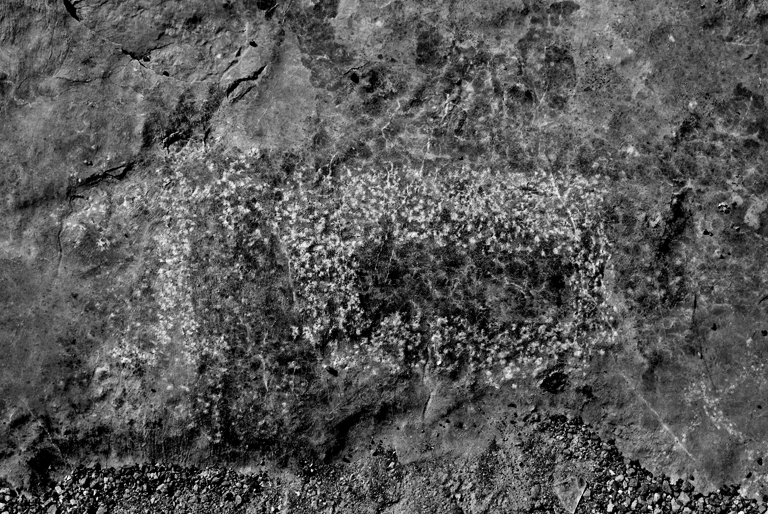 I am not sure what is being depicted here: a table, box or enclosure?
I could spend hours (I have) searching the rocks in the Al Hamra area, there is so much rock art: some of it very faded. A pity because it just will not photograph and I am reluctant to use chalk, which has been used on some that I have found.
I will just keep trying different methods to bring out the detail; all part of the fun…..

This was taken while going across the mountain from Qalhat, Kabda, Sayma and ending in Ibra.
Interesting drive and only possible with a 4×4 not to mention a full tank of fuel before leaving Qalhat: that is unless one has a diesel Discovery! which I had when I made this trip. No longer with me I am afraid as it was getting long in the tooth for this sort of journey (1994 Tdi 200) Try and get spare parts for a vehicle that old here in Oman………
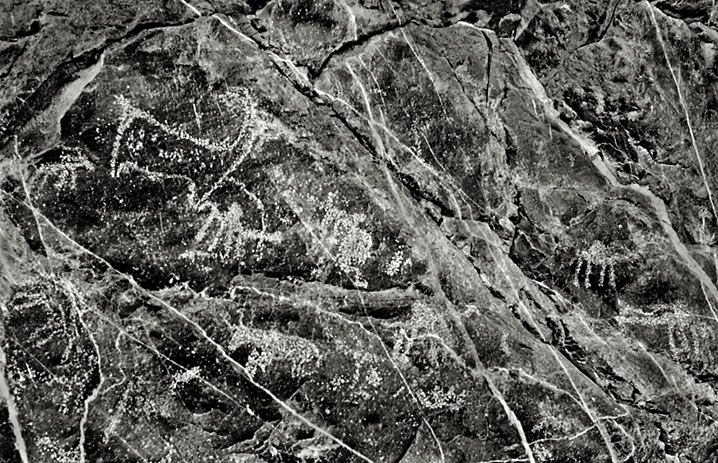
 The left hand representation has been around since the start of rock art, but in this case probably represents a connection with the hunt or a gesture that expresses a desire to dominate and appropriate the animal; the hand is also thought to be a sign of domestication.
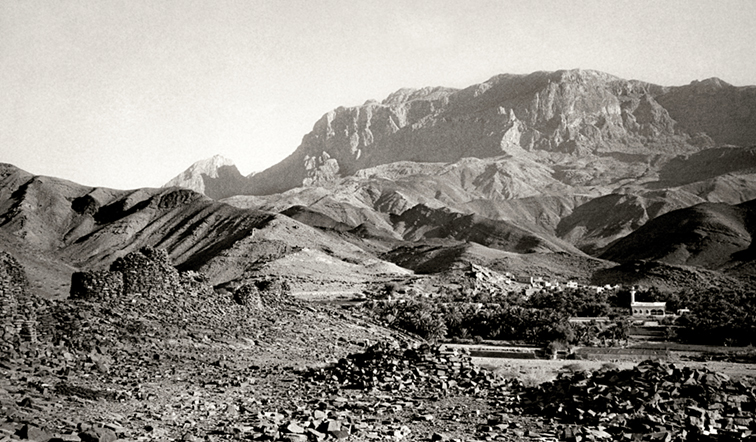 Tombs from about the third millennium BC.

 Note the depiction of very large hands & feet.
 Some sort of battle ?
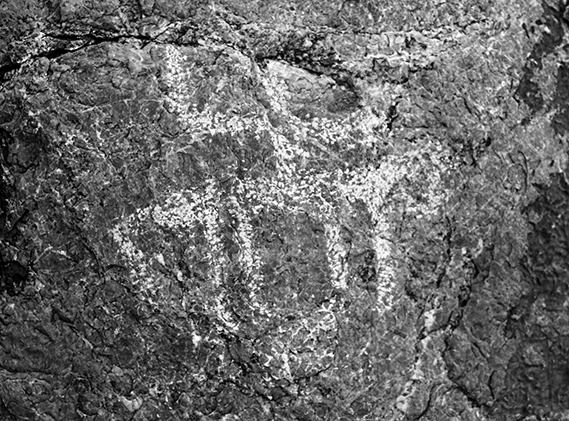
The rocks around the Ghamar area near Al Hamra are full of rock art; from the old to the relatively new (being less than a 1000 years old! age being a rather difficult thing to quantify – subject matter helps)
 David A Lockwood