
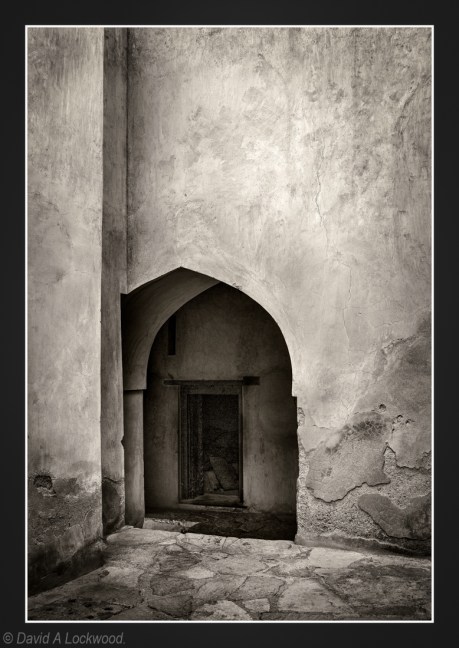
 Sun dappled archway – Nakhal.
Tag: Nikon D800
Nakhal Fort.
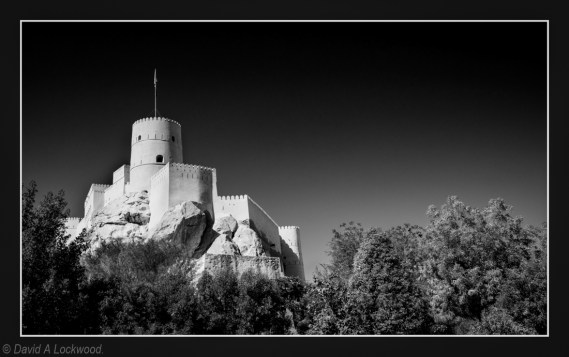 Nakhal Fort.
Nakhal Fort- steps.
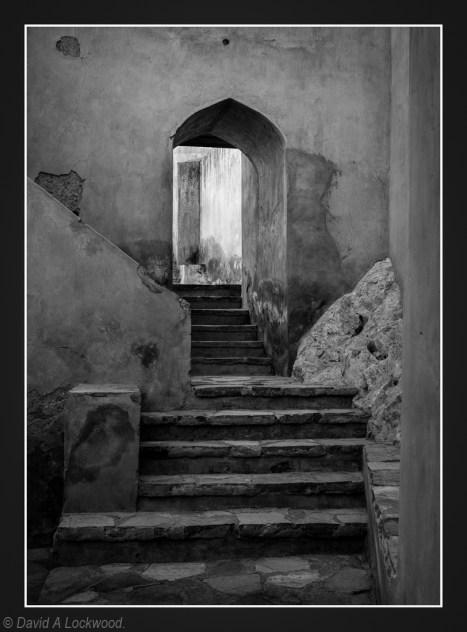 Nakhal Fort- steps.
Wadi Tanuf.
 Dirt track into Wadi Tanuf.
Nikon D800: Nikkor 85mm f1.8 AF D. (The original version with an aperture ring !)
Tanuf Visit.
A Tanuf visit – looking for the location of newly reported Rock Art find.
This is from the entrance: taken just after sunrise (a very early start for me from Muscat) lots of coffee 🙂
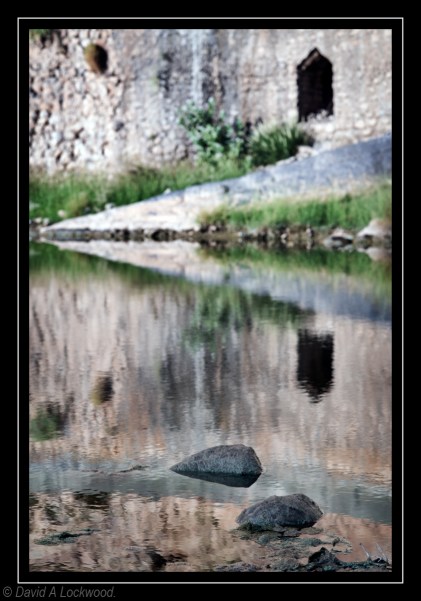


Last one.
 Normality will resume soon – promise.
🙂
Mad Half Hour……. !
 No I am not smoking weed – just playing with Lightroom/Photoshop.
😎
For fun…….
 Playing 🙂
I liked the colours ………
Steps with door.

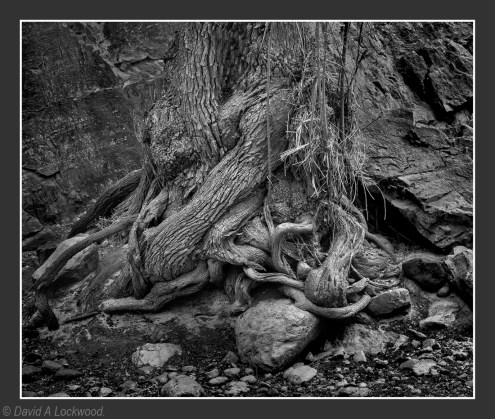
Tree Roots.
Old Door – Wadi Bani Habib.
 An old door from one of the two major abandoned villages at Wadi Bani Habib.
Trees.
 Wadi Al Muayden.
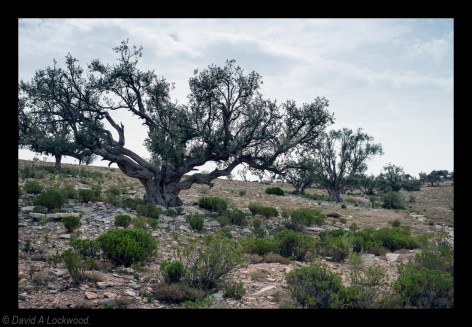 Jebel Akhdar – about 7000ft.
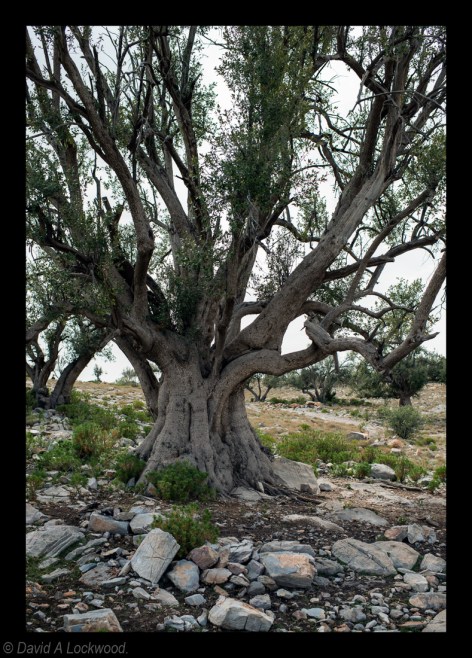 Jebel Akhdar: sun going down (what little there was) & possible rain.
Ps. It did rain about 02:00 so out of tent, put away cooking stuff and close my bivi top flap.
Wadi Bani Habib.
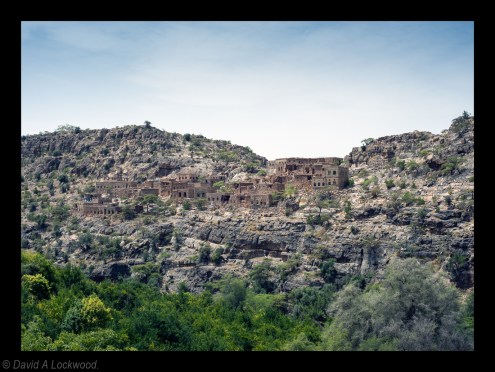 Another part of the Wadi Bani Habib abandoned village complex – less often photographed as it is further along the ridge; it sustained less damage during the 1950’s campaign.
Although Shackleton bombers of the RAF bombed the Jebel Akhdar plateau, this bombing was largely ineffective as the RAF had orders only to bomb caves and water systems, not villages. So although there are several caves in this area, how much damage was done by the bombers is hard to determine. The construction of this type of building needs constant maintenance otherwise it soon succumbs to storm damage; so a lot of what can be seen could be age related.
Abandoned village of Wadi Bani Habib.
 Abandoned village of Wadi Bani Habib.
(In colour for a change) D800 with AF-Nikkor 80 –200mm F2.8D ED
Pomegranate – Wadi Bani Habib.
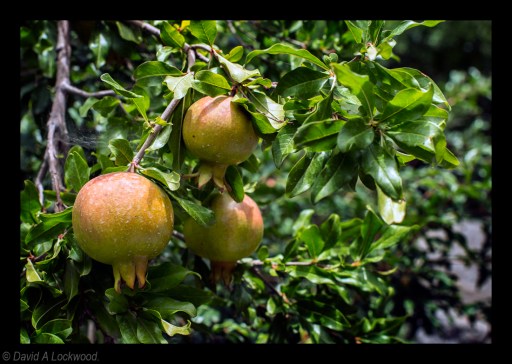 Pomegranate.
Walnuts – Wadi Bani Habib.
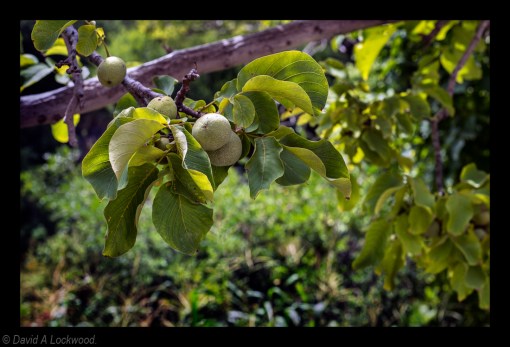 Walnuts growing in the Wadi Bani Habib.
Wadi Bani Habib – one of several interesting villages located on the plateau of Jebel Akhdar (The green mountain)
Moss on rock.

A tree with falaj.
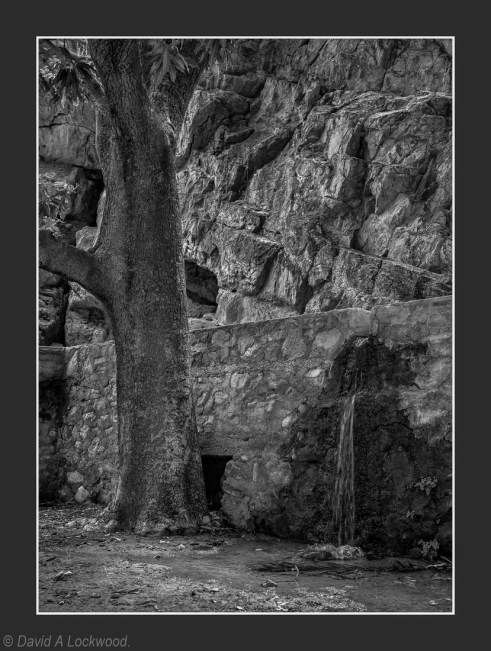 Well maintained Falaj.
Al Hazm Fort Interior.
 One of my last before I disappear for a month: thanks for all the comments and ‘likes’ since I last stepped off the world 🙂
Hopefully everyone has enjoyed my excursions around the various Forts.
Roof top Al Hazm Fort.
 Busy weekend as this was my last trip before I step-off the planet for a couple of days short of a month (holiday time soon 🙂 ) anyway it was 49 degrees C when this series was taken……. enough is enough: mad dogs & Englishmen come to mind !
Al Hazm Fort.
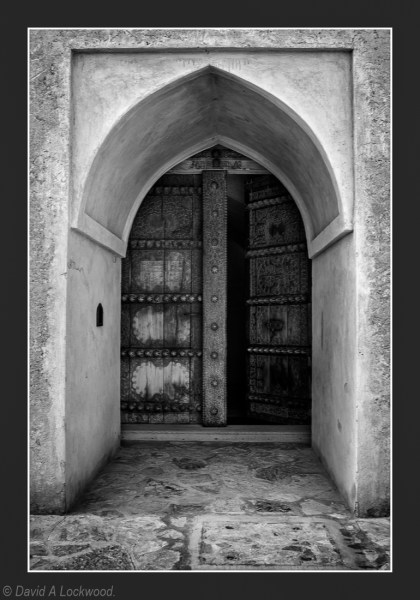 Entrance to Al Hazm Fort. (This one is a bit soft, using manual focus & the sun very bright: my excuse – need to go back! 😉 )
Al Hazm Castle – according to the Ministry guide-book.
Located in Al Hazm town in the District of Rustaq. It was built by Imam Sultan bin Seif the 2nd in ( 1123 A.H.–1711 A.D.) when he established Al Hazm town as a capital of Oman instead of Rustaq. The Castle is distinctive from other Omani Castle and forts by its magnificent shape and massive building. It contains the tomb of its builder – Imam Sultan bin Seif the 2nd.
The builder Imam Sultan bin Seif was the 5th ruler of the Ya’rruba dynasty of Imams; he was the grandson of the Imam (of the same name) who made the Portuguese an offer they could not refuse! they all left, after many years of attempting to subjugate the people.
This Fort is an outstanding example of Omani Islamic architecture and was built for defence against cannon. The roof is built on columns, and contains no wooden supports. Its walls can withstand the impact of cannon balls due to it being at least 3m thick at any point.
It has the outside appearance of being far larger than it really is, helped by tall walls and two towers, one on the Northwest corner & the other on the Southeast – giving almost 360 degrees of cover.
Another interesting fact; it used an advanced form of vaulted arch which was a major departure from the use of straight lines, along with post & lintel construction as had been seen in most of Oman’s earlier defensive constructions.
There are the usual defensive details such as multiple offset doors, pits just after a door (covered with planks of wood, removed when under attack) murder-holes above doors (think boiling oil or fire) along with hidden escape passages.
I have visited this fort on & off, many times as it not only has some of the most friendly and helpful custodians, but its main feature is the impressive collection of cannon.
Only one way out.
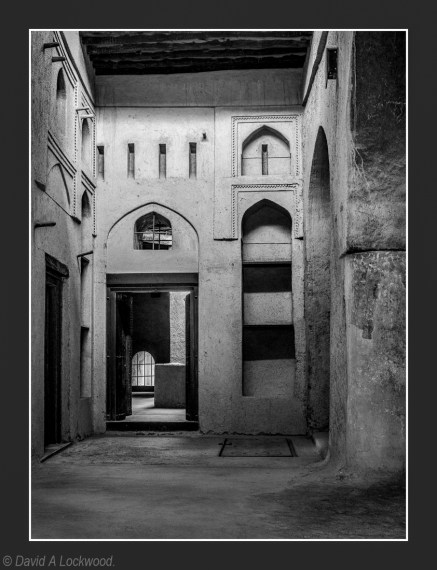 “Would he tell me that this door leads to the entrance?”
Wavy archway.
 Maybe the builder should have checked the blue flame more closely, or stuck to drinking water !
Looking Out.
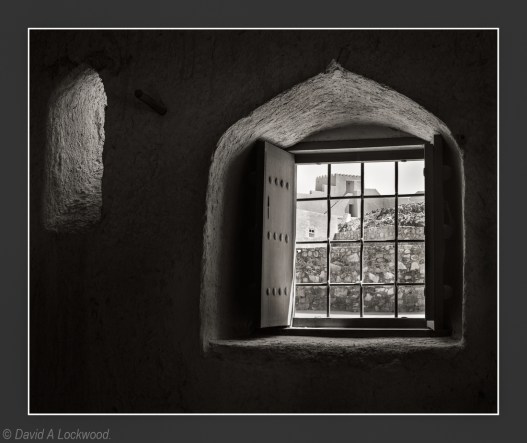 Looking out.
Bahla fort – again….
 The entrance – I think 🙂
P.S. the sloping walls you see in the above is not lens distortion – unfortunately for me, these are built by eye! which is why I always complain about the lack of straight edges.
 David A Lockwood