
 Derelict …… !
Pushed Kodak Tri-x: normally printed on textured art paper with a brown tone applied.
Derelict …… !
Pushed Kodak Tri-x: normally printed on textured art paper with a brown tone applied.
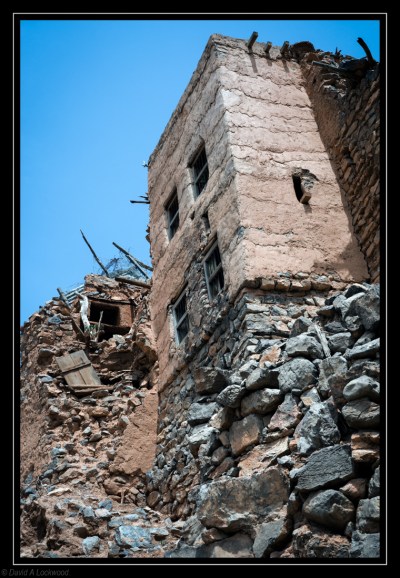 Abandoned ruin.
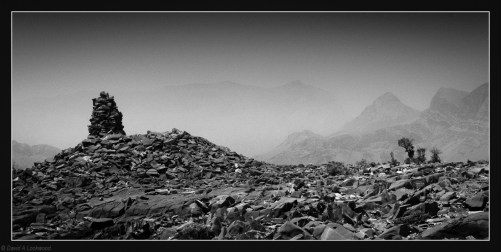 Cairn – Jebel Shams.
I have no idea of its age; always been there, say the locals – there are the remains of early Iron age tombs – see below and (if you know where to look) stone house foundations of probably the same period.
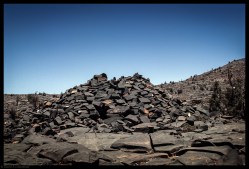
 Nikon F4 with AF Nikkor 50mm f1.8 lens. Made on T-Max 400 @ iso 320.
 For anyone interested in a little bit of information about the latest archaeological research regarding the Necropolis of Bat, of which the two tombs depicted above are part. See the link below:
Proceedings of the Seminar for Arabian Studies 45 (2015): Stephanie Döpper.
2014_SemArab_Doepper
Click the above link & click again on the new page – it will open a pdf file.
She discusses the reuse of Umm an-Nar tombs in the area and some of the interesting finds being made.
 Hanging clasp.
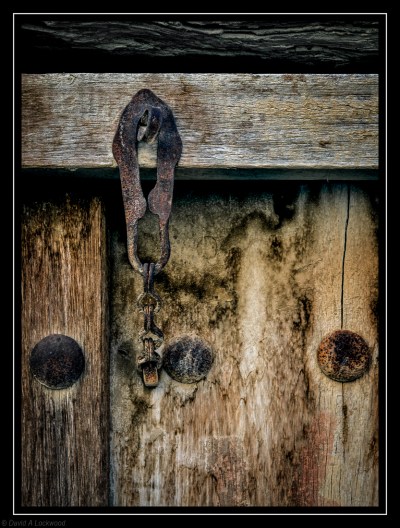 Rusting Clasp.
 Locked & forgotten.
 The lonely lock.
 Abandoned food processor.
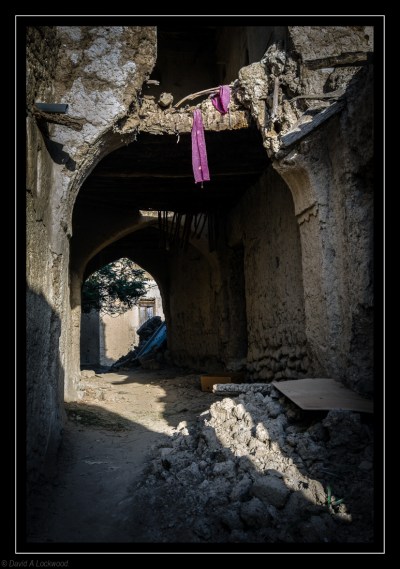 Abandoned scarf.
 Beyond the Door.
“It’s a dangerous business, Frodo, going out your door.
You step onto the road, and if you don’t keep your feet, there’s no knowing
where you might be swept off to.”
J.R.R. Tolkien, The Lord of the Rings.
Wadi Samail from its largest fort: considered to be the biggest valley in Oman.


Note all the different ‘transliterations’ of the name – this can make it very difficult researching information, not to mention the total change in a village name over the years.
Samail, Sumail, Samaiyl, Semail………….. سمائل
In 1845, Lieutenant C.S.D.Cole, one of the East India Company’s Surveying crew on the Brig Palinurus, made a journey overland from al-Ashkhara to Muscat via Bidyyah, Sinaw, Manah, Nizwa, the Green Mountain (Al Jabal Al Akhdar) and Samaiyl.
Despite being disguised under the name of ‘Salim’, Cole was always, during his journey, surrounded by immense crowds with great curiosity.
Wherever he went in Oman, he was accommodated and received courteously. In Jalan, he ‘was nearly suffocated with the great quantities of milk’ which the native ideas of hospitality compelled him to swallow.
Leaving Nizwa, on his final route to Muscat, Cole tells us that he halted for a night at a traveller’s bungalow in a village named Mettee (probably Muti or now Imti), noticing that most places in Oman had a building set apart solely for the use of travellers.
His comments on a visit to Sumaiyel (sic) were very complimentary:
I found the place of considerable extent and the most flourishing of any I had seen in Oman. Water was plentiful; the data groves, which are extensive, were in the best condition and everything about looked green and healthy.
Contrast this with an account by Lieut; Colonel S.B. Miles 1885.
In the month of March of this year 1885, a cyclone storm of unprecedented violence had burst over central Oman, causing widespread destruction and misery. It had been followed by a deluge of rain, which had swept down the valleys and poured a devastating flood of water through the villages & settlements and had done incalculable damage to houses and cultivation, while hundreds of thousands of date trees had perished.
Dashed by the cyclone against the precipitous walls of Jebel Akhdar, the clouds had broken and fallen in torrents of rain down the steep gorges and ravines, and had concentrated a mighty wave down the Semail valley, which had carried everything before it.
Makes Gonu (1st to 7th June 2007) sound like a pussy cat by comparison – having lived through it (just) I can tell you it was not good !! so this must have been absolutely dreadful.
In 1876 on a previous visit: Miles also noted that Semail ‘Fard’ dates, one of the finest varieties of this fruit produced anywhere. Is the kind most appreciated and esteemed by the Americans, who are good judges and a very large quantity of boxed Fard dates are annually shipped to New York & Boston markets.
Most of the above found from either the Royal Geographic or National Archives UK.
 Approaching the Walls of the Iron Age fort of Salut.
I loved the horse-tail clouds – only there for about half an hour so rush back to the car for my circular polarizing filter !
Visit to the Archaeological site of Salut.


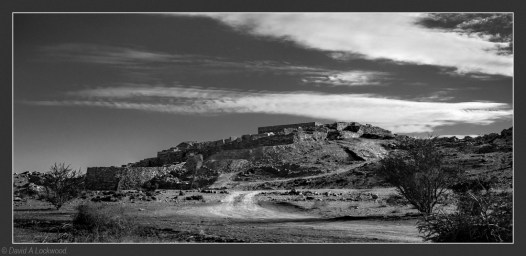 As the sun goes down – in need of a camp site……
 As could be seen from an earlier image – quite a climb getting here: definitely worth the effort.
 Looking towards the opposite hill from the one posted yesterday – two things about this: I made friends with the tree on the left, so more of that later because it was almost the same colour as the background hills.
The other is the tower tomb & alongside, the columned structure which seems oddly out of character !
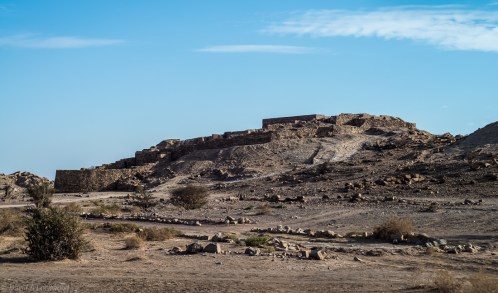 Just a quick image from my latest travels – the Archaeological site – Salut.
I have about 80 unprocessed images & 3 rolls of film, it will keep me out of mischief for a while.
Salut.
Off on my travels again – this time in search of the early Bronze Age site of Salut, some 20 kilometres south of Bahla & Jabrin fort.
A place I have known about for several years, but never visited until now; glad I left it so late because there has been extensive archaeological research carried out recently.
The site has been put forward for inclusion on the UNESCO world heritage list of sites with major historical interest.
It has had extensive human settlement in this area since at least the end of the fourth millennium BC to the present day. Observable by the large concentration of archaeological evidence that can still be seen. There are indications of very large settlements from the Bronze Age (c.3000-1300BC) and following Iron Age (c.1300-300 BC) probably through to the Middle Ages, with farming still carried on in 2015.
 Darkness.
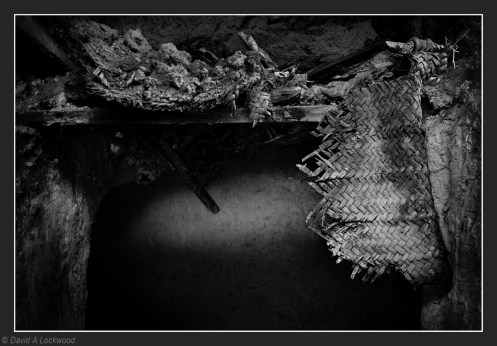 Abandoned & decaying.
 Ornate door – Abandoned building: Nakhal.
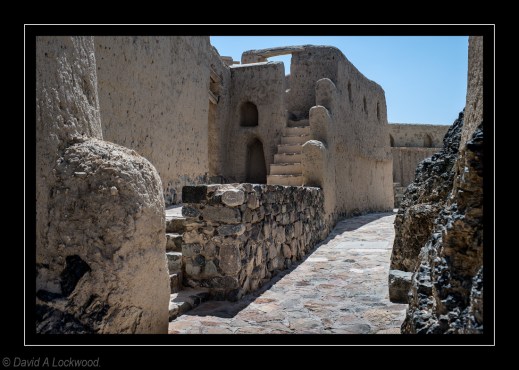 This shows the different construction techniques used (Mud, straw & rock) the mud brick needs constant maintenance, otherwise it slowly disintegrate in the rains.

 David A Lockwood