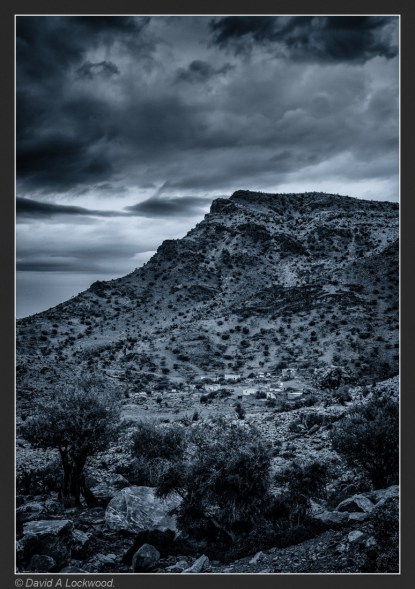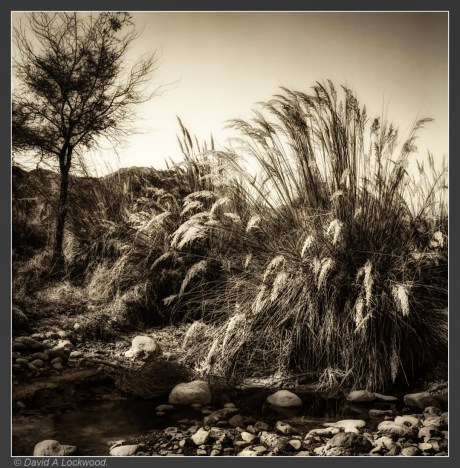
I left early this morning for Wadi Al hoqain: unfortunately, when I stepped out of the car & looked at the temperature, it was in the upper 30’s C.
with rather high humidity.
Not as enjoyable as I though it would be…. hay ho, cooler days will be here soon. 😎
Month: Sep 2016
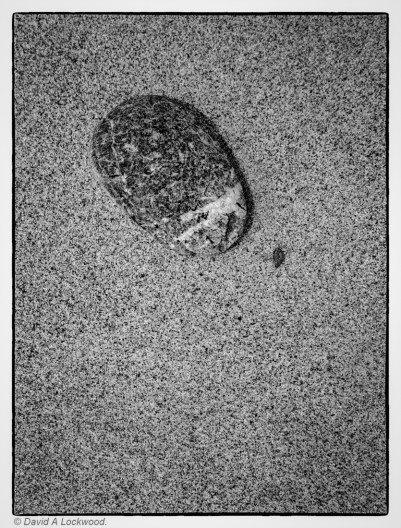
Two stones.
Nikon 35Ti: made on Ilford Xp2.
Each man has his own preferences:
All things seek their own companions.
I have come to fear that the world of youth
Has no room for one with long white hair.
I turn my head and ask a pair of stones:
“Can you be companions for an old man?”
Although the stones cannot speak.
They agree that we three shall be friends.
From a poem by Bai Juyi: 772–846, Chinese poet.
I posted a similar photograph of these two stones some time back: but with the big stone turned the other way. I prefer this one as it’s how I found them.
Music found on YouTube.
Gosh……. what more can I say.
How sweet the moonlight sleeps upon this bank!
Here will we sit and let the sounds of music
Creep in our ears: soft stillness and the night
Become the touches of sweet harmony.
William Shakespeare, The Merchant of Venice.
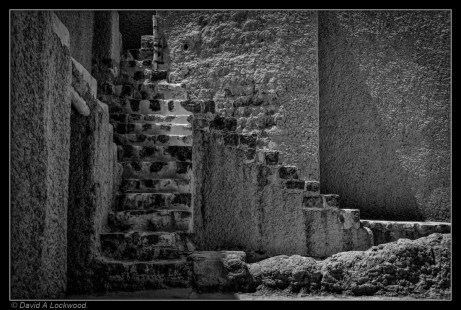
More steps.
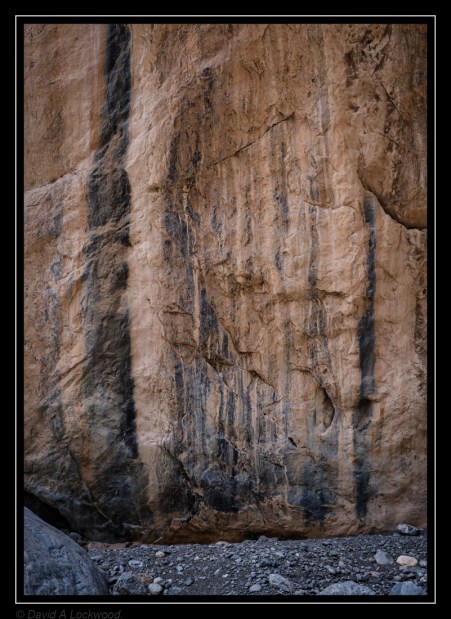
Unusual rock face.
Blocked Door.
Into another world.
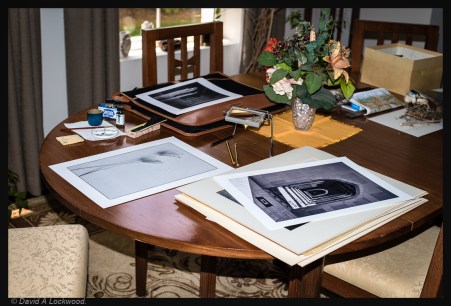
Retouching prints.
As you can see, I have a bad habit of taking over the dinning room table when retouching photographs: side light from the windows is good (my excuse anyway) which is a must.
As most of my work is on matte fibre papers (even my inkjet prints are matte papers mostly) I can use a number of different spotting mediums.
Spotone dyes are (were) the best IMHO but Marshalls are now the only archival liquid dye I know of. Two other methods can be used with good results: a range of artist quality pencils & the Edward Weston use of ink & gum arabic. For this I use Japanese ink stick and varying amounts of the gum arabic; depending on how glossy the paper surface is.
Ink jet prints will sometimes get the odd white or pale spot that went unnoticed on the screen (especially in high-key images) they can be retouched using the same methods used for fibre prints. Yes I know I could just reprint, but sometimes I won’t notice the fault for several days.
It could also be that I have developed a parsimonious reason; the cost of Ilford fibre paper is not cheap now, neither is good inkjet paper. If the retouching is done well enough, it will never be noticed when the print is behind glass.
Two things from the above: a tip from my wife (an artist who uses both watercolour & oils) is, look at the image upside down in a mirror. The other being, leave a print where you can see it on a daily basis: both remove the image from the minds eye, one then looks at it with a fresh mind-set.
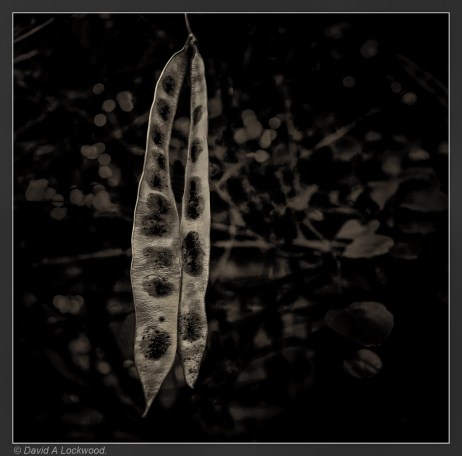
Grass Seeds.
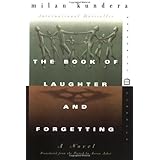
Reading: The Book of Laughter and Forgetting by Milan Kundera.
The Book of Laughter and Forgetting by Milan Kundera.
(Click the book for a link)
Two quotes from the book:
“The struggle of man against power is the struggle of memory against forgetting”
“Children, Never look Back!” and this meant that we must never allow the future to be weighed down by memory. for children have no past, and that is the whole secret of the magical innocence of their smiles.”
George Orwell gave a similar warning in his novel ‘1984’ the only thing he got wrong was the date !
“And when memory failed and written records were falsified—when that happened, the claim of the Party to have improved the conditions of human life had got to be accepted, because there did not exist, and never again could exist, any standard against which it could be tested…….”
Stones on the beach.
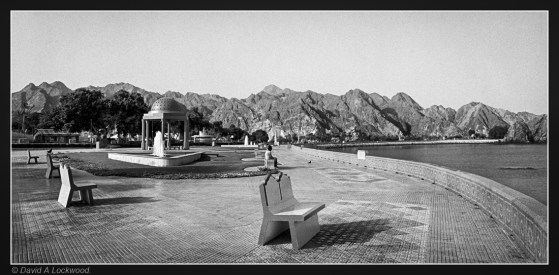
Muttrah corniche using my Nikon F. part three.
Muttrah corniche using my Nikon F. part two.
Muttrah corniche using my Nikon F.
Muttrah corniche using Nikon F. & Nikkor 25-50 f4 Ai lens.
I made a mistake when developing this film and did a pre-soak with water, shouldn’t have done with Microdol-X 1+3: you can see sprocket hole streaking on the first image. Funny that it only shows when I scan for the screen: prints are fine both digital & darkroom.