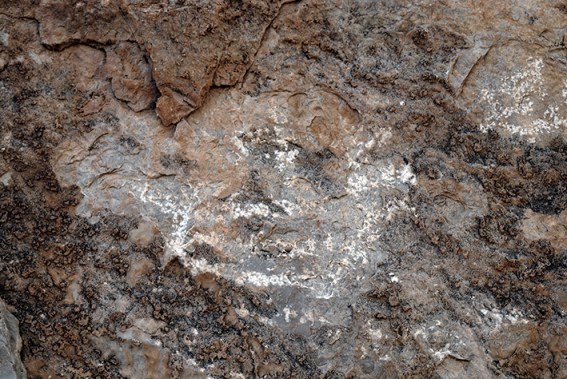
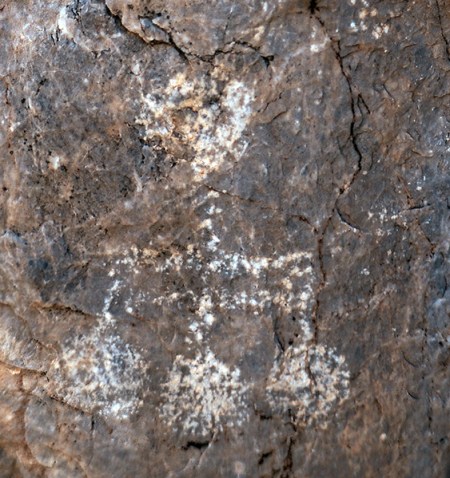
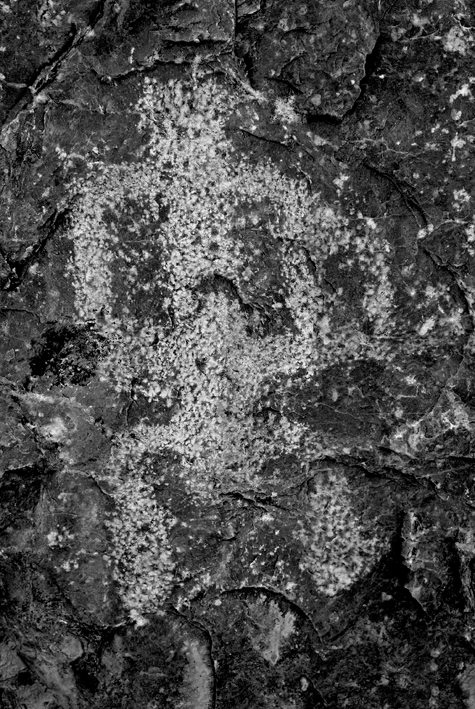
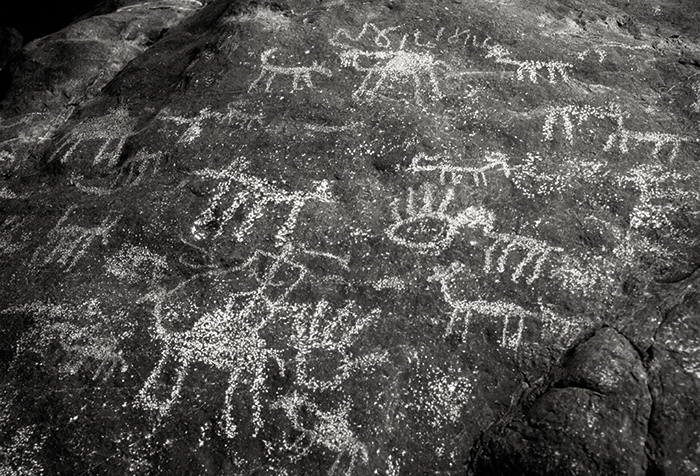
Rock Art at As Suwayh.

Update to the above:

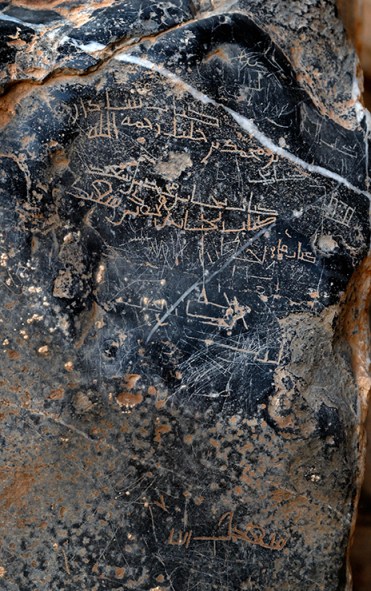
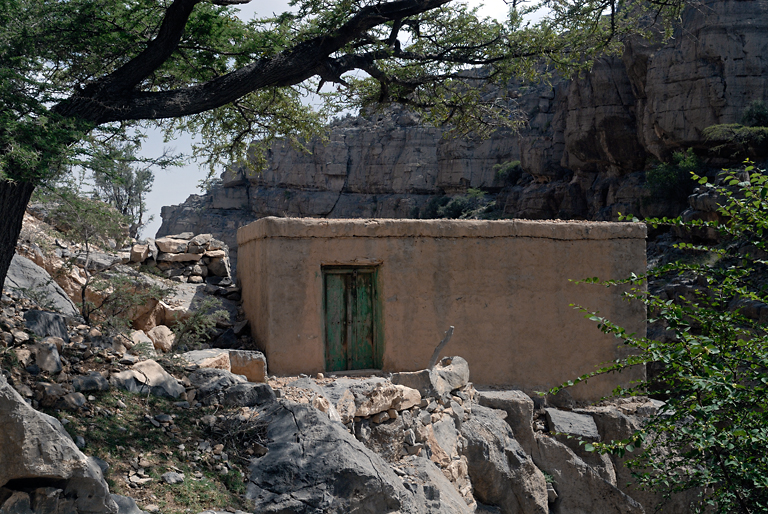
I have been doing a little research on the inscription and with the help of Omani friends and colleagues; we have a fair translation. Please correct me if I have got the translation totally wrong (I don’t think I have but who knows) 3rd of Dhu AlHijjah 1237 H is 23/08/1822 G.

 “On Thursday the 3rd of Dhu AlHijjah 1237 Hijri the scholar father of Nabhan. Jaiid bin Khamis bin Mohammed bin (?) bin Zaid bin Mansour Al Kharoosi Al Abadhi Al Omani has died. Written by his son Khamis”

 But why it was inscribed high up on a rock in the dark entrance to a narrow wadi, we are not sure, it could be that this is where he died….?

 He was a very famous Omani scholar of the Ibadi religion.

Back from holiday.

Although a little late – Happy New Year.

I have just spent a month in wind swept UK: cold wet and windy so nothing new .

The weather is definitely returning to what I remember in the 50’s and 60’s; where is ‘global warming’ – ho sorry climate change… when you want it?

Maybe it is the little ice age that was predicted by the experts during the 1970’s !

I now have the MF 23 for my Nikon F4 and although it was in ‘used condition’ Grays of Westminster  has sent me another Nikon item in mint condition, that can only be described as ‘new’ because one is hard pressed to tell it is not.

I have also decided to keep the D200 that I have been testing (playing with)  for a number of weeks now. I must admit that it is a nice camera to use – once I found my way around the menu settings.   One caveat, there is always one! ‘Blown Highlights’ I MUST watch the histogram.

Set-up as near as I can get to my F4, even down to using the Tokina AT-x 35–70 F2.8 manual zoom lens.

No more chasing around for colour chemicals (well maybe E6, although not much chance here in Oman…….! ) pity I cannot afford (justify) one of those digital to analogue (paper) enlargers that got a mention a couple of years ago.  DE VERE 504DS.

Rock Art near Qabil Al BuSaid.

Update:

This site should come under  the Ministry of Heritage and Cultures  protection, but probably like the one at Hasat Bani Salt; a fence will be put up and the site promptly forgotten!


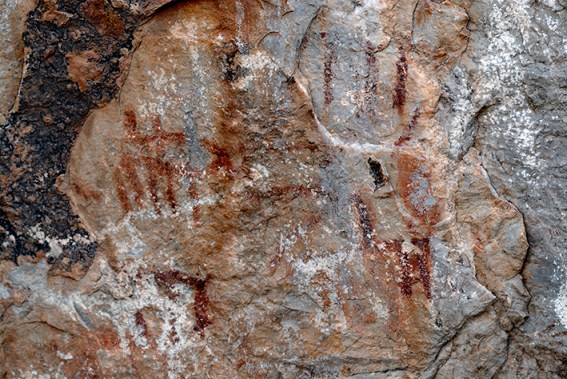
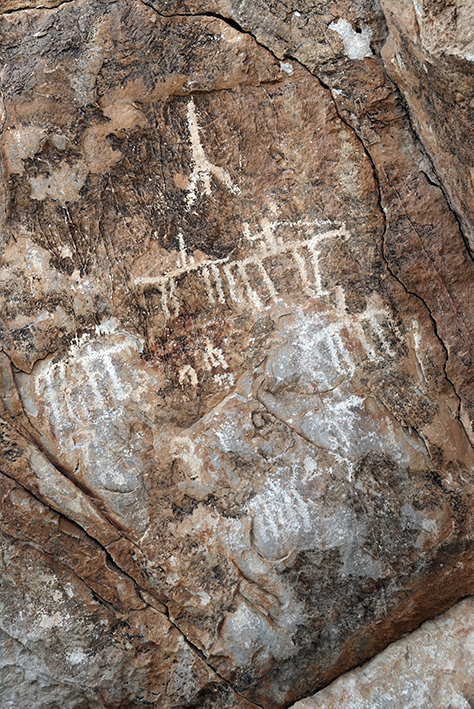
The following series of images are from a rock art site quite close to Qabil Al BuSaid in the Ash Sharqiyah Region.

A friend who lives in Al Mudaybi gave me directions to the area (also thanks to Google Earth which I used to pin-point probable rock outcrops) he said that there is some rock art that I might be interested in: how right he was….

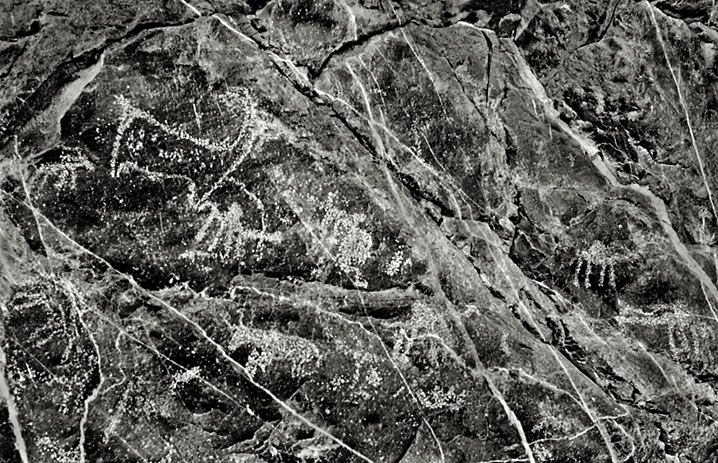
This is the first site where I have seen ‘Finger Painted’ art outside the Salalah area.

I will have to do some more research, because so far I have not come across any reference in the literature that I have, which refers to finger painting, other than in Salalah.

Note the Red Ochre coloured finger painting; some of the images have become very faint with age.

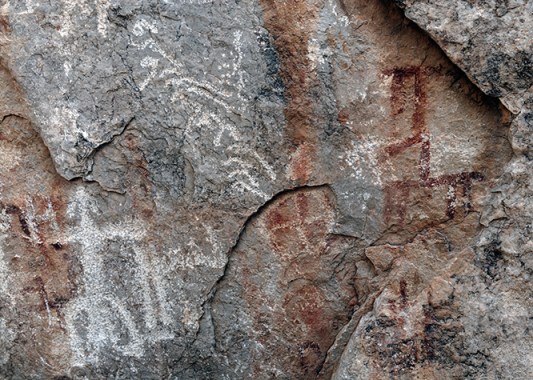
The above image shows a number of ‘Wusum’ or tribal markings: Dr Majeed Khan, a leading authority on Arabian rock art, has produced a book on the subject that is available for download from these two links Wusum-The-Tribal-Symbols-of-Saudi-Arabia-Part-1 and Wusum-The-Tribal-Symbols-of-Saudi-Arabia-Part-2 a very interesting read.

This looks like a 1600’s Galleon, but why would someone peck it out on a rock so far inland?

I need to go back! I did not get the focus quite right on this one…… That will teach me; when working in B&W I always take at least 3 just in case I mess up. Trying to conserve materials is never a good idea.

My Bronica S2a 6×6 camera.

The Bronica S2a 6×6 camera was made from about 1969 to 72. It was the successor of the S2. Having been given an improved film advance gear mechanism, resulting in fewer jams, usually the result of over enthusiastic film advancement.

This range of Bronica cameras had somewhat of a reputation for not being very sharp – even with the excellent Nikkor lens range that was provided.

It has been found that a number of things contributed to this problem:

The ground glass screen can be out of alignment and not allow sharp focus at the Infinity mark. Also to make matters worse, the foam under the screen deteriorates with age exacerbating the problem.

Film back inserts that would not seat properly.

Film roller problems with earlier backs which would allow the film to bow slightly. Later corrected by Bronica.

This all makes it sound unworthwhile bothering with these cameras which is far from the case: all it needs is a little care and attention. See this link for further information and corrective action. Link here. see below (as of 2014)

They have an excellent selection of Nikkor lenses, a large range of accessories and with the above problems sorted out, are capable of producing some fine images.

Further links of interest:

dirapon.be/bronica  Lot of very good images about these cameras (French, but if you do not have : still worth a visit)

camerapedia.wikia.com/wiki/Zenza_Bronica

medfmt.8k.com/bronica    This link is down as of 2014 I use the one below:

http://web.archive.org/web/20050117090649/http://medfmt.8k.com/mf/index.html

My Nikon F3 & F2SB.

My Nikon F2sb & F3.Thought I would just post an image of two cameras that I own.

The F2SB is quite rare in near mint condition, as it was only produced for one year (between 1976 & 77) so unfortunately gets the attention of collectors who push the price up.

It was (is) arguably the finest manual camera that Nikon has ever produced see Mir for more details.

The F3 was the last of the Nikon manual-focus cameras, it was produced  from 1980 to 2000 or maybe up to 2002; during that time there were at least four main variants that ended with the F3AF. The one I have is an early one without the ‘High Eye-point’ viewfinder, which allowed the entire viewfinder image to be seen from a distance. The only down side of this camera was the flash-mount which needed a dedicated F3 flash unit or a coupler AS-7: it took almost 20 years? before Nikon made the AS-17 coupler which will allow more modern flash units to be used; for example the SB27. see Mir

Incidentally, the lens is a Tokina AT-x 35-70 F2.8 zoom: their manual AT-x range is some of the highest quality lenses built, both in terms of sharpness and construction. As a side note: the AT-x designation was changed to AT-x Pro for this quality of lens when AF lenses were introduced by the company.

Oman Falaj.

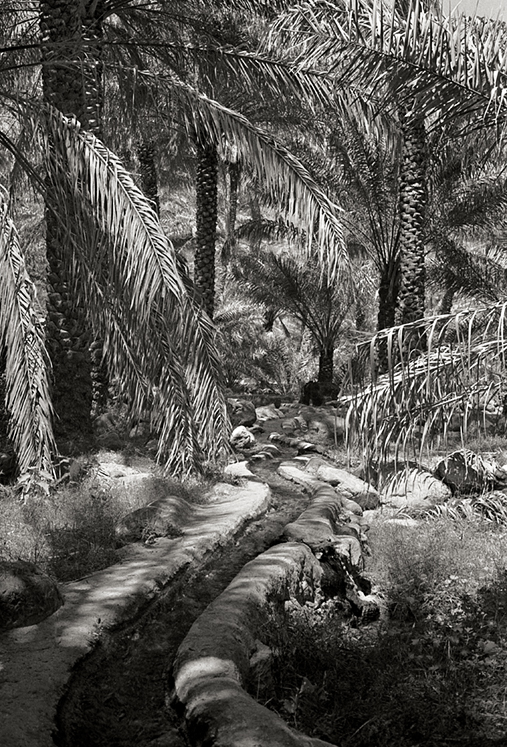
The Falaj is a traditional method of irrigation in Oman; some of which are quite basic as in this case, others can be complex with a very ridged control of how much water each individual gets.

Villages have a person who controls the amount of water supplied by using a form of ‘sun dial’ where the shadow cast by an upright stick times the amount  each member of the community receives.

When a Falaj is required for moving water long distances, it will quite often be under ground for most of its length; getting the gradient and flow rate is a very skilled job.

See these links for a far more detailed description:

The Falajs –  Written by Tor Eigeland.

The traditional Afalaj irrigation system.

Falaj – skilful Omani irrigation system

Michael Kenna.

This is dedication – a very interesting interview with one of the great landscape photographers Michael Kenna.

Michael Kenna video

(link for his site)

I have been lucky enough to obtain a couple of his books – Japan being one of them.

A selection of his images  that are beautifully bound and presented in a slipcase –  I  say I am lucky as his books are in great demand because of their quality; so prices can very quickly reflect that.

Nikon D200.

I have been asked by Dave of A Monkeyhanger’s motley medley whether the D200 that I have been playing with would be my Xmas present or was it just a passing fancy.

I am still not fully convinced that digital will give me any more than convenience. Film is so much more versatile, but maybe it is just an age thing, because I find technology getting in the way of just doing things.

Phones that do everything but make a clear phone call, not to mention being an intrusion: how many times do I get the comment “but I have been calling you” and people look so shocked when I say “but I did not feel like answering”

Every electronic item has ‘menus’ these days: what happened to well laid out buttons that were intuitive to use.

Cameras that just about do everything bar press the shutter……

And so it goes.

No the D200 will only be used when I have no alternative.

Sorry but he did ask!

Do go and look at his site as it has some wonderful images – see link above.

Nikon MF 23 for Nikon F4.

I have just ordered my Xmas present……

It is an MF23 multi control back for the Nikon F4 camera: I have been after one of these for years; they are very rare in good condition. Grays of Westminster has one (had one) in as new condition.

This adds a plethora of functions to the camera, I got one a couple of years ago in less than perfect condition but it developed a fault with the data imprint so had to be returned.

There are two functions that I like and a third that is useful now and then:

  1. In-between frame data print (F stop, Day month year etc.)
  2. Long-time exposure function.
  3. Auto exposure bracketing.

For more information see the Mir site on this link.

Rock Art near Al Hamra.

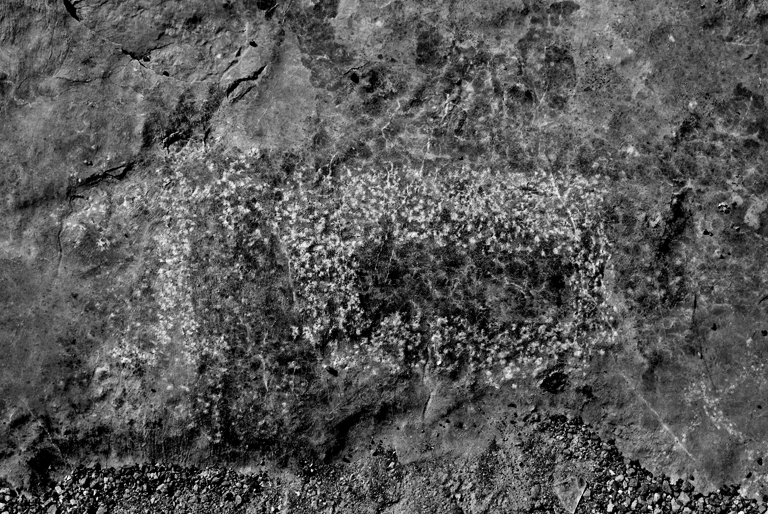
I am not sure what is being depicted here: a table, box or enclosure?

I could spend  hours (I have) searching the rocks in the Al Hamra area, there is so much rock art: some of it very faded. A pity because it just will not photograph and I am reluctant to use chalk, which has been used on some that I have found.

I will just keep trying different methods to bring out the detail; all part of the fun…..

On holiday for a month.

Time to escape for a month – buy all the photography stuff I cannot get here in Oman…….. Film, chemicals, paper, a tow bar for my new LR2 (Freelander) a £ for Rial thing, not that it cannot be got! (It is proving to be very good off road)  after my Tdi 200 I was not sure but…

I must admit the thing is performing really well, still a little worried about the clearance, but I do go where others fear to tread! I will probably get larger tires when they need changing.

The new ‘Hill decent / terrain control’ works as it says on the box so have not missed the transfer gears.

It also looks better than the Bread van LR3.

Jimmy Hendrix on the stereo – now that ages me!

Camel riding & Rock Art.

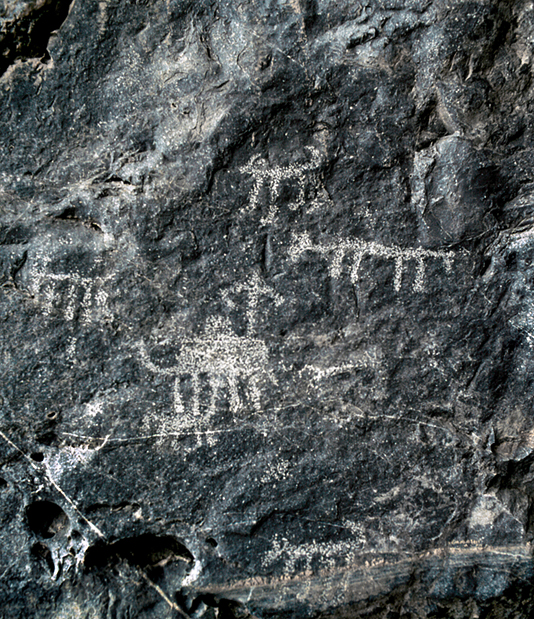
Two things I find interesting about this image:

There is older art behind the legs of the Camel.

Several instances that I have seen depict the rider ‘standing’ on the camel’s back when riding. Not being familiar with the finer art of camel riding (I only got on one for the first time a few months back – they are not my favourite animal. Especially as one stole newly purchased fruit from my Landrover at Masirah; anyway Horses are far more comfortable to ride) A good excuse to educate myself on the development of camel riding.

Rock art research.

The Origin & Evolution of Ancient Arabian Scripts  – by Dr Majeed Khan.

This is a link to another ‘downloadable book’ on the subject of rock art research: this time with emphasis on Proto – Arabic script.

He puts forward the idea that rock art was a precursor of Arabic script, considered a somewhat polemic conclusion by some: but if the Arab Bedouin used rock art as an eventual form of communication, then it is not unreasonable to conclude that it could develop into a proto – Arabic script.

If you do not have a Facebook account (I certainly don’t – Life style!) it can still be read on line.

Rock Art site near Al Wishal & llya.

The weather is not going to beat me! So an early morning start tomorrow in search of a possible Rock Art site. I mean early 0430 start.

A good friend has given me this location so with luck and some judgement (GPS & map) I should find it.

The site is near Al Wishal & llya.

Update:-

3 1/2 Klicks  from the site and the road/track was blocked with no way round – very frustrating, but some times this  happens when looking for a new place. So another visit and boots on the ground this time if necessary.

If these sites were easy then everyone would know about them and where would the fun be then…….

What to do when the weather is bad!

Summer and its hot, so what to do when the humidity and temperature become unbearable – stay in doors. That though, is an anathema……  as days away from work should be spent out of doors when at all possible (comes of spending far more time in an office than I really care for)

So I set about some TLC on my photographic equipment, cleaning, checking battery contacts, blowing out the film chambers / backs then selecting every single switch and button that I could find on all the cameras, at least two or three times. That includes all shutter speeds: it helps clean the contacts of any oxidisation that may have built up through lack of use or in some cases no use at all, as in the AF switch on my F4 for instance.

Clean the bags and in the case of my Billingham bags, leather wax on all the straps and fittings. I have two of their bags and the old saying ‘you get what you pay for’ has held true, they are as good as the day I got them: just look a little lived in….

I have a UNILOC tripod that has water proof legs due to the design: great in sand as well. But it is an item that can get forgotten in the cleaning regime. So a little! WD40 after wiping with a damp cloth has kept it in excellent condition for 18 or more years. These tripods are very hard to find now and the ones of a similar design do not have the same quality of finish, so I must make it last as long as I can.

Nikon F3.

The Nikon F3 that I have been using for a few months now has been great fun and a pleasure to use.

Here I am talking about a camera that was manufactured about 1981, as if it has only just come onto the market. That is the way it is with well made and functional cameras like the Nikon ‘F’ series. MIR on the F3

I was offered this camera by a friend a couple of years back – but as I was using an F2SB & F4, I hesitated or as my wife says (Dithered) but when I did say yes, he had lost or misplaced it. In the end it was found, so this time I bought it without hesitation and after a little TLC, it is proving to be as good as has been claimed by many users over the years.

I like the 80/20 centre weighted metering which along with the ‘sunny 16 rule’ has proved to be very accurate – I don’t miss the ’Matrix metering’ of the F4, probably because I have been using my Weston meter a lot recently.

So I will add my name to the long list of people who have recomended it and at the prices offered on the used market, you cannot go wrong.

Qalhat.

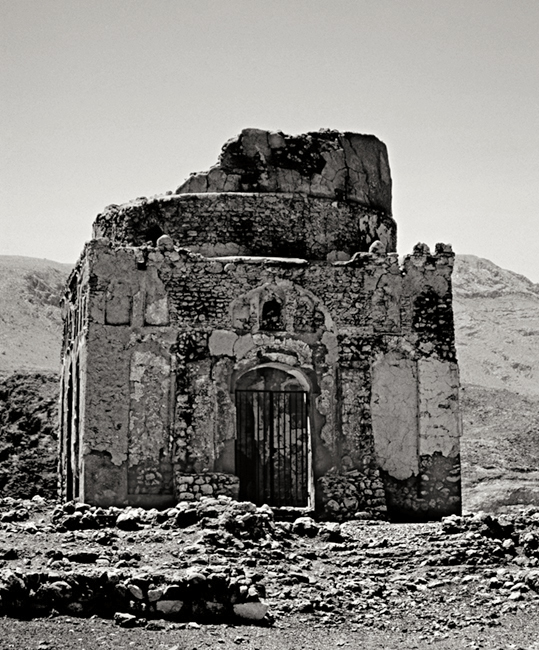
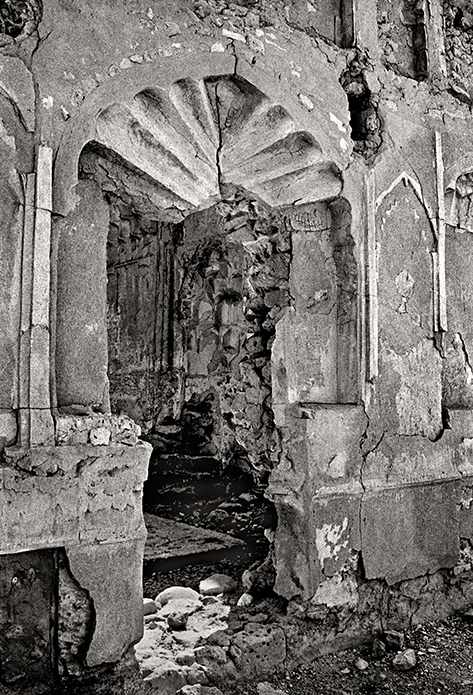
Mausoleum of Bibi Maryam.

Qalhat is about 20km from Sur, follow the new coastal road from Muscat.

The mausoluem built by the wife of Baha al-Din, Maryam, is thus call the Bibi Maryam mausoleum. Located on the coast near the town of Qalhat, described by Marco Polo and visited by Ibn Battuta in the second quarter of the fourteenth century.

Philip Ward’s Travels in Oman about Qalhat:

At the end of the fourteenth century Qalhat was struck by a heavy earthquake that destroyed many of the city’s buildings and falaj systems. In 1507, the Portuguese arrived in Oman ransacking Quriyat and then in the following year they destroyed Qalhat, killing many of the local population.

Portuguese quote:

“They did not stop to put fire to the building until it was completely burnt down….”

See entry World Heritage Centre from the link below.

http://whc.unesco.org