In search of the dead – Wadi Bani Auf.

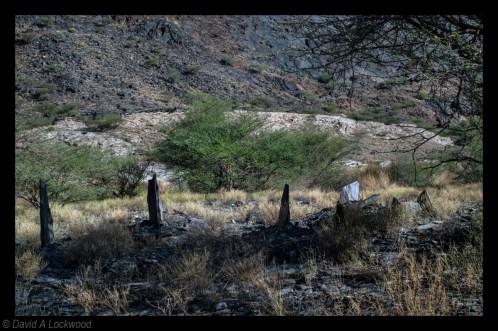
Bee-hive type tombs Auf damageBeehive type tomb archaeological site in wadi Bani Auf.

Damage carried out by road (dirt track) maintainers or the electricity contractors – either way very sad.

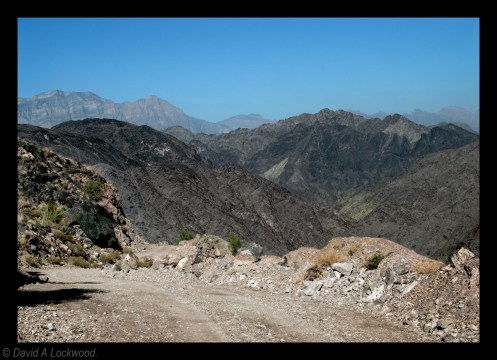
Bee-hive type tombs AufAbout six tombs further along the track from those above (the pile of almost black rocks centre of image)

Very early Islamic gravesProbably early Islamic – directly across the track from those above.

I find this continuous use of the same burial site quite common – time span can be 2 or 3 thousand years.

14th October 1066.

Senlac hill – the morning of the 14th October 1066.

The last uninvited army in England

“My son,” said the Norman Baron, “I am dying, and you will be heir
To all the broad acres in England that William gave me for share
When he conquered the Saxon at Hastings, and a nice little handful it is.
But before you go over to rule it I want you to understand this:–

“The Saxon is not like us Normans. His manners are not so polite.
But he never means anything serious till he talks about justice and right.
When he stands like an ox in the furrow – with his sullen set eyes on your own,
And grumbles, ‘This isn’t fair dealing,’ my son, leave the Saxon alone.

From: Norman & Saxon by Rudyard Kipling.

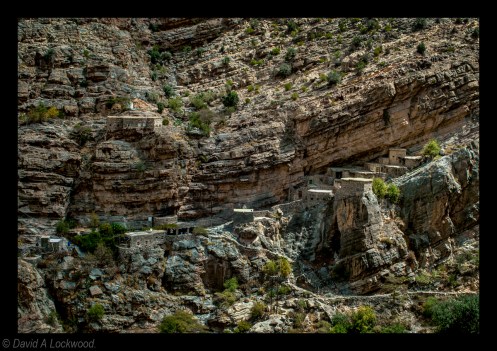
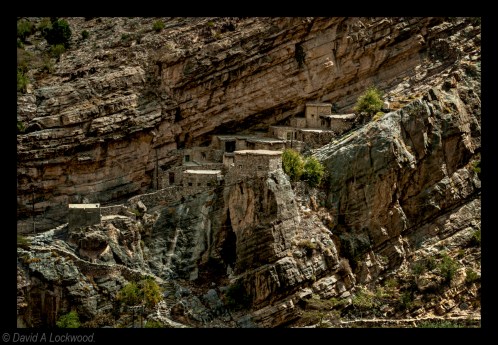
Saqrah – Jebel Akhdar.

Saqrah - Jebel Akhdar

Saqrah - Jebel Akhdar 2

Saqrah - Jebel Akhdar 3Saqrah

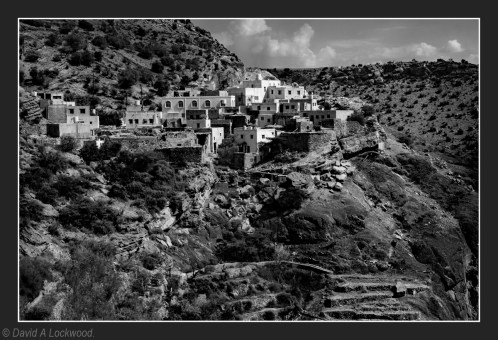
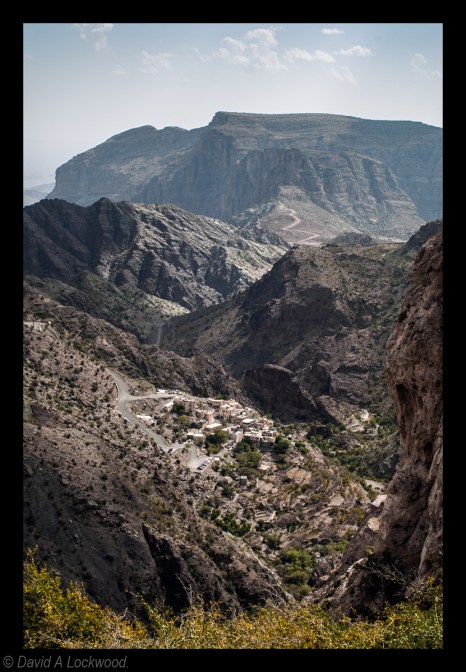
Hidden village on Jebel Akhdar that gets a mention on my Ordinance Survey map of 1968/75 but not on the 1961/63 version.
Said to have been occupied for at least a 1000 years; the existing families giving their occupation at about 300/350 years.
It is only reached by a somewhat precipitous path from one side of the gorge to the other: supplies are taken over by a cable slung between both sides.

Note: the electricity poles – even in these remote areas, power has been recently supplied (at great cost I would imagine ) giving quite a transformation, from what must have been a very tough existence.

Remote places like this gave water and security, which was of paramount concern until the middle 70’s

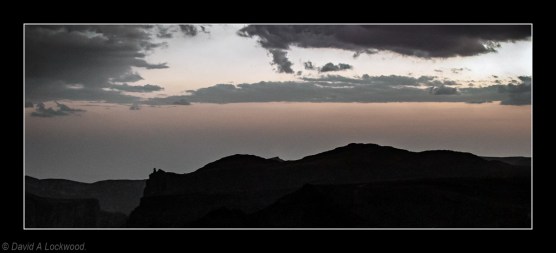
The Devil’s finger jebel akhdar.

The Devil's finger Jebel AkhdarThe setting sun has just dropped behind the range of hills – last night on Jebel Akhdar: the sticky up bit a third of the way in from the left is known as The Devil’s finger.

I have tried along with some friends, to find a path that gets me onto this prominent feature – other than the very long hike from right to left along the range of mountains. Unfortunately without success as yet; it’s the long way or not at all.

It has been raining for the last few evenings on this range of mountains, hence the dark clouds.

Muttrah.

Muttrah – a visit made because I should have gone into the jebel but was lazy, hit the alarm off button and then overslept…………

The place is only like this early in the morning,  by later in the day it will be a busy crowded area full of  merchants, customers and these days, tourists and one cannot move!

Muttrah or Al Dhalam (Darkness) Souk in probably one of the oldest market places in this part of the Middle East.
The city was walled, with two gates; Bab Kabir & Bab Mathaib, they were always guarded & by royal decree, all camels were left outside the gates, thus avoiding traffic jams ! 🙂 the best way in & out was boat.
Trade has gone on here for centuries with everything from dates, dried fish, limes, spices, coffee, cloth, and luxuries such as gold and silver: the list today is endless and all cards taken thank you very much…..!
In the past payment would be mostly the Maria Theresa silver thaler (first minted in 1751) and used right upto the beginning of the 1970’s. For larger transaction gold, along with the gradual introduction of all major middle eastern currencies and of course the Indian rupee.
The method of transaction/transportation tax was complicated; it depended on the item, quantity, quality and production area – actually it seems that at some time or other, just about anything one could dream up to justify tax, was !
Muttrah had the first hospital in the whole country…….. set-up initially in Muscat but almost immediately moved to Muttrah in 1893 ( a mission hospital by the Dutch Reform Church of America) it was fully functioning by 1909 and only closed once during the First World War.
There are many fine old merchants’ houses and at least one area (the Liwatiya quarter) that as a stranger one is always looked on with some suspicion even today: not in any hostile way, but if not accompanied by a resident one is usually kindly asked to leave.

From Wiki:

The size of the Al-Lawati population cannot be determined precisely, but is estimated to be approximately 80,000 people Most Lawatis reside in Muttrah, but some live on the coast of Al-Batina. Some Lawati families reside elsewhere in the Persian Gulf region such as U.A.E, Qatar, Bahrain and Kuwait.
Traditionally, Al-Lawatia have been known as prominent merchants on the coasts of Muttrah which lies 2 kilometers from Muscat. They have worked in the incense, jewelry and clothes business as well as in general trade. The community occupies a gated quarter of Muttrah known as Sur al-Lawatia. The quarter still boasts attractive houses with a unique Islamic architectural view and a large mosque known as Al-Rasul Al-Aadam Mosque or The Greatest Prophets Mosque.. The Sur has seen a major exodus in recent decades as Lawatis have moved to more modern neighbourhoods as a result of increasing development, the availability of facilities and growing wealth and business of the community.

Muttrah Souk No1All made with Nikon D200 & Tokina 35-70 f2.8 Ais AT-x lens.

Click on any image below for gallery view.

THE SHAHNAMA.

“Listen: this story’s one you ought to know,
You’ll reap the consequence of what you sow.
This fleeting world is not the world where we
Are destined to abide eternally:
And for the sake of an unworthy throne
You let the devil claim you for his own.
I’ve few days left here, I’ve no heart for war,
I cannot strive and struggle any more,
But hear an old man’s words: the heart that’s freed
From gnawing passion and ambitious greed
Looks on kings’ treasures and the dust as one……..”

Abolqasem Ferdowsi, Shahnameh: The Persian Book of Kings

Wadi Tanuf – again.

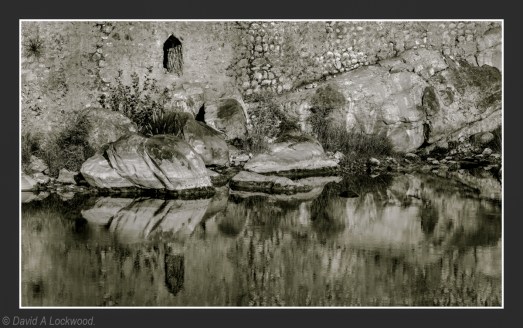
Trees against rock - TanufTrees grow well in Tanuf wadi; there is some surface water throughout the year & occasionally very deep pools can form, not to mention the dirt road being washed away.

P.S as of a couple of days ago, I could not get anywhere near this area because the track  has been totally flooded – so my return for more rock art will have to wait  😦

That’s how the light gets in.

The birds they sang
At the break of day
Start again
I heard them say
Don’t dwell on what
Has passed away
Or what is yet to be

Ah the wars they will
Be fought again
The holy dove
She will be caught again
Bought and sold
And bought again
The dove is never free

Ring the bells that still can ring
Forget your perfect offering
There is a crack, a crack in everything
That’s how the light gets in

Leonard Cohen.

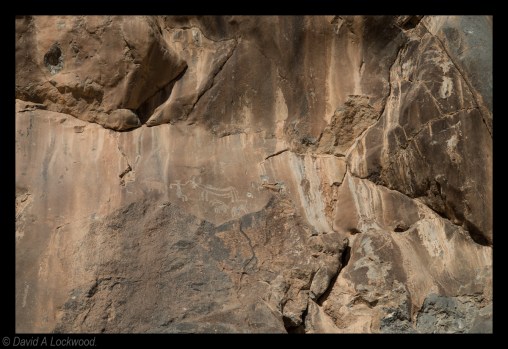
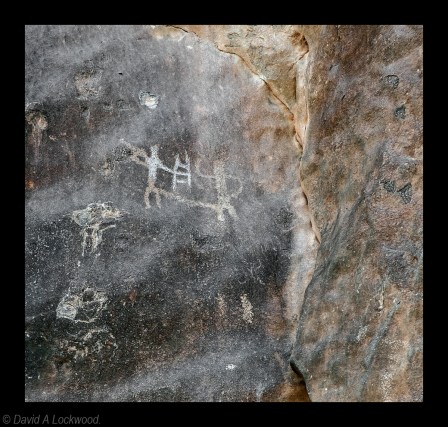
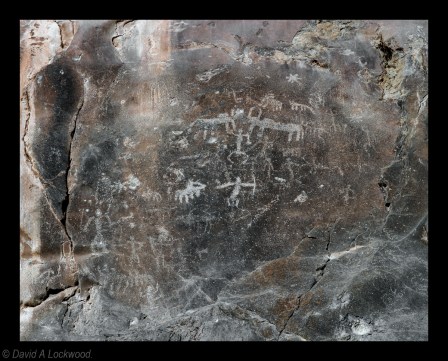
Newly discovered rock art in Wadi Tanuf.

Newly discovered rock art in Wadi Tanuf.

Rock Art TanufThe above image gives some idea of the erosion these images suffer – this has lost a large portion of the rock due to weather damage over many hundreds of years.

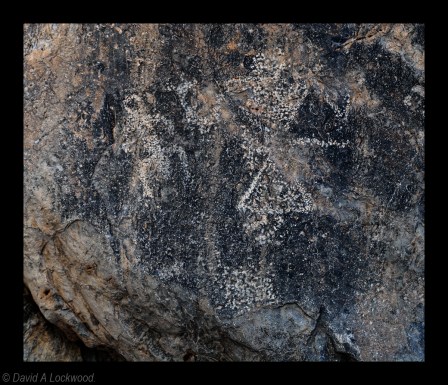
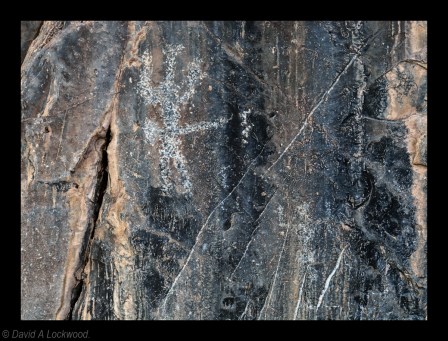
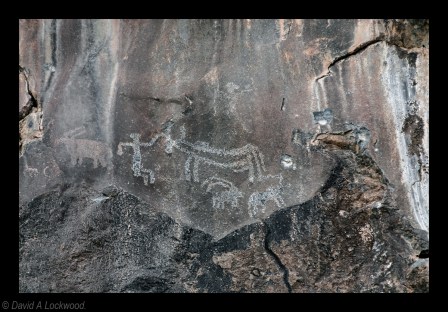
The images below have been colour shifted so that the subject is more defined. The first two from a rock about a third of the way in and the last three near where the wadi branches in two directions.

Several other rock faces have images but they were very faint and will need technical image manipulation.

Rock Art Tanuf No1The above triangular clothed Anthromorph is almost a mirror image of one found on a rock in a wadi near Nakhal, about 50km away as the crow flies: I wonder if it was made by the same person?

Rock Art Tanuf No2

Rock Art Tanuf No3

Rock Art Tanuf No4

Rock Art Tanuf No5