
 Into a gorge at Misfat al Abryeen.
Bananas, pomegranates, papayas, mangoes, citrus trees and palm trees.
Into a gorge at Misfat al Abryeen.
Bananas, pomegranates, papayas, mangoes, citrus trees and palm trees.
I am not sure how long this will stay – it is well worth the 29 mins spent listening and then go to the version below and be transported to another reality: I have 15 different recordings (obsession – no… I just love music that can make one stop & listen without distraction) my excuse anyway 🙂
The extended ‘C’ is delightful and without strain or vibrato in the version below.
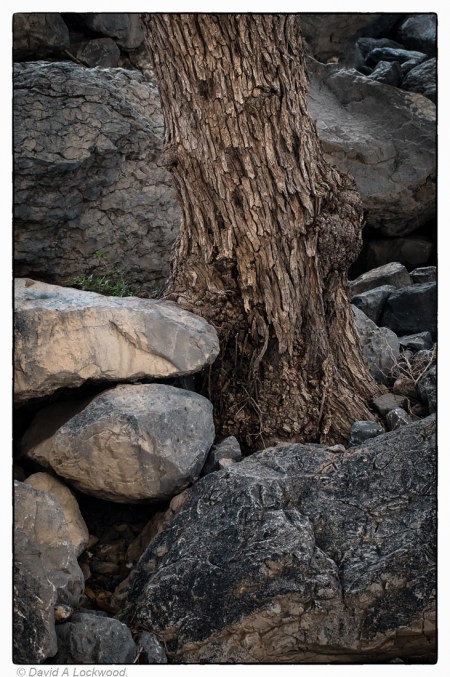 Tree trunk in rocks.
See update in my previous Nikkor Zoom 43 to 86 post.
I have been doing a bit of research about the history of this lens and in an article (Linked) Nikon do acknowledge the limitations of this lens.
One of the really good things this lens has, is a very usable ‘Depth of Field‘ scale not seen on a lot of lenses today: In fact gone never to be seen again on the ‘G’ type….. !
 Soft at the edges even at f8.
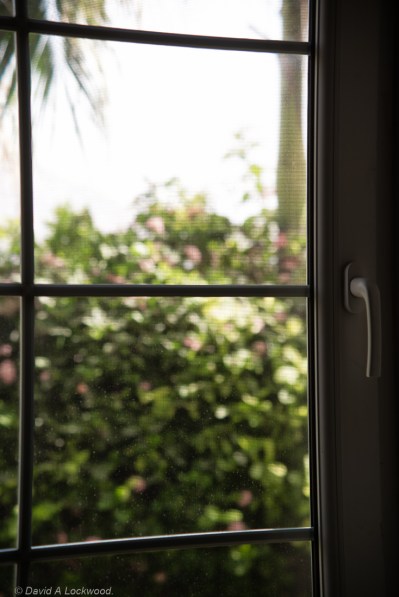 43-86 AIs Nikkor – 43mm @ f5.6.
Hummm…. Distortion is as bad as people say ! but for general use it’s probably ok – just no architectural images: I don’t want to hear it can be corrected in Lightroom !!! this is a film camera lens. Distortion like this is almost impossible to correct in the darkroom.
This is one of the last made, with a Sno: 1037665 which is an improved version. I wonder why Nikon thought it was ok, although the construction is of a very high standard which is missed with most of the AF lenses foisted on us these days.
P.S
Further reading about this lens.
In the Nikon article below, the operative word is “skilfully”
Nikon in their Nikkor – The Thousand and One Nights series (very interesting for those who use Nikon) do acknowledge its limitations : http://www.nikkor.com/story/0004/
“While there is no denying that its performance does not match that of its contemporary fixed focal length lenses or the latest zoom lenses, the 43-86mm instigated the development of the whole standard zoom lens genre, and deserves our esteem as the lens which more than any other popularised the use of zoom lenses by allowing the man on the street to experience the convenience and joys of zoom photography. It is still an eminently usable lens which if used skilfully can provide a unique and evocative quality unattainable with today’s lenses.
This lens, with its trademark array of coloured, engraved lines indicating depth of field over the zoom range decorating the lens barrel, is definitely one of the great lens to bear the Nikkor name”.
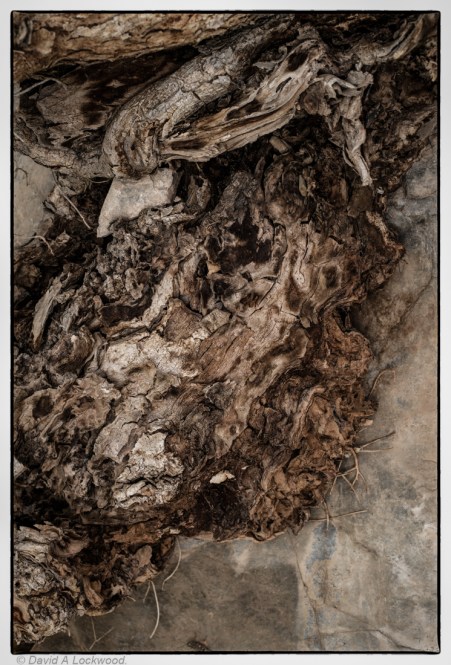 Roots & Rock No3.
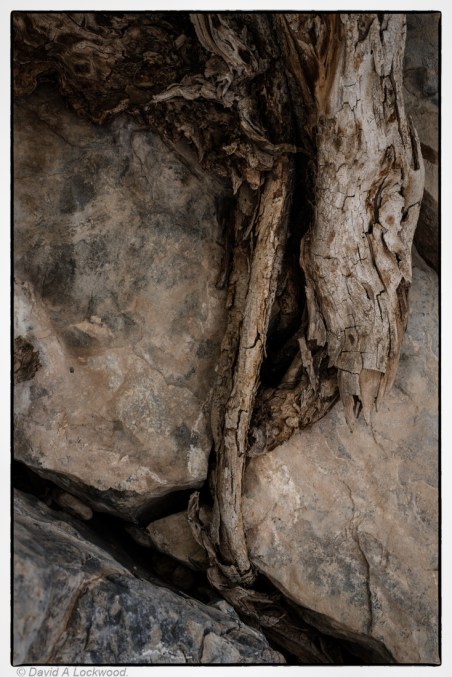 Roots & Rocks No2.
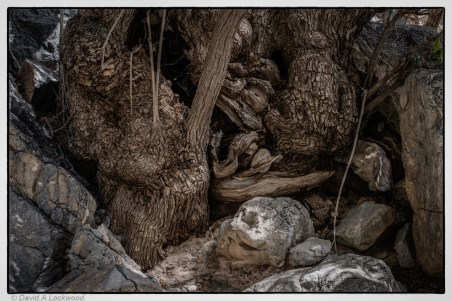 Roots & Rocks.


Archæological site: opposite the Village of Manal.
There was some interest in this site around 2003 if I remember correctly; when a dig was carried out and most of the tombs were enclosed by a chain-link fence, but behind this on a tributary of the main wadi are more tombs.
I am not sure of the age: but what information I could find, listed it as an Iron-age site, although some of the tombs could be reused from an earlier date.


Dead & Alive.
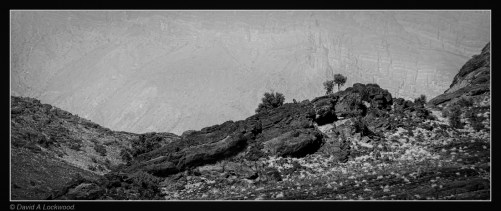 Rocky outcrop.
 Nikon F with Micro Nikkor 55mm f2.8 AIs lens on Fuji Neopan 400.
 Nikon F – Micro Nikkor 55mm f2.8 AIs lens.
The Spider’s Web
It hangs where daisies mauve and white
Stand dreaming in the morning light,
A spider’s web, a fairy thing
Whose threads to daisy-petals cling,
And quiver in the sunlit air;
And on the cobweb here and there
Round beads of amber dew are hung
By elfin fingers deftly strung
Along each gleaming silver thread.
The hairy spider-witch has fled,
And crouches in a huddled heap,
Beneath a daisy, half asleep.
And for this hour of sun and dew,
The web belongs to me and you!
Enid Blyton Book of Poetry 1934
 How to get an AF Nikkor 50mm f1.8 lens to engage with the metering system of a 1973 Nikon Ftn camera?
Easy ! If you can find the ‘Rabbits Ears’ as a spare part; a little difficult these days but not impossible, find a friendly camera repair shop.
Look at the F stop ring of most Nikon AF lenses (Pre ‘G’ type) there are two little dots at the f5.6 indication. These are where you will carefully drill two small holes, slightly smaller in diameter than the screws that should have come with the Rabbits Ears. They must be deep enough for the screws to be flush with the top of the ears pedestal, but no more…….. care is needed here ! I used some tape on the drill as an indication of the depth required and held the drill bit in my hand, not in any form of drilling machine.
Fit the Ears by placing a very small amount of contact adhesive on the base of the pedestal, then position with the step facing towards the front of the lens. The adhesive is only really needed so that fitting each screw is a little less fiddly; avoid over tightening these screws as they will have cut their own thread (if you got the diameter right) if not – don’t panic as a small amount of adhesive on the thread of each screw will take up the slack; but leave to dry for at least 24 hours before using the lens.
Voilà – an AF lens metering with an F & F2 camera system.
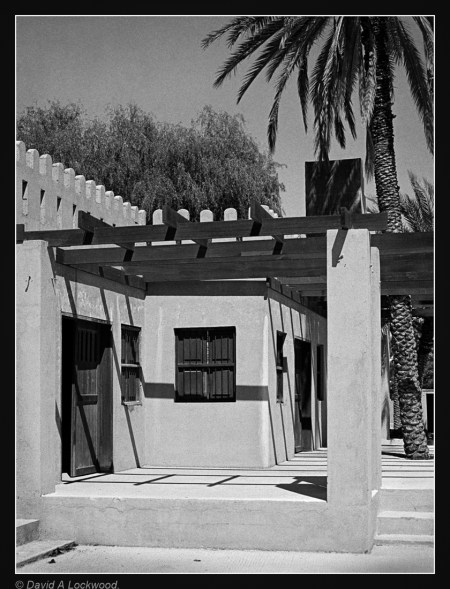 Shadows.
Nikon F with Tokina 35-70 f2.8 AIs AT-x lens.


A few odd looks (curiosity – not hostile) when I set-up my tripod for the second & third: an old camera that uses film & a tripod, not
a common sight these days in Muscat.
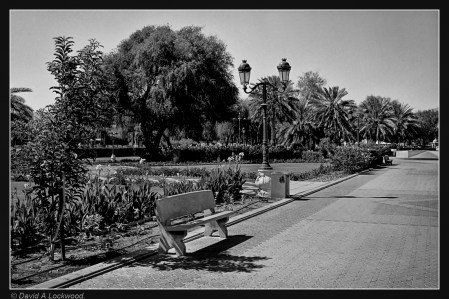 Nikon F – test film No2.
Qurum Park.
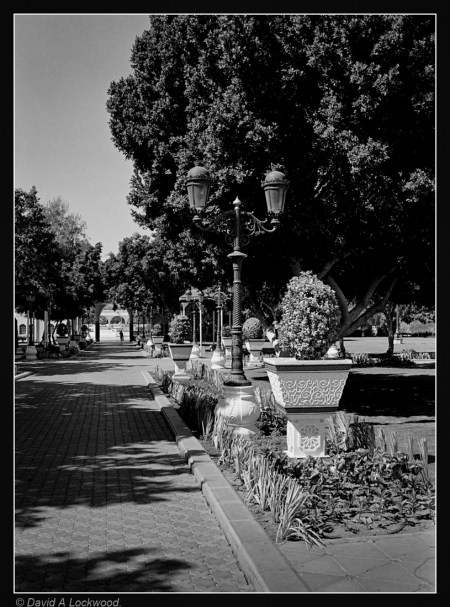 Fujifilm Neopan 400 @ box speed in Microdol-X 1+3. 22c for 15.5 mins with Kodak style agitation.
No filter, just a slight increase in contrast as compensation for image scan.
Ho & it was taken yesterday morning at Qurum Natural Park near Muscat – more of these later, as it is a lovely place for an
early morning walk & not a long drive from my house.
As an after thought for anyone interested: this was exposed using the camera meter, so I think my TLC has worked quite well.
 Decorative windows & lights.
I like this and for a Heavy Metal band, which is not normally my choice of music, it’s an exceptional version IMHO.
The accompanying video is not bad either 😉
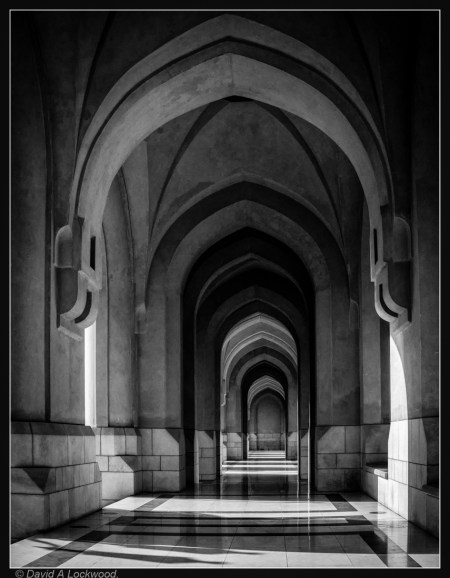 A little trouble with the perspective on this one – my eyes kept going squiffy.
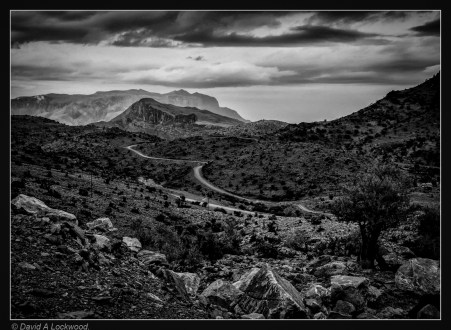 Mountain road – when I drive this route it’s mostly work related: well someone has got to do it 😎
 Tombs at Bat.
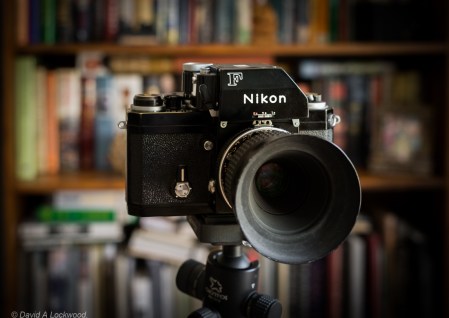 Ignoring the fact that I have more cameras than any sensible person should have – I have acquired a 1973 Nikon F (S/no says manufactured between JUL 1973 to SEP 1973) with an FTn finder.
Wanted one of these cameras for years, but would not (could not) justify the prices being asked – but this was a sensible price and more importantly, in good condition & with a working meter system: not bad for a camera nearly 43 years old ! Thanks Freyja 🙂
The only thing I found was that the meter seemed to be about one & a half stops out, but consistently over many different ‘f’ & ASA settings: which meant the ring resistor was probably just dirty. Or it had been modified to take the modern equivalent of a 1.35volt mercury battery (several methods available – all unknown on a newly acquired camera) suspicion aroused because it contained two mercury batteries that still indicated 1.3volts; how old were these I ask myself….. especially as they have been unobtainable for years.
As rumour has it that I am an electronics engineer, one of these heads should not be outside my capabilities for cleaning and minor adjustment; given the right documentation (find out were the access screws are hidden !!! ) under the top leatherette as it happens.
It turned out that at some point in time the battery-box -lead wire had corroded and this being replaced along with some judicious application of Isopropyl alcohol gave the whole thing a new lease of life, it now only reads about half a stop out compared to my Nikon D800.
All in all a happy bunny……….
 Unknown film found in my freezer – marked in my writing 100asa B&W exposed: put it through Microdol-x 1+3 and gave it Ilford FP4 times.
Used the first 3 frames for a clip-test in case I could tell from the markings what film it was (it had been loaded from a bulk roll and the canister was a reusable one) but no clue other than frame numbers. Looking at the subject matter, it was probably from the early 90’s prior to the Nizwa – Muscat dual carriageway as these palm trees are now protected by a flood defence wall.
I keep my films in plastic freezer boxes with a small packet of silica-gel, but this one along with a couple of E6 films, had escaped !
 David A Lockwood