
 Wadi Qurai – early morning walk last Saturday Feb: 14th.
Another Old Door.
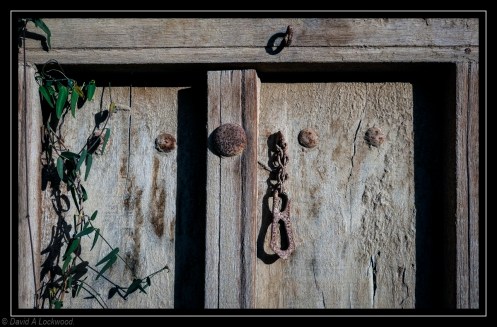 This is what comes of visiting old abandoned villages – doors & more doors 🙂
Juniper tree – Jebel Shams.
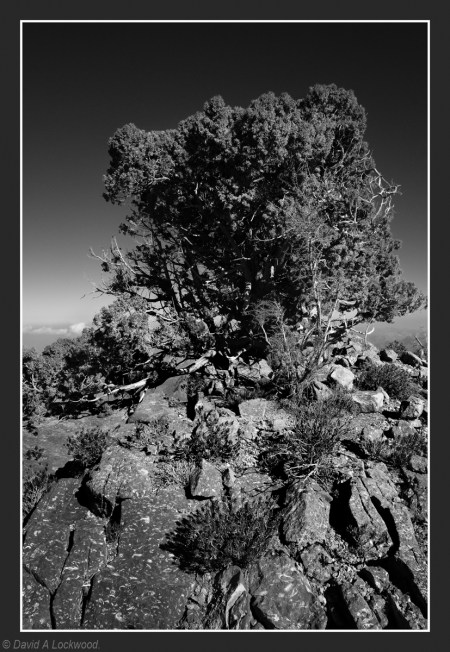 The Juniper has done very well this year – lots of new growth, helped by plenty of rain & some snow.
This one is at about 9900ft. Note the fossils in the rocks; from when this area was under the Tethys sea, its come a long way since then.
Old door fittings.
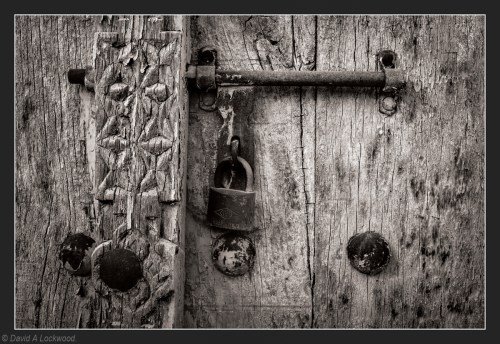 Old door fittings.
Wadi Mahram Archaeological site.
A very interesting visit, even though I got up at 0445 (time for coffee & toast) it also meant that I could avoid the early morning traffic.
Wadi Mahram has many archaeological sites – but as usual for Oman, very little published information (it can be found if one is willing to search the internet) I pity the tourists who may only have a short time here.
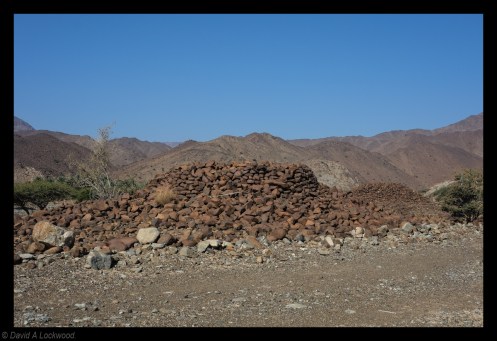
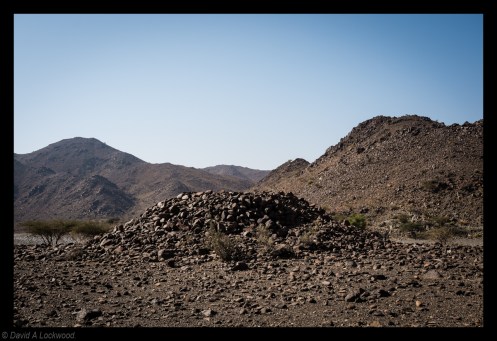

 All the above are (I think) Late Iron Age tombs,
 Early Islamic or late pre-Islamic (I am not experienced enough for a certain date) and as usual, very close-by the above cairns.
 Bulldozer damage – it is almost as if the driver does it deliberately !
Wadi Mahram.
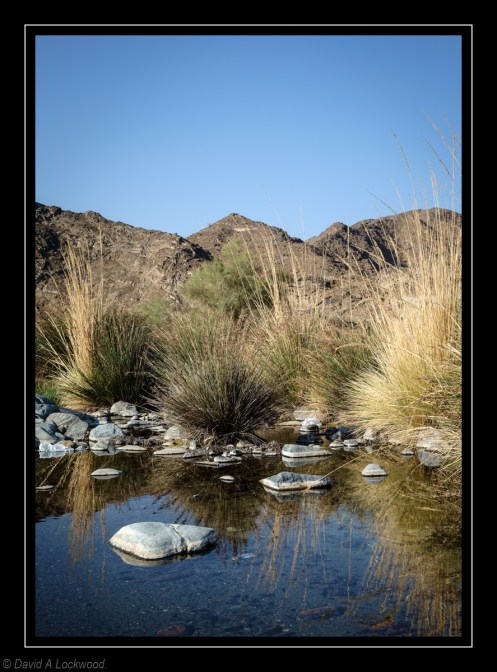
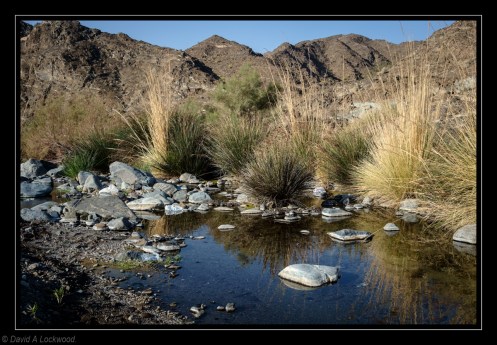 Amazing what a little rain will do – actually I hear there was a lot while I was away.
An early morning visit; it is a few years since I was last here and I was wondering how an archaeological site had survived the coming of electricity poles.
More on that subject later.
Date Storage – Al Hazm Fort.
 Nikon D800 at ISO 6400. Tokina 35-70 f2.8 Ais AT-X lens.
A Date storage area on the ground floor of Al Hazm fort.
The raised channels that can be seen in the image above were used for storing Hessian type sacks of dates. They were stacked one on top of the other and as the juice was forced out of the lower sacks, it ran through the channels into a catchment area.
This juice had a number of uses; a very nutritious food, medicinal qualities both internal as medicine & external in the form of salves, can be used as a sweetener like honey and I am sure in the case of Al Hazm Fort, a military use! Boiled and poured through the murder holes above entrances.
From that well-known on-line encyclopædia.
Dates have been a staple food of the Middle East and the Indus Valley for thousands of years. They are believed to have originated around Iraq, and have been cultivated since ancient times from Mesopotamia to prehistoric Egypt, possibly as early as 4000 BCE. The Ancient Egyptians used the fruits to make date wine, and ate them at harvest. There is archaeological evidence of date cultivation in eastern Arabia in 6000 BCE. (Alvarez-Mon 2006).
There is also archaeological evidence of date cultivation in Mehrgarh around 7000 BCE, a Neolithic civilization in what is now western Pakistan. Evidence of cultivation is continually found throughout later civilizations in the Indus Valley, including the Harappan period 2600 to 1900 BCE.
In later times, traders spread dates around South West Asia, northern Africa, and Spain. Dates were introduced into Mexico and California by the Spaniards in 1765, around Mission San Ignacio.
Fossil records show that the date palm has existed for at least 50 million years.
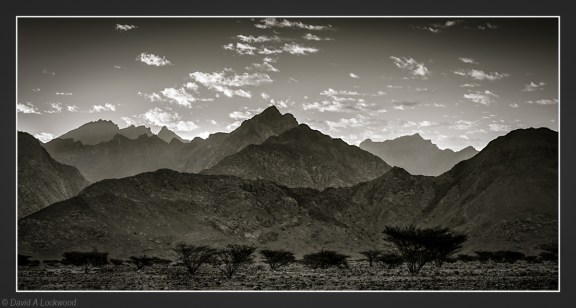
Sundown.
 Sundown.
Mountain Road.
 Mountain road from Al Hamra.
Foggy day on Jebel Shams.
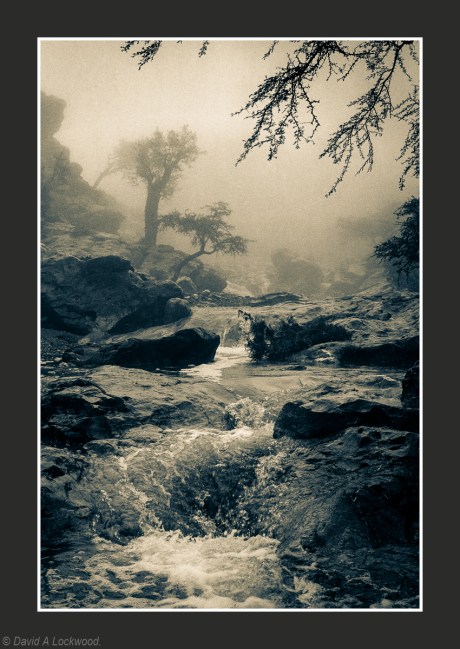 Nikon F4. Kodak T.max ISO 400 @ 320.
Back in the dark-room after a nice long (cold, wet & snowy) holiday.
“Their Finest Hour” – Sir Winston Churchill.
Sir Winston Leonard Spencer-Churchill, KG, OM, CH, TD, DL, FRS, RA (30 November 1874 – 24 January 1965)
What General Weygand called the Battle of France is over. I expect that the battle of Britain is about to begin. Upon this battle depends the survival of Christian civilisation. Upon it depends our own British life, and the long continuity of our institutions and our Empire. The whole fury and might of the enemy must very soon be turned on us. Hitler knows that he will have to break us in this island or lose the war. If we can stand up to him, all Europe may be free and the life of the world may move forward into broad, sunlit uplands. But if we fail, then the whole world, including the United States, including all that we have known and cared for, will sink into the abyss of a new Dark Age made more sinister, and perhaps more protracted, by the lights of perverted science. Let us therefore brace ourselves to our duties, and so bear ourselves that if the British Empire and its Commonwealth last for a thousand years, men will still say, ‘This was their Finest Hour.’
—House of Commons, 18 June 1940, following the collapse of France. Many thought Britain would follow.
The remembrance of history changes: once in a while it is worth re-setting the clock!
30th January 1965.
At the time, Churchill’s funeral was the largest state funeral in world history, with representatives from 112 nations.
Seasons Greetings.
I wish everyone seasons greetings and especially – A Happy New Year – thank you all for visiting.
I am now going to take my usual twice yearly departure from the world: avoid all contact with news, computers and work (never a complete success, but one can hope 🙂 ) see you in 2015 !
Remember ‘2001 A Space Odyssey’ ? (some of you must be old enough……) I remember watching it in the cinema and thinking how far in the future that date was.
It has now long gone and here we are approaching 2015, how the world has changed; I am not sure I can honestly say for the good. We have all this new technology, but that has given us such things as ‘rolling news’ when disaster became entertainment (don’t even think about the video game approach when reporting war) it has trivialised death.
So, once in a while I escape and reset my equilibrium; it helps me view the world with less pessimism (a pessimist is only an optimist with experience) so hope for me yet.
On a brighter note – with luck WordPress will have stopped all these changes that have bedevilled us and we will have a change free year (I see four-legged pink things flying by and it’s not the Guinness!) we can but hope.
I think I will take my copy of 2001 with me on the plane and wonder, what will happen when we eventually find a real TMA.1. that should put the cat among the pigeons……
Leaf & Flower.
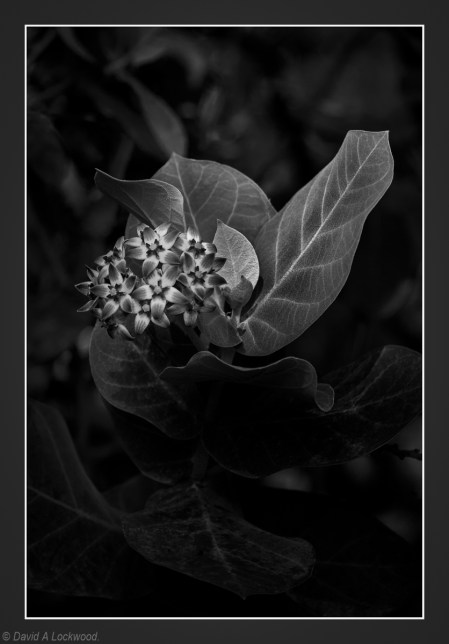 Leaf & flower
New beginning.
 New beginning .
The need for peace & tranquillity.
One of his students asked Buddha, “Are you the messiah?”
“No”, answered Buddha.
“Then are you a healer?”
“No”, Buddha replied.
“Then are you a teacher?” the student persisted.
“No, I am not a teacher.”
“Then what are you?” asked the student, exasperated.
“I am awake”, Buddha replied.
Palm frond tray.
 Palm frond tray.
Another from Nakhal Fort.

 Nakhal Fort.
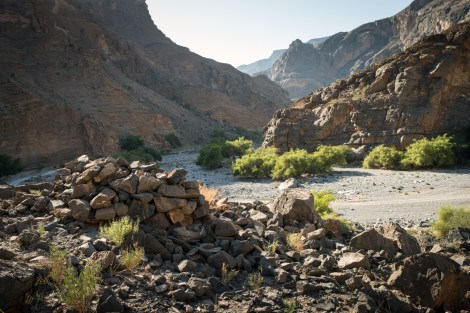
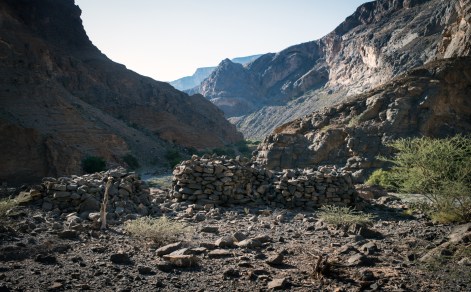
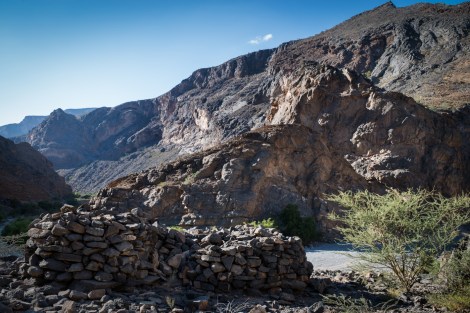
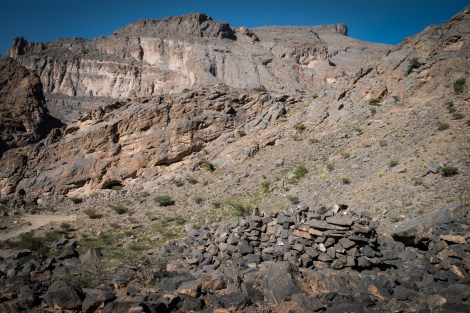
In search of Hafit Tombs.
These are from another visit I made to Wadi Tanuf – this time looking for the tombs which are probably associated with the rock art I posted a couple of weeks ago.
If I get my time lines right – they are probably Hafit/Umm An-Nar: 3000 – 2000 BC.
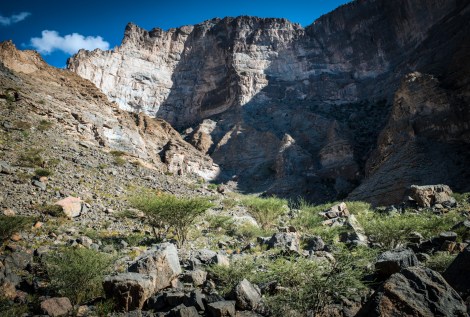
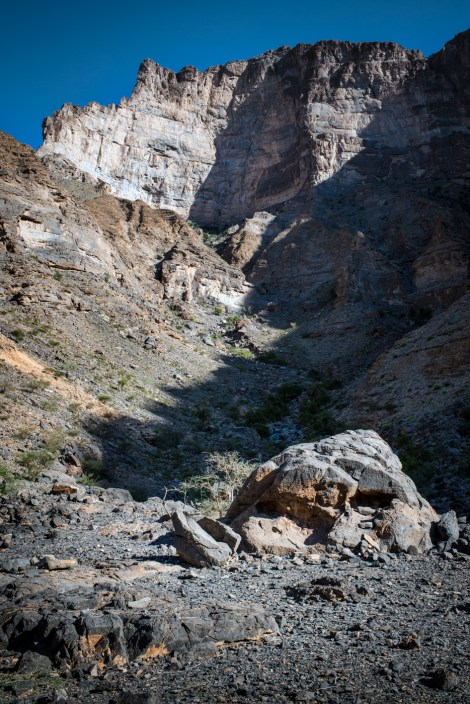
Misty mountains No2.
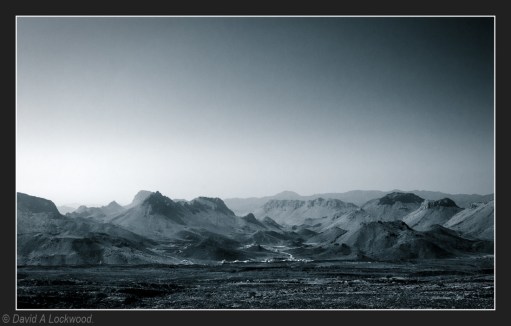 Hamra Al Abryeen – Bilad Sayt rd
Misty mountains.
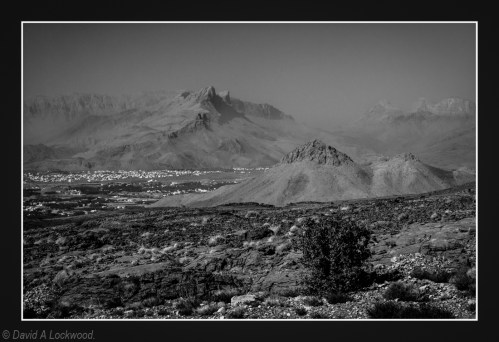 Misty mountains.
Wadi House.
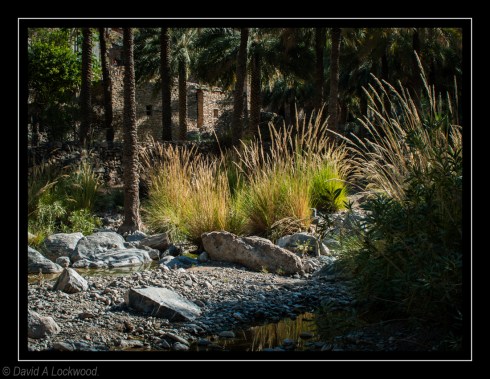 Wadi House.
Wadi Stream.
 Wadi Stream.
Palm Trunk.
 Neatly cut Palm trunk.
Fishermen shacks Masirah
 Nikon 35Ti – Tmax 100
Fishermen shacks Masirah Island.
Walk along most of the beaches in Masirah and eventually you will come across these shacks built of anything that can be scrounged; either from the sea or abandoned by the military.
It can be quite interesting rummaging around, looking at what has been used – oil drums filled with sand were quite popular after the departure of the RAF in the early 70’s.
I remember a rather large pile of abandoned materials disappearing within less than 24 hours after our American colleagues left, at the end of the ‘first Gulf War’ .
Mind you I did get rather a lot of ‘MREs’ or (meals rejected by Ethiopians) so should not be that critical of the local fishermen. 🙂
Masirah net floats.
 Nikon 35Ti – Tmax 100.
 David A Lockwood