
 One of a number of cannon on display.
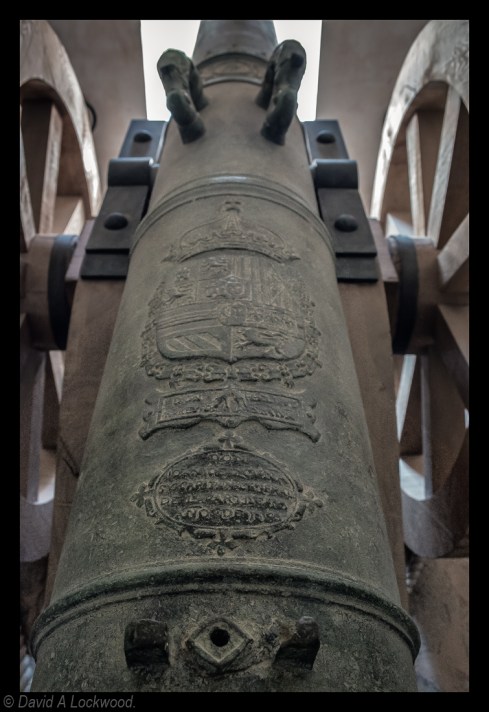 Rather worn with age; when new, there would be no doubt who cast this (Portuguese I think?)
One of a number of cannon on display.
Rather worn with age; when new, there would be no doubt who cast this (Portuguese I think?)
 They maybe decorative but – once closed………
 Busy weekend as this was my last trip before I step-off the planet for a couple of days short of a month (holiday time soon 🙂 ) anyway it was 49 degrees C when this series was taken……. enough is enough: mad dogs & Englishmen come to mind !
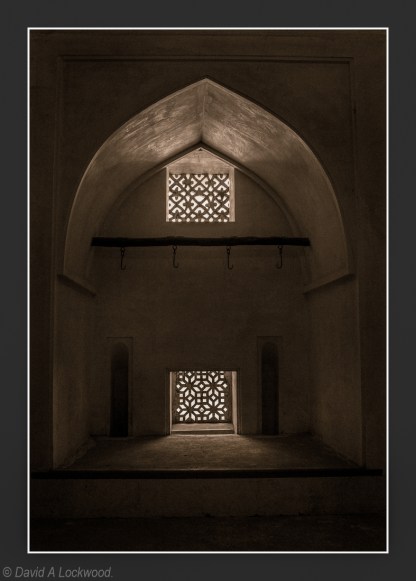 Red/brown tone for a change.
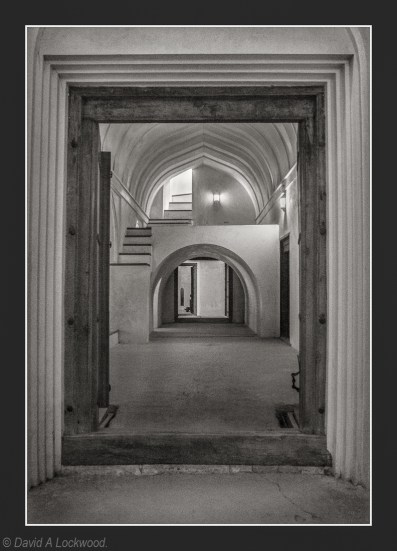 One of the many doors.
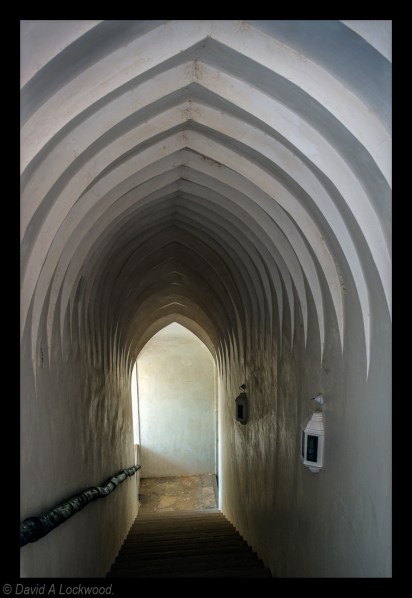 Interior passage -Al Hazm.
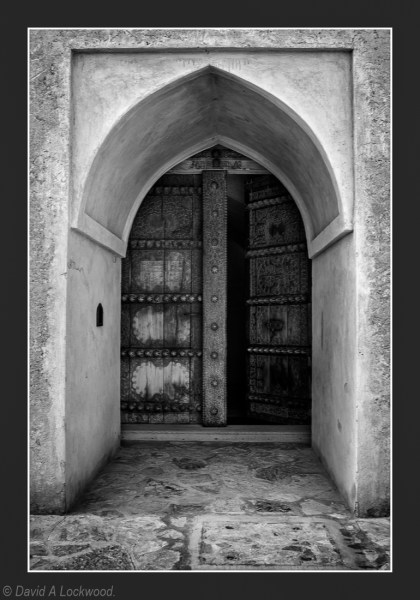 Entrance to Al Hazm Fort. (This one is a bit soft, using manual focus & the sun very bright: my excuse – need to go back! 😉 )
Al Hazm Castle – according to the Ministry guide-book.
Located in Al Hazm town in the District of Rustaq. It was built by Imam Sultan bin Seif the 2nd in ( 1123 A.H.–1711 A.D.) when he established Al Hazm town as a capital of Oman instead of Rustaq. The Castle is distinctive from other Omani Castle and forts by its magnificent shape and massive building. It contains the tomb of its builder – Imam Sultan bin Seif the 2nd.
The builder Imam Sultan bin Seif was the 5th ruler of the Ya’rruba dynasty of Imams; he was the grandson of the Imam (of the same name) who made the Portuguese an offer they could not refuse! they all left, after many years of attempting to subjugate the people.
This Fort is an outstanding example of Omani Islamic architecture and was built for defence against cannon. The roof is built on columns, and contains no wooden supports. Its walls can withstand the impact of cannon balls due to it being at least 3m thick at any point.
It has the outside appearance of being far larger than it really is, helped by tall walls and two towers, one on the Northwest corner & the other on the Southeast – giving almost 360 degrees of cover.
Another interesting fact; it used an advanced form of vaulted arch which was a major departure from the use of straight lines, along with post & lintel construction as had been seen in most of Oman’s earlier defensive constructions.
There are the usual defensive details such as multiple offset doors, pits just after a door (covered with planks of wood, removed when under attack) murder-holes above doors (think boiling oil or fire) along with hidden escape passages.
I have visited this fort on & off, many times as it not only has some of the most friendly and helpful custodians, but its main feature is the impressive collection of cannon.

 Very distinctive trunks on these Palm trees – from my garden.
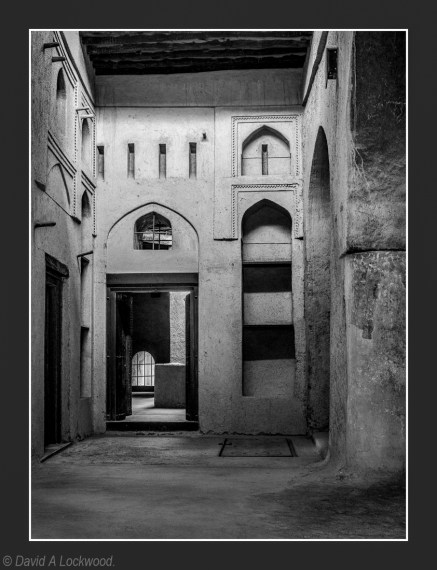 “Would he tell me that this door leads to the entrance?”
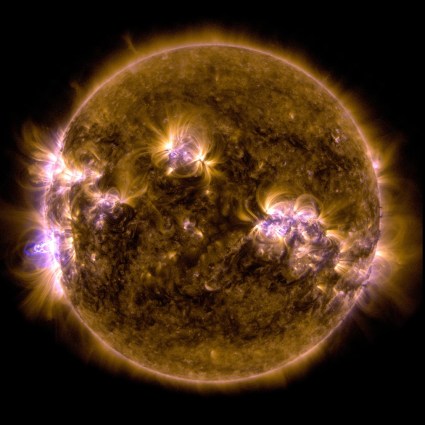 Credit: NASA/SDO
Nikolaus Kopernikus (Copernicus) 19 February 1473 – 24 May 1543)
De revolutionibus orbium coelestium – Copernicus:
In which he asserted that the universe comprised eight spheres. The furthest consisting of fixed stars, with the Sun motionless at the centre. The planets then known, revolved about the Sun with each in its own sphere: Mercury, Venus, Earth, Mars, Jupiter & Saturn. The Moon, revolving in its own sphere around the Earth. What appeared to be the daily revolution of the Sun was infact the Earth’s daily rotation on its own axis about the sun.
He may have been wrong with his ideas that the orbits of celestial bodies must be perfect circles, but his change from geocentric to a heliocentric cosmology helped move the views of science away from Aristotle’s theories and turned astronomy on its head so to speak.
People were not happy …….
Martin Luther was quoted as saying in 1539:
“People gave ear to an upstart astrologer who strove to show that the earth revolves, not the heavens or the firmament, the sun and the moon … This fool wishes to reverse the entire science of astronomy…….”
 Maybe the builder should have checked the blue flame more closely, or stuck to drinking water !
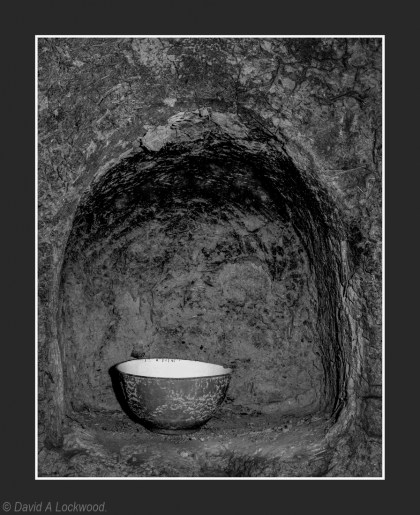 Nikon F4 with 50mm f1.8 D AF Nikkor lens.
Printed with the EL-NIKKOR 50mm f/2.8N on Ilford M/G IV gloss.
The black at the top of the arch is from numerous oil lamps being placed on the shelf – think ‘Aladdin’s Lamp’ style.
A busy little Bee in the darkroom – as I have the box of paper out of the freezer 🙂
Another reprint from a few years back: on Ilford M/G IV gloss – T-max 400 in T-max 1+4.
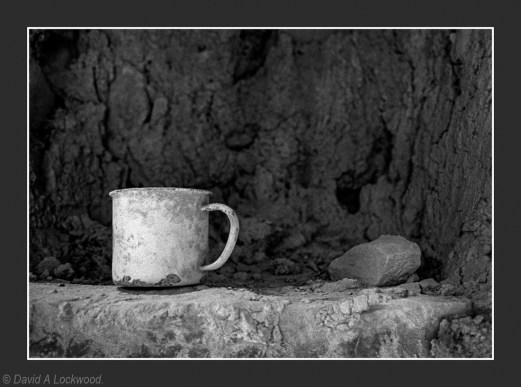 Nikon F4 with 50mm f1.8 D AF Nikkor lens. Printed with the EL-NIKKOR 50mm f/2.8N
There are several abandoned or semi-abandoned villages in the mountains around Khasab: a large town in the Musandam peninsula.
Many happy hours exploring the area and finding such things as this old grindstone.
Reprint from a few years back: this time on Ilford M/G IV gloss – T-max 400 in D76 1+1.
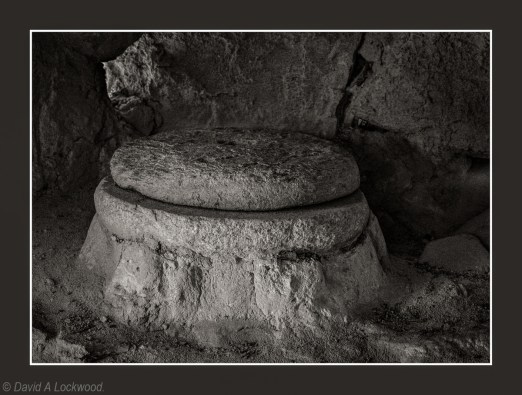 Nikon F4 with 50mm f1.8 D AF Nikkor lens.
 Shadows.
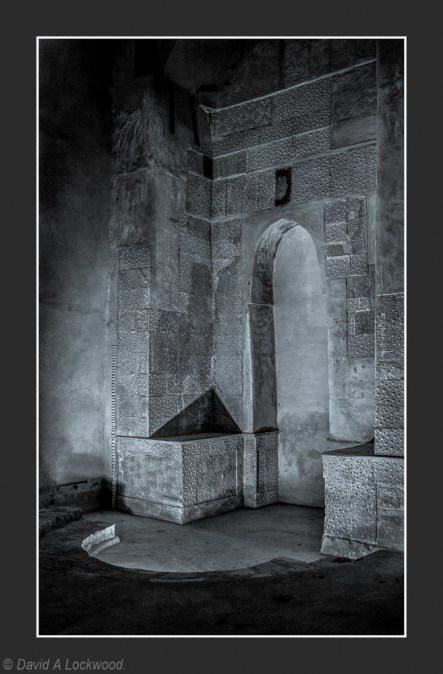 Arch with decorated stone work.

For a change, I thought I would give some information about the two enlargers I use.
For negatives from 6×9, 6×7, 6×6, 6×4.5 and 24×36:
Meopta magnifax 4:
In comparison with many other enlargers on the market this was one of the best in terms of value for money, quality and especially handling. It may look rather functional but that actually is one of its virtues, it does the job with the minimum of fuss.
It has an interesting addition in the form of ‘split-line’ focusing which actually works very well. Especially for a test print when focusing is not needed at grain level. You just pull out the carrier halfway and see two lines, join them using the focus knob to get one line and everything is sharp. Another good feature is a neutral density filter which is good for reducing the light output, letting one use the optimum ‘ f ‘ stop on the enlarging lens.
It has a choice of three heads, B&W condenser, a Meograde for variable contrast paper and the colour head 3 for all film types, this is the one I use. There are two (more if you include specialist light sources) generally used types of light output, Condenser and Diffuser, I prefer the Diffuser as it uses a ground-glass screen in the light path producing a nice even light across the negative; condenser enlargers achieve this using condenser lenses. There is a debate about how each type produces different contrast levels for a given negative, but I personally have never noticed much difference.
The late Barry Thornton in his book ‘Elements: The Making of Fine Monochrome Prints’ 1993. mentioned that it was one enlarger he never regretted buying for both professional & personal use. As I had enjoyed reading the book and found it informative and entertaining; I looked out for one of these enlargers. Never in almost 20 years has it let me down.
For negatives from 6×6, 6×4.5 and 24×36:
Durst M605:
Although this enlarger was built with the amateur market in mind, the Durst M605 is a strong, precise all metal design, built with the highest standards as was all their equipment.
It accepts negatives up to 6 x 6 cm and although the column is not tall, it is sufficient for making 12×16″ prints. A dedicated extension arm allows one to make 16×20″ prints but this needed to be purchased as a separate item. 😦
The enlarger head is of the diffuser type, the advantage of the diffuser head is the possibility of quickly switching from 35mm to 6×6 by just moving a lever and changing the lens of course. Enlarging lenses are a subject all of their own as the quality varies considerably and the most expensive are not always the best.
The other important feature you need is a glass negative carrier which both have. Don’t be confused by anyone telling you that glassless carriers are easier. Glass carriers require a little more dusting, but they hold negatives much flatter and that produces sharper images, especially with 6×6 or above. Plain glass is good, anti-Newton glass better; it avoids seeing the interference rings (Newton`s rings) produced when two flat optical surfaces are in close proximity, as they create interference effects associated with residual Fresnel reflection.
Both of these enlargers can be found on the used listings and at the moment are quite cheap. That may change in the very near future as more people take up or return to traditional film photography (as is the case with vinyl for example) and they said that was dead as well !
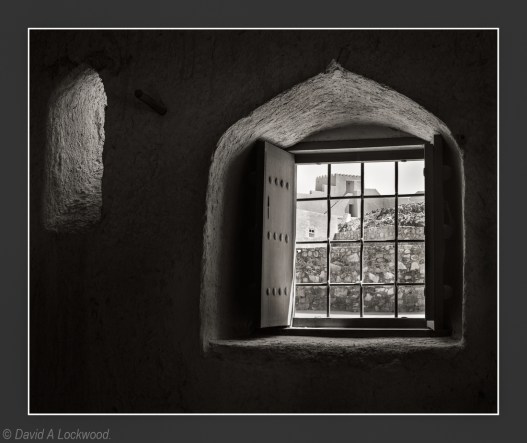 Looking out.
 The entrance – I think 🙂
P.S. the sloping walls you see in the above is not lens distortion – unfortunately for me, these are built by eye! which is why I always complain about the lack of straight edges.
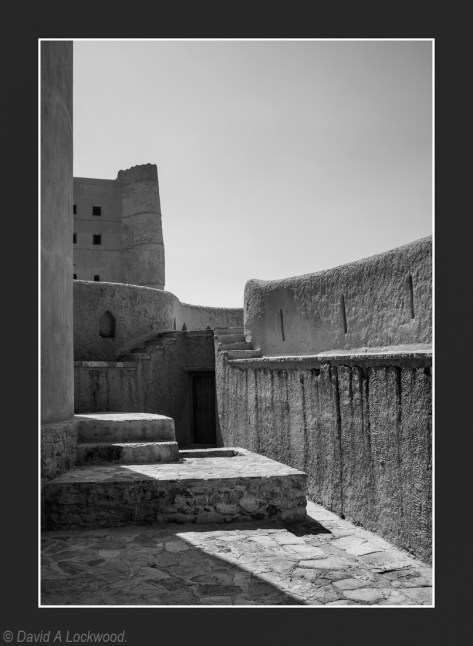
 Thick walls & no glass!
 On a visit to another fort here in Oman (Al Hazm Fort) I had the services of a guide who explained the convoluted passages and in some cases dead-ends! Confusion…… If the enemy breached the gates, the rampage through the fort was impeded by indecision; this gave the defenders enough time to mount a new defence.
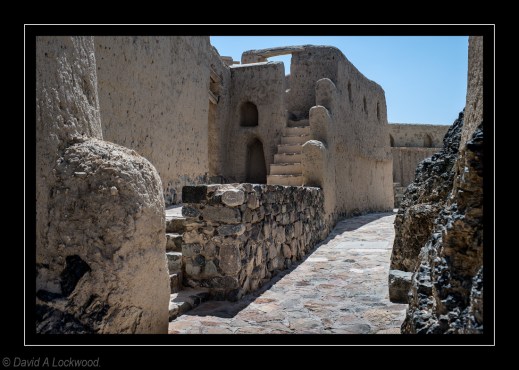 This shows the different construction techniques used (Mud, straw & rock) the mud brick needs constant maintenance, otherwise it slowly disintegrate in the rains.
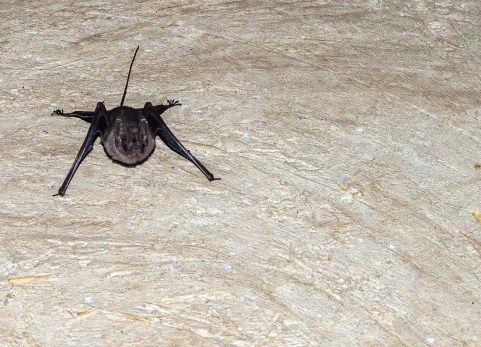 One of a very large number of small Bats in Bahla Fort.
I don’t think I mentioned Bats from last weekends visit to Bahla Fort 🙂
What with the talk of Jinns and getting a little lost; there were a great number of bats, especially in the darker corners of the fort. A feeling of Transylvania about the place…..
I was determined to get a picture of one, but easier said than done ! So excuse the quality, it is a miracle of Nikon that I got one at all. The body size was about 10cm and the room needed to be dark for them to land, otherwise they were zipping round getting excited about being disturbed.
So how did I manage this image without giving them more stress?
Camera set on Auto exposure, Aperture-priority AE, 1/60 sec, f/8, ISO 200 with built-in flash set very low & using my Tokina 35-70 f2.8 lens. I stood in the room until my eyes adjusted (zone focused my lens) then waited.
Click on YouTube link bottom right – embed has been disabled.
Looking at Murray Foote’s travelogue from India, I thought I would enjoy some music by Anoushka Shankar, the daughter of Pandit Ravi Shankar: it must be in the blood ! But she is a wonderful musician in her own right.
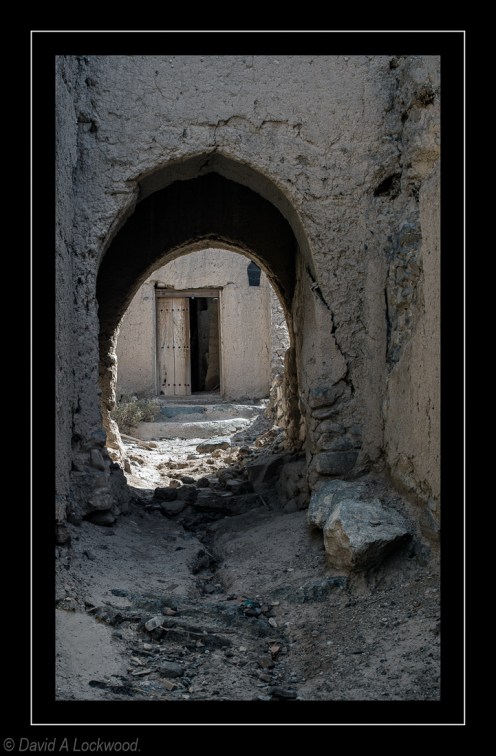
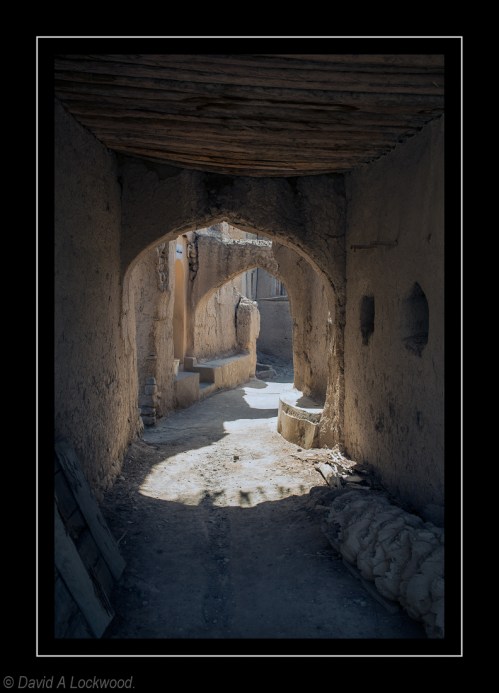
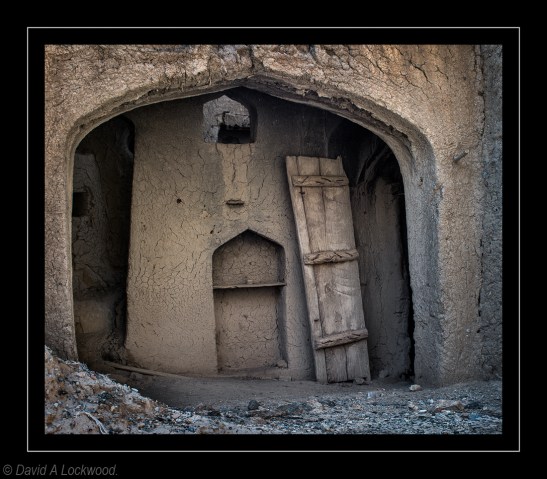 Nikon D800, Tokina 35-70 f2.8 AIs AT-X.
These made during my visit to the fort, after checking that it was open !
The village is part of the oasis of old Bahla, it developed alongside the fort and utilised the same water supply; it was also within the forts outer walls.
 David A Lockwood