

 An old door from one of the two major abandoned villages at Wadi Bani Habib.
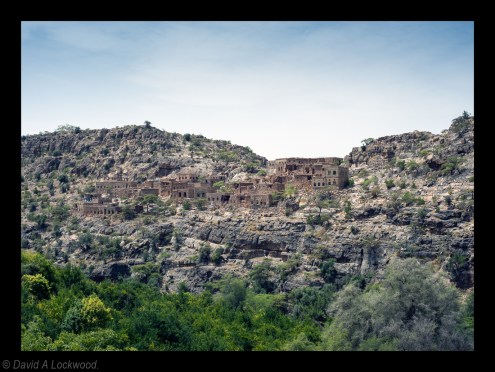 Another part of the Wadi Bani Habib abandoned village complex – less often photographed as it is further along the ridge; it sustained less damage during the 1950’s campaign.
Although Shackleton bombers of the RAF bombed the Jebel Akhdar plateau, this bombing was largely ineffective as the RAF had orders only to bomb caves and water systems, not villages. So although there are several caves in this area, how much damage was done by the bombers is hard to determine. The construction of this type of building needs constant maintenance otherwise it soon succumbs to storm damage; so a lot of what can be seen could be age related.
 This column has a lot of work put into the decoration for what is essentially a support.
Spent ages trying to get a position that would show both sides and centralise the arch: gave up !
 One of my last before I disappear for a month: thanks for all the comments and ‘likes’ since I last stepped off the world 🙂
Hopefully everyone has enjoyed my excursions around the various Forts.
 One of a number of cannon on display.
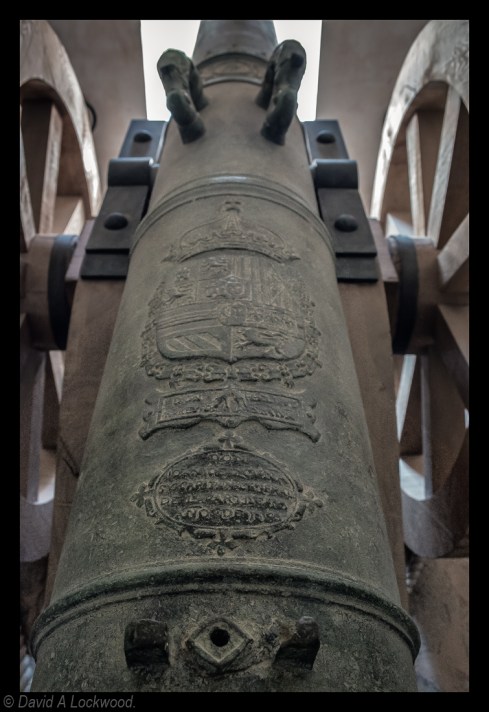 Rather worn with age; when new, there would be no doubt who cast this (Portuguese I think?)
 They maybe decorative but – once closed………
 Busy weekend as this was my last trip before I step-off the planet for a couple of days short of a month (holiday time soon 🙂 ) anyway it was 49 degrees C when this series was taken……. enough is enough: mad dogs & Englishmen come to mind !
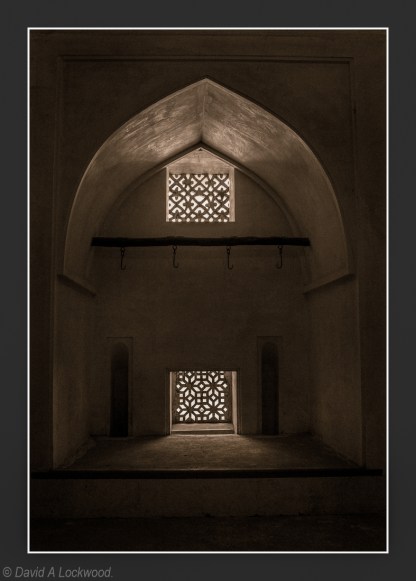 Red/brown tone for a change.
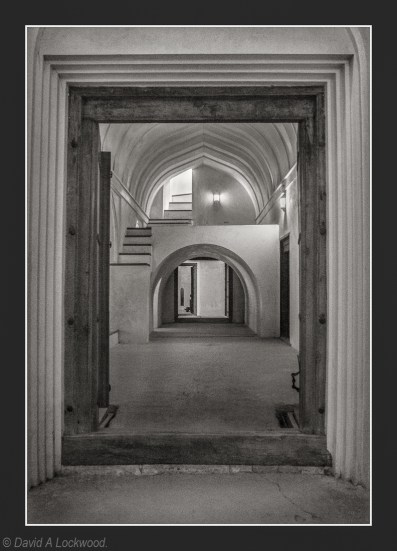 One of the many doors.
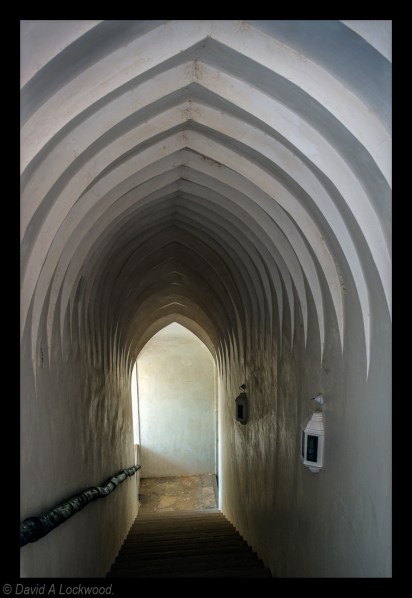 Interior passage -Al Hazm.
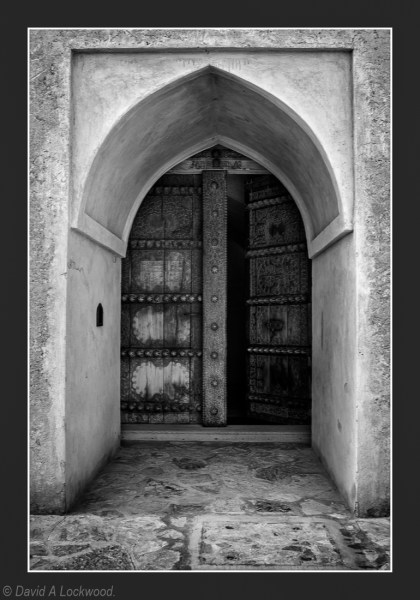 Entrance to Al Hazm Fort. (This one is a bit soft, using manual focus & the sun very bright: my excuse – need to go back! 😉 )
Al Hazm Castle – according to the Ministry guide-book.
Located in Al Hazm town in the District of Rustaq. It was built by Imam Sultan bin Seif the 2nd in ( 1123 A.H.–1711 A.D.) when he established Al Hazm town as a capital of Oman instead of Rustaq. The Castle is distinctive from other Omani Castle and forts by its magnificent shape and massive building. It contains the tomb of its builder – Imam Sultan bin Seif the 2nd.
The builder Imam Sultan bin Seif was the 5th ruler of the Ya’rruba dynasty of Imams; he was the grandson of the Imam (of the same name) who made the Portuguese an offer they could not refuse! they all left, after many years of attempting to subjugate the people.
This Fort is an outstanding example of Omani Islamic architecture and was built for defence against cannon. The roof is built on columns, and contains no wooden supports. Its walls can withstand the impact of cannon balls due to it being at least 3m thick at any point.
It has the outside appearance of being far larger than it really is, helped by tall walls and two towers, one on the Northwest corner & the other on the Southeast – giving almost 360 degrees of cover.
Another interesting fact; it used an advanced form of vaulted arch which was a major departure from the use of straight lines, along with post & lintel construction as had been seen in most of Oman’s earlier defensive constructions.
There are the usual defensive details such as multiple offset doors, pits just after a door (covered with planks of wood, removed when under attack) murder-holes above doors (think boiling oil or fire) along with hidden escape passages.
I have visited this fort on & off, many times as it not only has some of the most friendly and helpful custodians, but its main feature is the impressive collection of cannon.
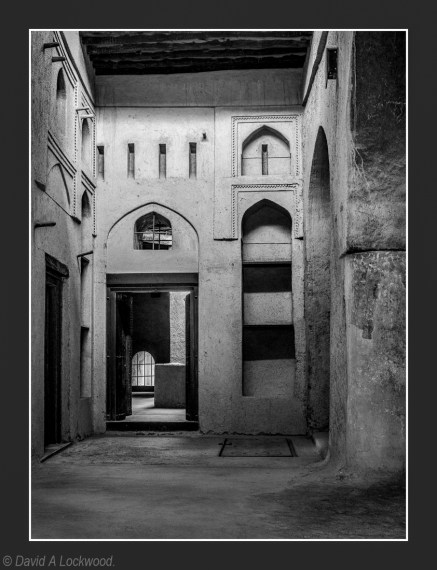 “Would he tell me that this door leads to the entrance?”
 Maybe the builder should have checked the blue flame more closely, or stuck to drinking water !
There are several abandoned or semi-abandoned villages in the mountains around Khasab: a large town in the Musandam peninsula.
Many happy hours exploring the area and finding such things as this old grindstone.
Reprint from a few years back: this time on Ilford M/G IV gloss – T-max 400 in D76 1+1.
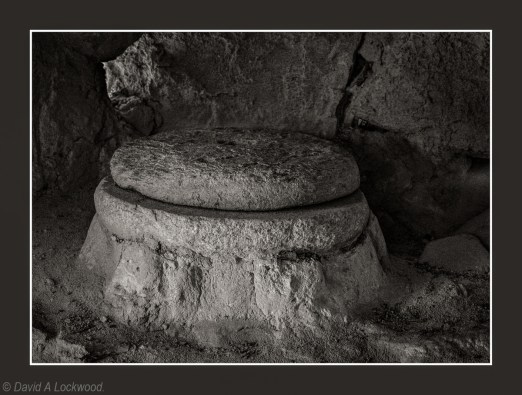 Nikon F4 with 50mm f1.8 D AF Nikkor lens.
 Shadows.
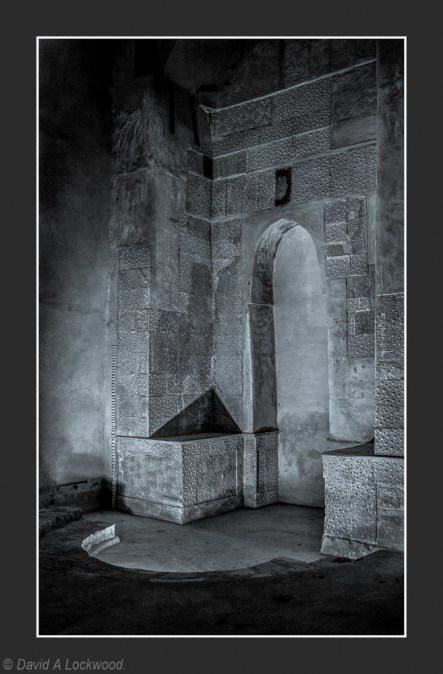 Arch with decorated stone work.
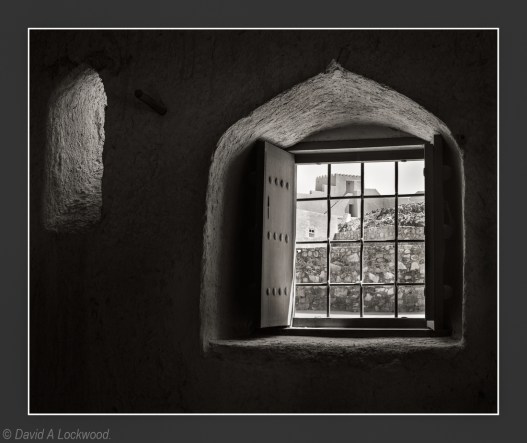 Looking out.
 The entrance – I think 🙂
P.S. the sloping walls you see in the above is not lens distortion – unfortunately for me, these are built by eye! which is why I always complain about the lack of straight edges.
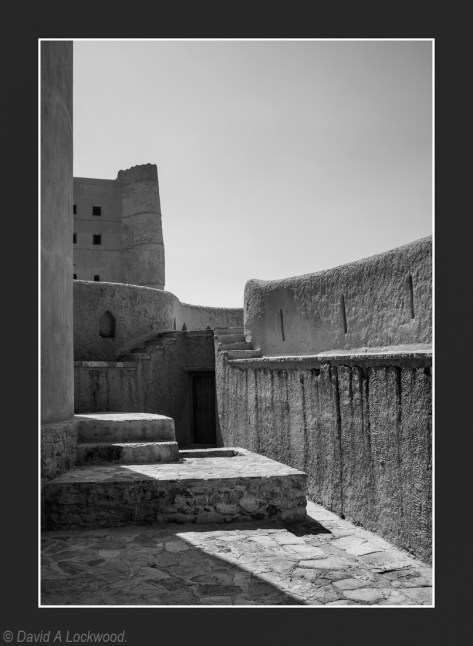
 Thick walls & no glass!
 On a visit to another fort here in Oman (Al Hazm Fort) I had the services of a guide who explained the convoluted passages and in some cases dead-ends! Confusion…… If the enemy breached the gates, the rampage through the fort was impeded by indecision; this gave the defenders enough time to mount a new defence.
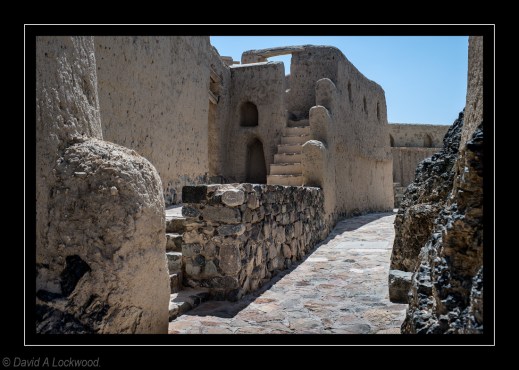 This shows the different construction techniques used (Mud, straw & rock) the mud brick needs constant maintenance, otherwise it slowly disintegrate in the rains.
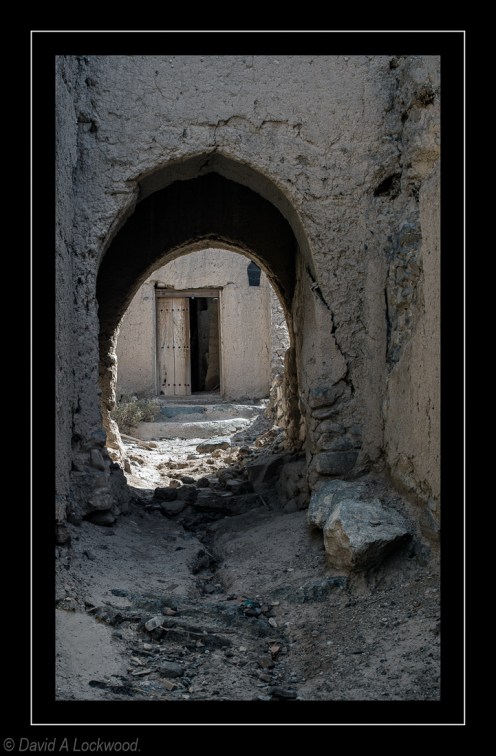
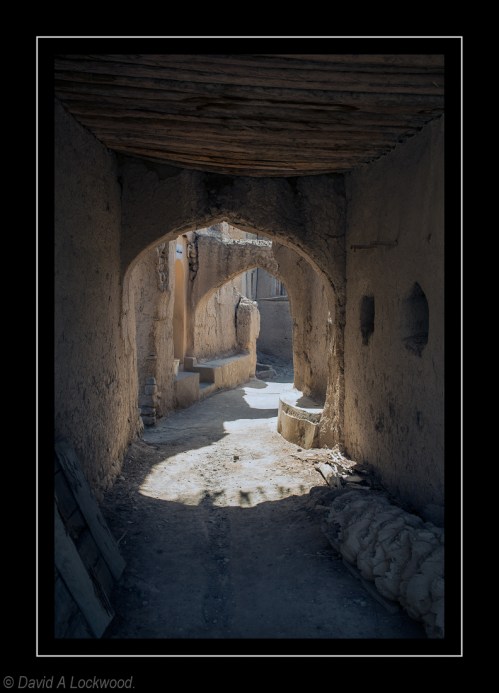
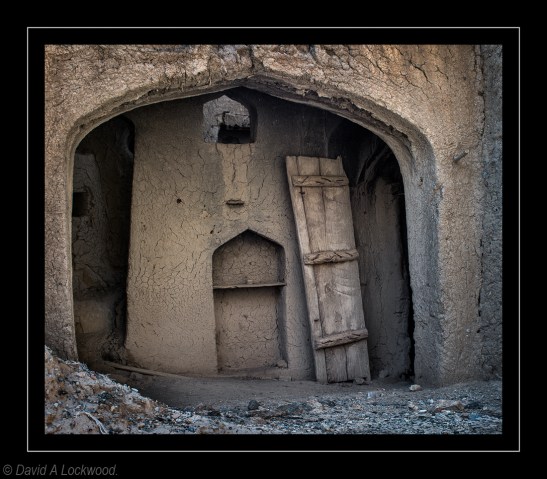 Nikon D800, Tokina 35-70 f2.8 AIs AT-X.
These made during my visit to the fort, after checking that it was open !
The village is part of the oasis of old Bahla, it developed alongside the fort and utilised the same water supply; it was also within the forts outer walls.
 I couldn’t close today after a fort visit, without at least one door….. 🙂
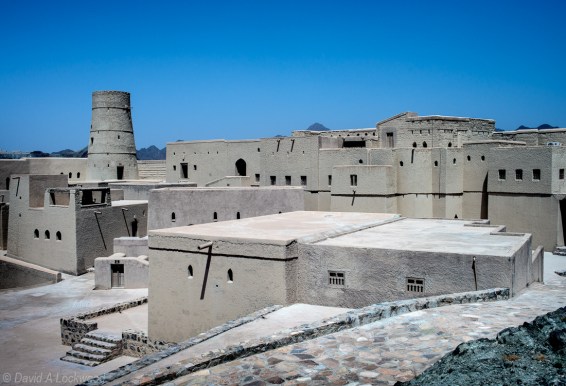
I have been trying to get a visit for aeons, but always closed – beginning to think it was a conspiracy by the jinns that are said to occupy the place….
Bahla fort and settlement owed its prosperity to the Banu Nebhan tribe who had prominence from the 12th to the end of the 15th century and made Bahla their capital. From here they were able to established relationships with other tribal groups of the interior. Bahla was the centre of Ibadism (a branch of Islam), on which the ancient Omani Imamates were based.
The fort became a UNESCO World Heritage Site in 1987. It was included on the List of World Heritage in Danger from 1988 and restoration work began in the 1990s. The fort with its walls and towers of mud brick on stone foundations along with the wall enclosed oasis, is understood to be the third largest example in the world. It’s a labyrinth of floors, doors and rooms; without a guide, needs careful thought as to which way the entrance was, when time for departure. 🙂
The town is well known for its pottery and although not mentioned unless one asks, its magic, in fact its second name is “Madinat Al Sehr”(the City of Magic). All part of Oman’s unwritten history of tradition and folklore.
Cannon found at the entrance.

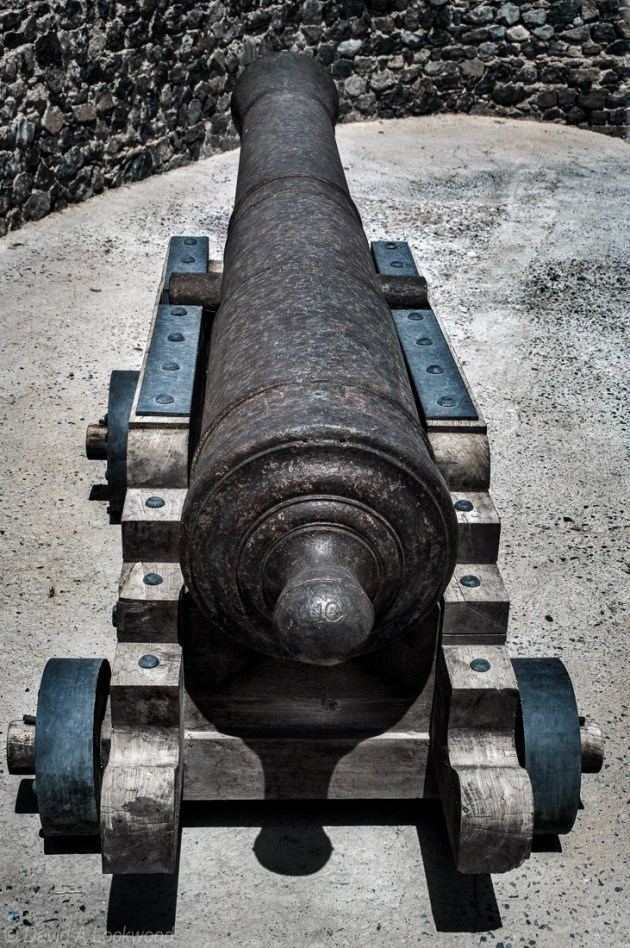
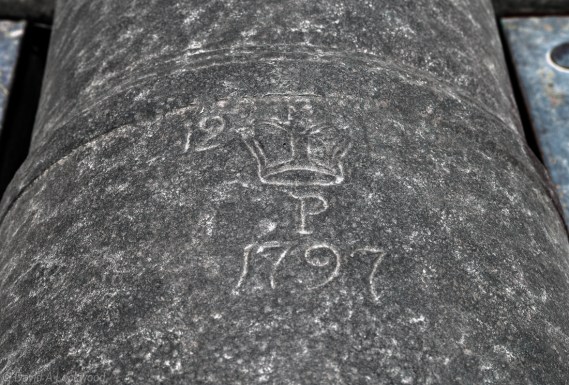 Old !
Old !
 David A Lockwood