
 Into the past.
Adventure but not stupidity !
 Adventure but not stupidity !
The hole was rather deep & the ledge looks precarious.
Another adventure beckons.
 Another adventure beckons.
Ruins – Birkat Al Mouz.
Enough of the sarcasm about the new WordPress reader: back to what passes as normal on this blog.
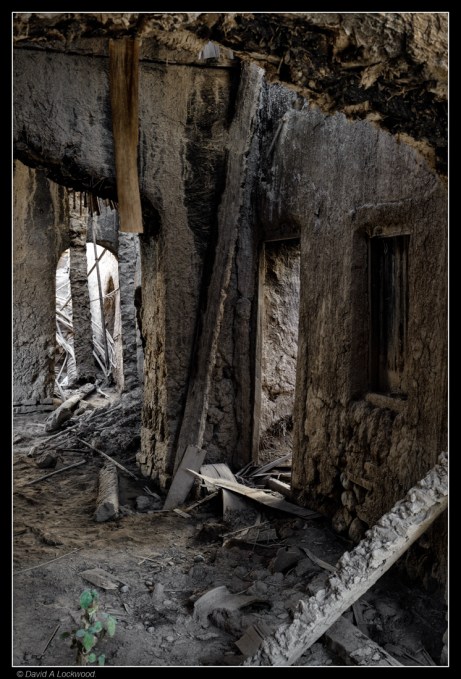
Ruins hidden behind some of the modern houses in the main thoroughfare of Birkat Al Mouz.
Ruins that most people miss when they visit this town: there was not two as I have seen mentioned, but three occupied areas until modernity arrived.
In his book “Across the Green Mountains of Oman” Colonel S B Miles says that in 1876 the population was about 3000 & the settlement is divided into three distinct hujrahs (sic) sections, Belonging to Sezzid Hamad and the other two to the El Amair & Beni Riyam tribes respectively.
Implementing new compositional ideas.
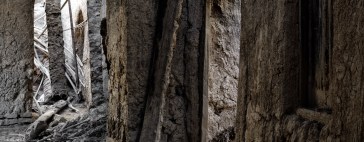 Great isn’t it, one gets a real sense of what the image is about 😉
I have spent all morning cutting cardboard oblongs for my lenses; painted mat-black, they look quite good.
Old scraps of mount board cut and painted, then using old step up/down rings work really well.
WordPress is not the only one that can distort my images.
WordPress improves my photography.
I did hope that we could have a year of very little change by WordPress for us struggling bloggers; but they have done it !! with a change to the Reader format.
It is so good that I cannot understand why after all the years learning the subtle art of composition, I didn’t think of cropping all my images into letterbox format. It is such a brilliant idea that I am now going to mask all my lenses to this format so I can save myself even more time & trouble.
Entrance with steps – Birkat Al Mouz.
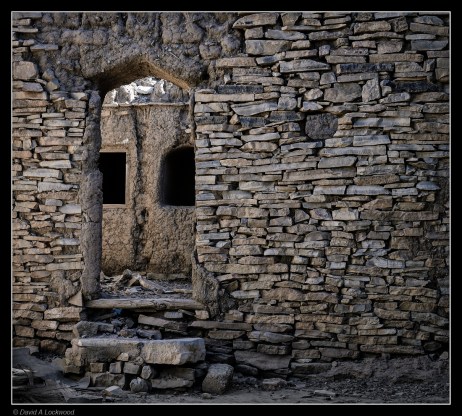 Entrance with steps – Birkat Al Mouz.
Basket remains – Birkat Al Mouz.
 Basket remains.
Broken pot: Birkat Al Mouz.
 Broken pot.
Old Sack – Birkat Al Mouz.
 Old sack cloth.
The Bottle – Birkat Al Mouz.
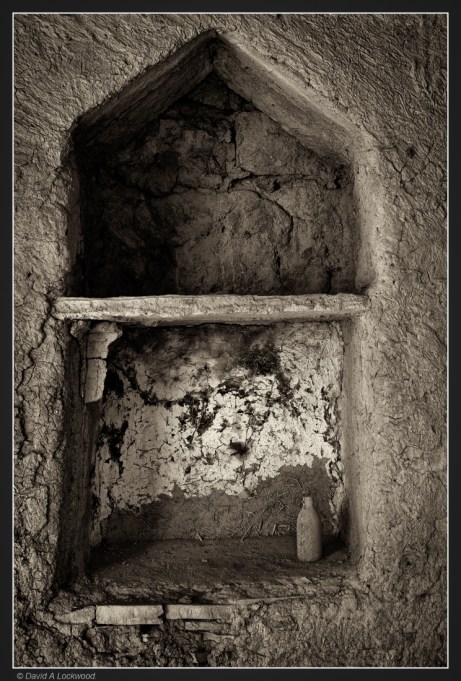 The Bottle – Birkat Al Mouz.
Birkat Al Mouz – The old & New.
 Birkat Al Mouz – The old & New.
Birkat Al Mouz (Mawz).


Birkat Al Mouz.
Translates loosely as Pool of Bananas.
The Jebel this morning.
 A quick stop on my way to Birkat Al-Mawz (Birkat Al Mouz) this morning.
I’m afraid there are going to be more posts about ruined villages in the next few days: I spent this morning going around the three abandoned areas of Birkat Al Mouz.
These abandoned villages were important stopping places on the camel route between Muscat and Al Buraimi. A camel In caravan can make about 20 miles a day and Al Buraimi was at least 350 miles by dirt track from Muscat; a long trip of many days, needing plenty of rest stops en-route.
The village (now town) of Al Buraimi was an important juncture between Oman proper & the Persian Gulf ‘Arabian Gulf‘ for some – depending on which map you look at and its age.
Sunset – toned (Jebel Shams).
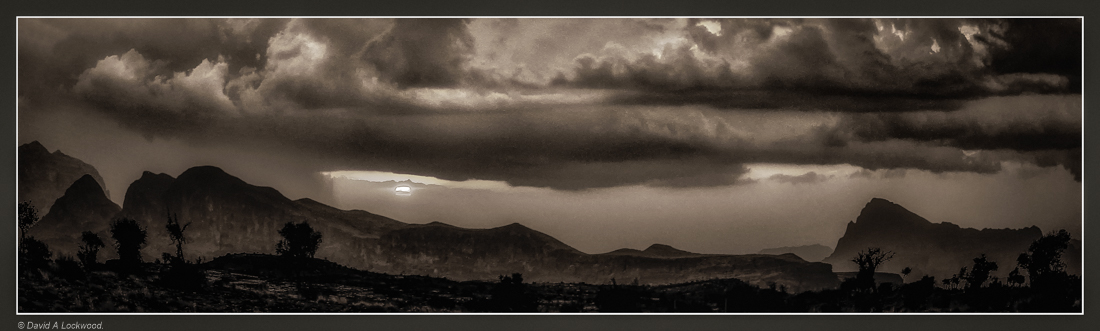 A stormy night approaching – Jebel Shams looking toward Misht.
Pomegranate: nearly ready !
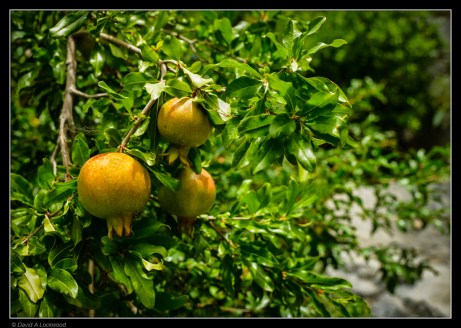 Pomegranate – although I get in a mess eating these: never have been able to do it with finesse 🙂 love them.
They are so much better straight off the tree.
Dates.
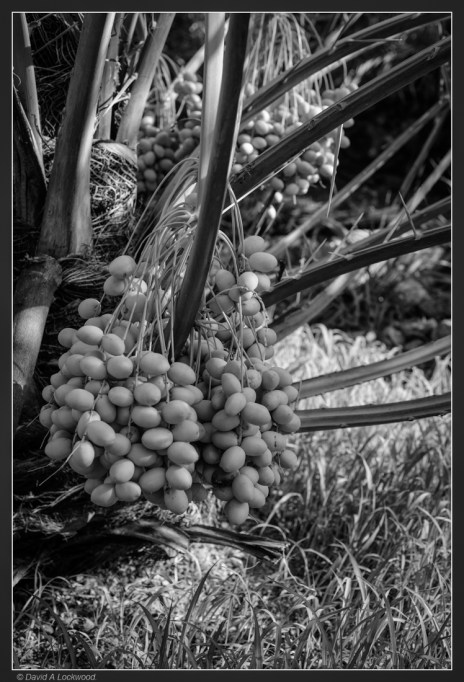 Dates – Yummy !
Deteriorating alcove – Zikki.
 Deteriorating alcove: Zikki.
Rusting & abandoned.
 During my visits to these abandoned villages, I am always intrigued by the amount of doors I find locked.
There can be nothing left of the building but the door, & it’s locked!
Almost as if the rooms are silently waiting the return of the occupants.
Door detail No2 Zikki.

 It must have been a very colourful place ! Signs of blue, green, red & yellow paint everywhere.
Find a way in – Zikki.
 Find my way in.
Palm frond building material – Zikki.
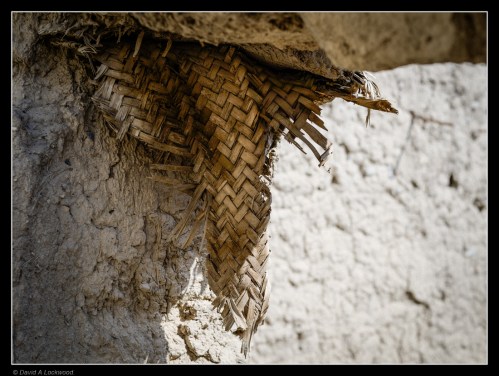 Palm frond building material -Zikki.
Door detail – Zikki.
 Door detail – Zikki.
Air lock.
 When I asked this lock what it was doing, the answer came back:
“I have a very important task in life – I’m just not sure what it is”
Another broken door – Zikki.
 Another broken door – Zikki.
 David A Lockwood