Misfat Al Abreen.

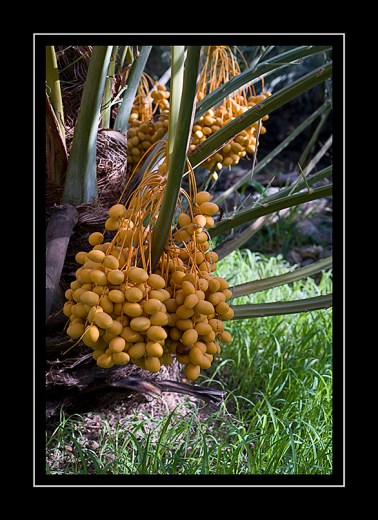
Dates Misfat Al Abreen


Bananas-Misfat-al-AbreenNikon D800 50mm f1.8 AF D lens.

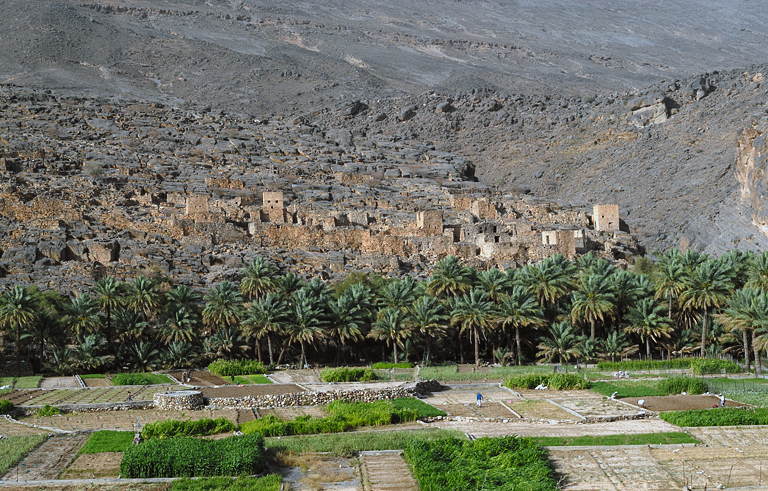
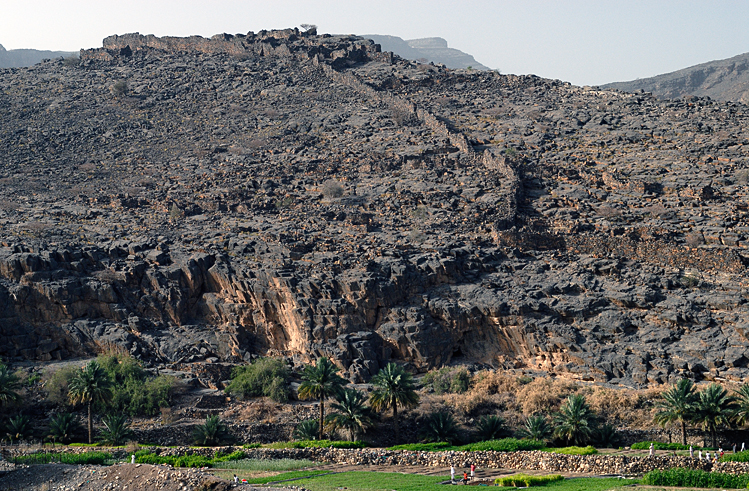
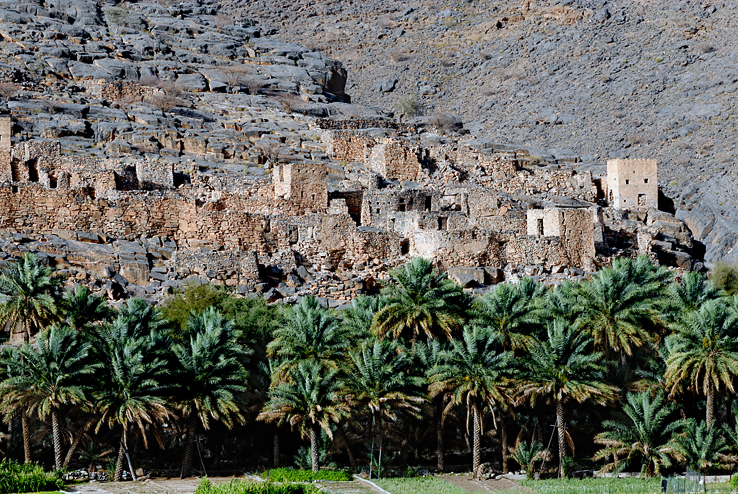
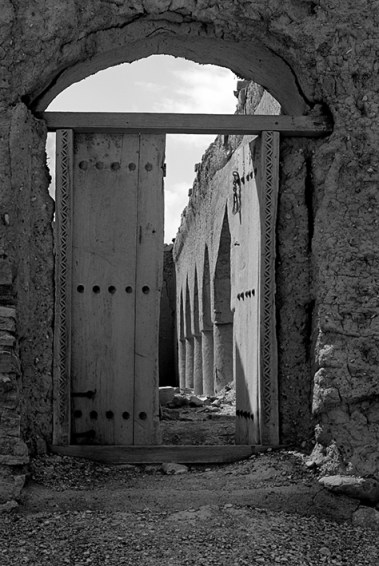
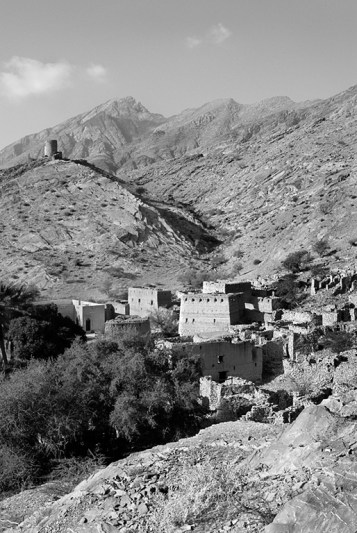
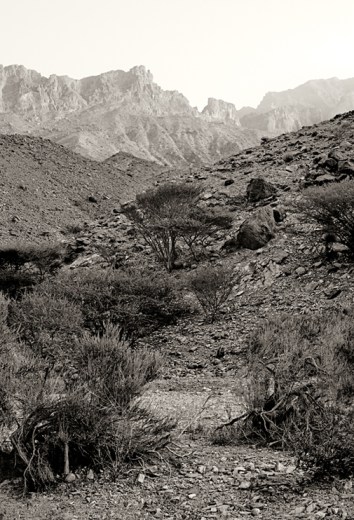
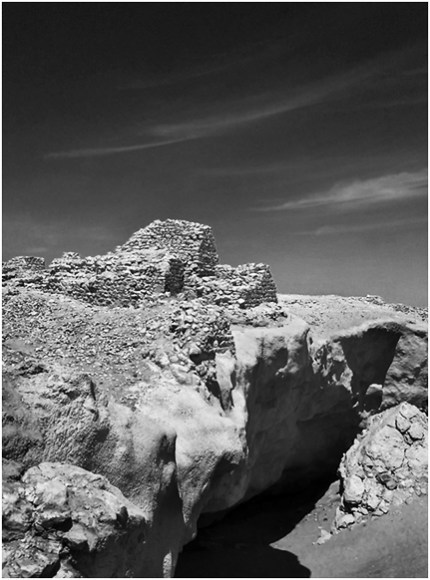
Misfat Al Abreen is a traditional mountain village perched on the jebel above Al Hamra on the way to Jebel Shams. When I first visited in about 1986, it was very secluded and certainly didn’t get many, if any visitors from outside the local area.

It has now embraced tourism (all be it in a very limited way) as one can stay in a converted traditional village house. I think it was a case of ‘if you can’t beat them then join them’ which helps with the local economy.

There is an abundance of water which allows the growing of bananas, dates, mango, papaya and vegetables in spite of the dry vegetation elsewhere in the summer months.

Sorry: this is beginning to sound like a tourist guide, but it is such a lovely and welcoming village I needed to say more.

A project this winter is to spend time in the visitors house and take pictures……….

The battle of Mirbat in July 1972.

For those that might be interested, here are some links to what was probably one of the most heroic battles fought in Oman during recent times – nine men of 22 Squadron SAS fight off an enemy force of over 250 communist insurgents, called the “Adoo”, who attacked the town of Mirbat in southern Oman.

The political consequences of this battle has probably helped to make Oman the modern progressive country it is today

The following SAS soldiers were present at Mirbat on 19th July 1972:

Captain Mike Kealy
Sergeant Talaiasi Labalaba (Killed in action)
Sergeant Bob Bennett
Corporal Roger Cole
Corporal Jeff Taylor (Believed to be an alias)
Lance Corporal Pete Warne
Trooper Sekonaia Takavesi
Trooper Tommy Tobin (Died of wounds)
Austin “Fuzz” Hussey

July 1972, Mirbat Southern Oman, the BATT team of 22 SAS showed courage, tenacity and sheer refusal to give in under the weight of overwhelming forces.

Also look at these links for more information:

Unfortunately I see the videos on YouTube have closed as of 2020. Will see if I can re-establish the links.

Albritains-smallwars.Mirbat.

sasspecialairservice


The Hajar Mountains: جبال الحجر

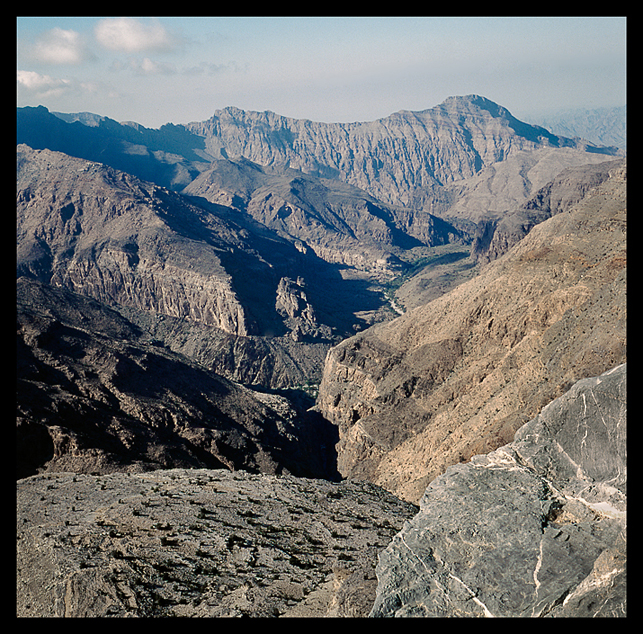
Al-Hajar Mountain rangeFor those interested – this is an indication of the different topography that can be seen when getting up high in the mountains. Made from about 7500ft – note the wadi winding through the valley.

From Wiki:

The Hajar Mountains in north-eastern Oman and also the eastern United Arab Emirates are the highest mountain range in the eastern Arabian Peninsula. They separate the low coastal plain of Oman from the high desert plateau, and lie 50–100 km inland from the Gulf of Oman coast.

The mountains begin in the north, forming the Musandam peninsula. From there, the Northern Hajjar (Hajjar al Gharbi) runs southeast, parallel to the coast but moving gradually further away as it goes.

Antique Weapons found in Oman.

Omani-cannon

Oman’s historical military arms from Matchlock muskets of Portuguese origin (although some experts now think that many are of European-German origin: open to debate) along with Martini-Henry lever-action types. Combined with muzzle-loading cannon from the Iberian Peninsula and at least one that may have come from the English Commonwealth era, circa 1649 to 1660. Not to mention the vast number of ‘sharp pointy’ weapons; makes Oman a treasure trove for military historians.

Early indication of the Arabian Horse in Oman.

Arabian-Horse-Rock-Art-2

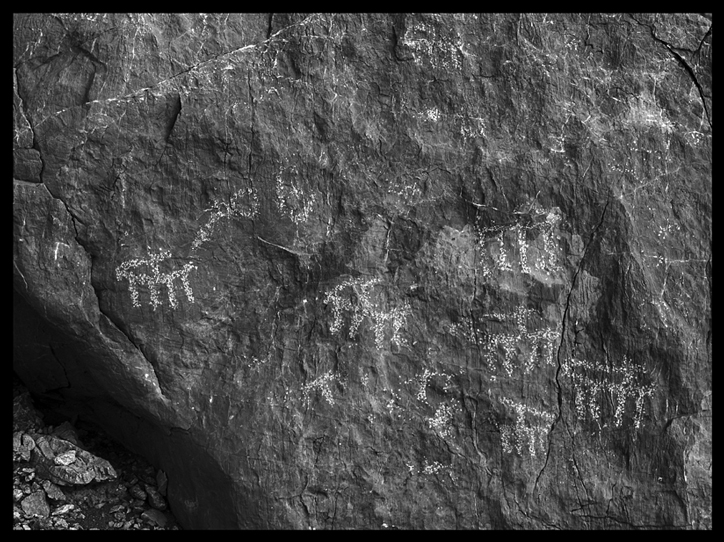
Arabian-Horse-Rock-ArtOn the above image: note the horse lower left with the classic characteristic of the tail being held high.

From Wikipedia:

Arabians are one of the oldest human-developed horse breeds in the world. The progenitor stock, the Oriental subtype or “Proto-Arabian” was a horse with oriental characteristics similar to the modern Arabian. Horses with these features appeared in rock paintings and inscriptions in the Arabian Peninsula as far back as 2500 BC. In ancient history throughout the Ancient Near East, horses with refined heads and high-carried tails were depicted in artwork, particularly that of Ancient Egypt in the 16th century BC.

‘Infinity Scroll’ Problems……….

Having trouble with the ‘Infinity Scroll’ on this theme only ??!!  at the moment – two different computers exhibit the same problem, haven’t a clue.

Unfortunately, I am unable to make it load a fixed number of pages with a tag at the bottom saying ‘load more’  which I actually prefer but WordPress does not seem to allow that  ……….. uurrrrr.

So if anyone finds loading slow; I apologise, this is the downside of paying for a theme as it means I cannot just change.

Rock Art.

Rock-art-No1

The above image shows what is almost certainly a Wusum found at a number of rock art sites and camping places: it gave the tribe a method of transmitting information about land and animal ownership.

The other interesting feature about the above depiction is the very obvious sign of someone’s attempt at adding their bit to an early image. (In many it is not so obvious and therein shows some of the difficulties ageing this art)

Rock-art-No2

Another difficulty with these images is age, they can be very faint and so extreme side lighting is often required – for that read a ‘early start in the morning’ one thing I am not  good at……..!

A Comment.

In response to a comment by Murray Foote on ‘Masirah A Storm Coming’

I thought it would make a good post rather than be tucked away under comments.

He said:-

“It’s impressive but I think it’s the sort of image that can’t really be appreciated online. I suspect it really needs to be printed to whatever size is appropriate and probably on matte paper.
The reticulation in the sky makes it look as though it is a matte print but I presume that’s the consequence of the pushed TMax and the developer.”


Thank you for the critique Murray; yes there is some reticulation in the sky, accentuated by scanning unfortunately. I would have used a different developer, but at the time that was all I had.
Oman is not the best place for buying chemicals – almost zero supply now !  You are right in that it prints well on paper like Ilford FB matt and certainly does not look its best on the screen but:

I thought long and hard before I started this blog and decided it was for fun, rather than promoting my photography.
I am in the process of putting together an idea for a gallery type site, which I can use for my best work (for that read more care with the scanning…..) 🙂
The thing is, it begins to feel like work and the time could be spent in the darkroom, so the jury is out on that idea.
It is also nice being able to give some an idea of what Oman is like as a country.
I hope it also reminds people that film is still part of the process and has not been consigned to history. This is one of the reasons I have started mentioning what film, developer and camera I used.
I get such a shocked look from some when I answer the question “what camera do you use?” by saying a Bronica S2a along with a number of Nikon ‘F’ cameras and anything else that I can put film into.
I do use the Nikon D200 but am rather ambivalent about it, a bit like my thoughts on Vinyl and CD’s.
So do I leave the image up or take it down, along with several others that I am not 100% happy with. I think I will leave them and probably end up writing more answers like this one.

One thought – the above does not imply that I felt petulant in any way about the criticism I received from Murray. On the contrary, I admire his work and rather pleased that he took the trouble to comment.

Go and see his site it has some fascinating travel writing along with excellent photography.  http://murrayfoote.com

Ubar. (Sultanate of Oman)

Lost Town of Ubar

Taken with my ‘cheap Nokia phone’ and tinkered with in Photoshop – no camera !

The lost City of Ubar; known by various other names (Wubar, Wabar, Iram of the Pillars and Atlantis of the Sands mentioned by Lawrence of Arabia)

Ubar was a processing and transportation centre for frankincense, an aromatic resin used in religious ceremonies as well as perfumes and medicines, it was as valuable as gold.

Shis’r  (Shisr or then again Shasar) being the modern name of this location in Oman. [Even today, names change or most often the spelling used for transliteration can be quite imaginative]

The ancient structure found here from satellite images (Landsat) was partly excavated by Dr. Juris Zarins (Missouri State University) starting in 1992. Others involved were Nicolas Clapp, Sir Ranulph Fiennes, and an archaeologist Dr. Juris Zarins.

There is some considerable doubt !

From that well-known on-line encyclopædia:

When the explorer Freya Stark consulted the works of Arab geographers, she found a wide range of opinions as to the location of Wabar: “Yaqut says: “In Yemen is the qaria of Wabar.” El-Laith, quoted by Yaqut, puts it between the sands of Yabrin and Yemen. Ibn Ishaq… places it between “Sabub (unknown to Yaqut and Hamdani) and the Hadhramaut. Hamdani, a very reliable man, places it between Najran, Hadhramaut, Shihr and Mahra. Yaqut, presumably citing Hamdani, puts it between the boundaries of Shihr and San’a, and then, on the authority of Abu Mundhir between the sands of B.Sa’d (near Yabrin) and Shihr and Mahra. Abu Mundhir puts it between Hadhramaut and Najran.”

“With such evidence,” Stark concluded, “it seems quite possible for Mr Thomas and Mr Philby each to find Wabar in an opposite corner of Arabia.”

See these two links for more detailed information:

 http://nabataea.net/ubar.html

 http://nabataea.net/shisr.html

Trekking in Oman (Now where did that path go….. ?!)

Now where is the path.

Two things you learn quite early on if you start to do any serious trekking here in Oman.

Find old Ordinance Survey maps, they show most of the original footpaths that have been used for generations. One small caveat, two really; the position of some is only approximate and village names (English transliteration) change.

This is probably the most important: learn to recognise the path, as they can be quite obscure or even lost in the general detritus of previous storms.

In some areas they stand out like a map on the landscape; dark smooth areas on the rock that in many cases has change from rough and sharp-edged rock into glass like smoothness.

When all else fails, children and old people used these paths so if you are finding the path has suddenly become very difficult, you are not on the right route!

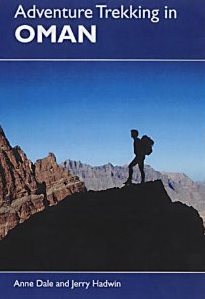
Buy this book……. Of all the new publications; it is still the best, even if a little dated now. They put a lot of hard work into getting the routes and maps as exact as possible.

ATOman

See this link.

Adventure Trekking in Oman

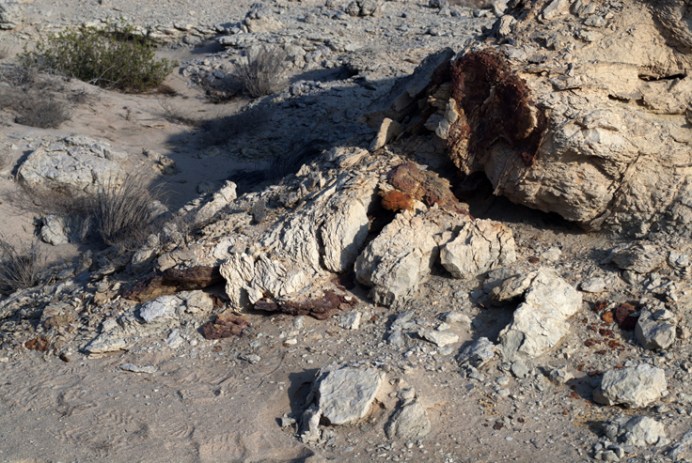
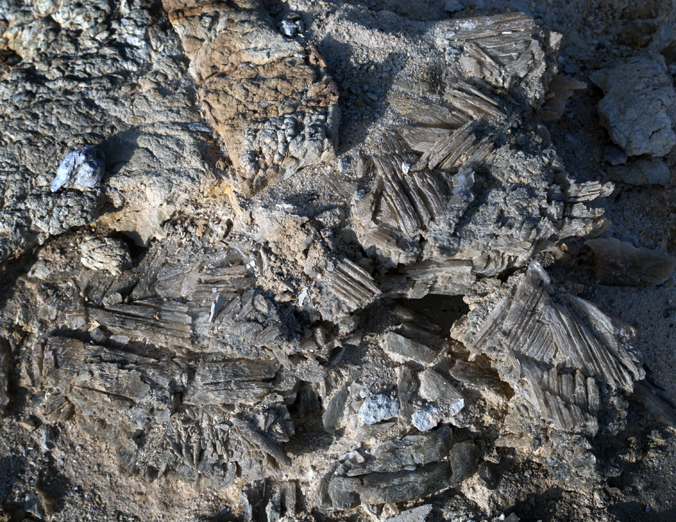
Interesting Geology found at Huqf.

Interesting Geology found at Huqf; all these were within a couple of metres of each other. This is where I wish my knowledge of the subject  was more than non-existent……….

Very frustrating !

The yellow/orange had a very sulphurous smell and the dark red/brown was powdery and stained the fingers.

This one and the above seemed to be Iron ore ?

Unusual (For me anyway) crystal formations that were very heavy for their size.

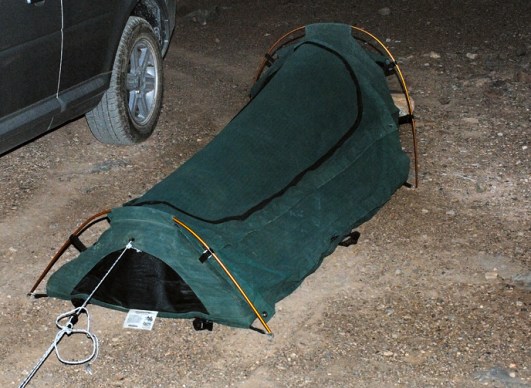
My tent (Swag).

Just for interest: when I am on an overnight stop, this is my tent or as it came from Australia, swag. One of the best items of kit that I have ever purchased. Why Australia? because they make the best –  see this link http://burkewills.outfitters.com.au/aboutBW.html

I have  never found anything like it for quality or practicality anywhere in UK. It keeps out Snakes,Scorpions, mosquitoes, rain/snow and very cool in the desert heat.

Ha.. you say: snow in Oman???? well yes especially on Jebel Shams in December.

Sorry but I have been so pleased with it over the years, I thought it deserved a mention (Thanks D.K) and it makes a change from photographs, film and cameras.

Back from holiday.

From the sublime to the ridiculous – the weather that is………

I had a good holiday despite all the rain (the novelty wears off after a few days!) but now I am back and getting hit by the heat: no pleasing some people.

Have a new graphics card for my PC but, no I am not going to say another word – it works and does the job reasonably well: but my new Laptop ………..  😀

A whole month and no computer, a lot of catching up to do. I am sure there are some great posts for me to see and read.

Then back out with the camera and a public holiday coming up soon.

New Graphics card.

On holiday in a few days  so will be away for a whole month……!

Looking at the weather in UK, maybe I should pack some sunshine as we certainly have enough here – 47c when I got into the car for my trip home from work today.

Will also pick up a new Graphics card, it would seem that the computer I use for image processing is OLD and anything electronic and more than a couple of years old should be consigned to the bin…… “sorry sir no call for cards with that connector, buy a new computer” For someone who still uses an Nikon F2 SB, words like that are an anathema; a bit like my Land rover Discovery Tdi 200 before I gave up trying to find spares here. It must have been the most environmentally friendly vehicle on the planet, built in 1994, but no “sorry sir no call…….”

I cannot understand this idea that because it is new it must be better (consumerism me thinks) look up Thorstein Bunde Veblen for a thought on this subject.

End of rant… maybe I am becoming a ‘grumpy old man’ some may say I already am!


NASA | SDO’s Ultra-high Definition View of 2012 Venus Transit – YouTube.


This from the NASA Goddard site.

On June 5 2012, SDO collected images of the rarest predictable solar event–the transit of Venus across the face of the sun.  This event happens in pairs eight years apart that are separated from each other by 105 or 121 years.  The last transit was in 2004 and the next will not happen until 2117.


Some remarkable footage…….!

Wadi Ghul.


Wadi Ghul has some folklore about it; the first village on the top of the hill is said to have been abandoned due to a snake infestation . Now it so happens that the Omani word for ‘Snake’ is Ghūl. Although in general Arabic it means a demonic being believed to inhabit burial grounds, mountainous areas and other deserted places; belonging to a class of jinn  جن (spirits) said to be the offspring of Iblīs, the Muslim nearest equivalent of what Christians would probably refer to as the  Devil

There is also another story that the first families to settle here where from Persia.

Whatever the reasons, this village has made four moves over its lifetime, ending up in the new housing on the other side of the wadi.

Tanuf 2.


The old and new – this clearly shows the falaj and the fact that it is open. There are very strict social and cultural rules about aflāj systems as they are communal supplies of water in an arid climate. No one pollutes it; the whole village will have contributed to the cost of construction and up-keep, in most areas the amount of water is divided up between each family on a ‘timed’ basis. A form of sun-dial clock (post in the ground with graduated lines) was and in some cases still is used for this purpose.

In very arid areas, the falaj can travel for many kilometres underground with entrance holes  so that it can be maintained; finding water, construction and maintenance is skilled and costly work.

A quote from that well known on-line encyclopædia

In Oman from the Iron Age Period (found in Salut, Bat and other sites) a system of underground aqueducts called Falaj were constructed, a series of well-like vertical shafts, connected by gently sloping horizontal tunnels. There are three types of Falaj: Daudi (داوودية) with underground aqueducts, Ghaili (الغيلية) requiring a dam to collect the water, and Aini (العينية) whose source is a water spring. These enabled large scale agriculture to flourish in a dry land environment. According to UNESCO, some 3,000 aflaj (plural) or falaj (singular), are still in use in Oman today. Nizwa, the former capital city of Oman, was built around a falaj which is in use to this day. These systems date to before the Iron Age in Oman.

Tanuf.

Tanuf ruins (another little altercation with the help of the Brits)

Then around the corner for this one – always a very scenic place after rains.

Just a thought – for those that are not very familiar with water movement in Oman, the wall that can be seen along the cliff face is a ‘Falaj’ basically a trough for carrying water.

Of this type, it is probably one of the best preserved that I know of; maybe because the ‘Tanuf bottled water plant’ is only about a klick away.

Light Meters (Weston & Pentax Spot).

Here are the two light meters that I use.

Pentax digital spot meter and the Weston Euromaster with ‘Incidental’ reading cone.

Generally the Matrix metering provided by modern cameras is very good, but when critical exposure is required; nothing beats the hand-held meter.

I use a simplified version of Ansel Adams zone system, as discussed at length in his book ‘The Negative’ along with the zone label attached to the Pentax meter, mentioned in the book ‘Way Beyond Monochrome’.

Both books give a very good explanation of metering in all conditions; add to that the many references that can be found on the internet, I am not going to elaborate. Suffice to say that for those who use film, a meter is an invaluable way of avoiding the often heard comment “I think that has turned out” for digital it avoids the ‘machine-gun’ syndrome.

Unfortunately the digital camera and scanner add their own difficulties ‘blown high lights’ being the biggest problem to deal with, for me anyway. Keep an eye on the Histogram…… is my mantra since the evil digital entered my life!

For scanners avoid contrast as ‘flat’ looking scans are easier to deal with post processing.

Given all this, I still get it wrong at times but hay-ho.

Do look at all the links in this post as there is some good information there.


Ziki (Izki) 2.

July 1957: at the request of the previous Sultan, RAF Venom jets flew 12 sorties against this fort; the results can still be seen.

Izki (Ziki or Zikki) was described by Colonel S.B.Miles in the year 1876 as having “some beautiful plantations of palms and extensive cultivation, and stands in a very picturesque location” he also described the castle as being of a lofty construction and walls some 5 feet thick.

It is claimed to be one of the oldest towns in Oman and the falaj ‘Al-Mulik’ alleged to be older than the one built by Malik Bin Fahm near Nizwa.

In 1682 the town was taken by Malik Bin Fahm of the Yaruba dynasty, as part of his campaign to stabilise a large area of the country.

Over the years it has seen many a conflict, either between sections of the town; occupied by two different tribes (which is never a good idea) or just  establish a power base.

In 1957 RAF Venoms stationed at Sharjah attacked the fort at Izki with rockets and cannon.

See this link for further interesting infomation on this campaign. Jebel Akhdar Muscat and Oman 1957-59

In 1970 there was a rebel attack near the town which precipitated the succession of His Majesty the Sultan.

Above As Suwayh.

The abandoned village where this image was made, does not even get a mention on the ordinance survey map (NF-40-038) of 1961: the nearest is Al Hijir.

It is actually near As Suwayh, in fact perched on a rock outcrop above that village.

What with the inscription from an earlier entry, this place has some history about it. Another village which I find has three areas of habitation; moving down the mountain (Jebel) in stages as the years goes by.

Another from the Muti (Imti) series.

MutiMuti (Now known as Imti)

This proved to be a very enjoyable morning; I had intended going back to the ruins behind Izki (Zikki as it was known) but diverted to Imti.

A short diversion as I thought turned into a whole morning out and the promise of another visit.

I have passed this place many times over the years and always promised a visit, but it never happened. I knew there were ruins at the back of Imti from various reference books and manuscripts held by The Royal Geographical Society (thank you Google) but it was never sufficient to spur my interest.

Wadi near Nakhal.

 Wadi near Nakhal – cannot find a name on any of the maps I have.

To quote Donald Rumsfeld.

“there are known knowns; there are things we know we know. We also know there are known unknowns; that is to say we know there are some things we do not know. But there are also unknown unknowns — the ones we don’t know we don’t know.”

I have been searching for why I knew that at the end of this wadi there is an abandoned SAS camp; now occupied by some local families.

But no luck so far and my memory for useless information is good but always let down by source references……….

So I think this wadi is either Wadi Raqim or more likely Wadi Al Hadak.

Ho well; either way, it has some nice scenery and the remains of a few Bee-Hive tombs.