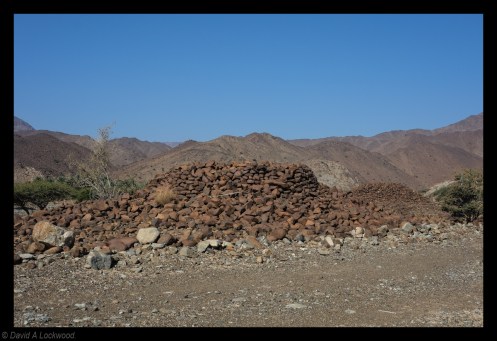
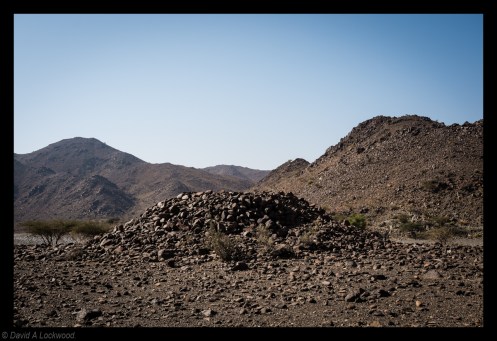
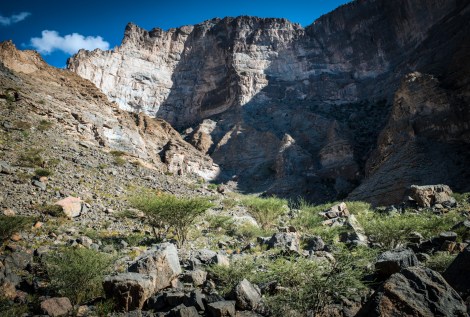
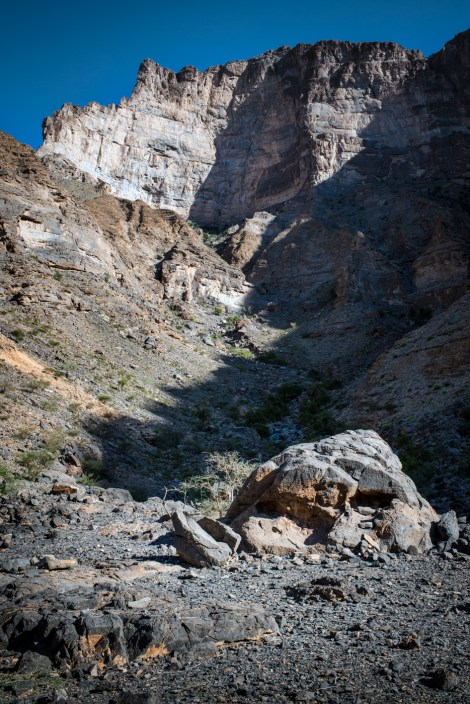
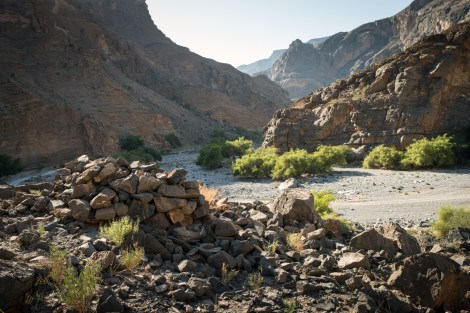
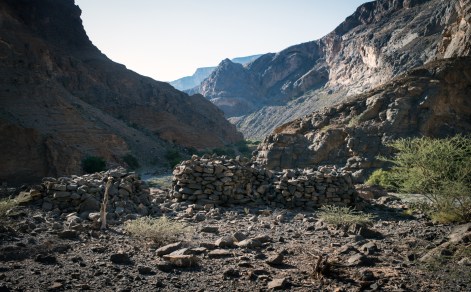
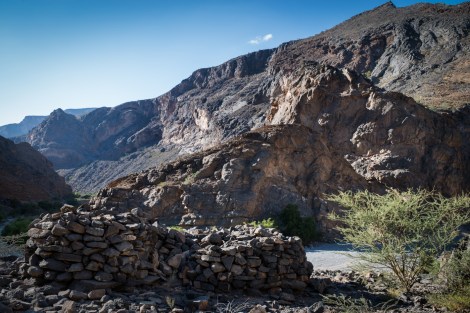
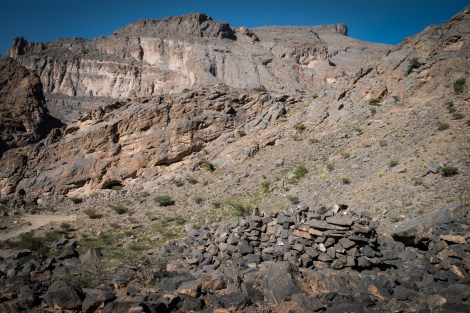
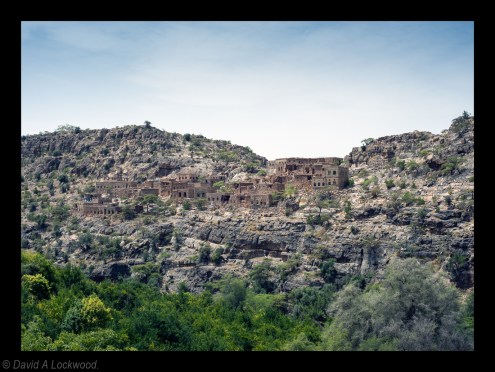
Reuse of Umm an-Nar tombs – Necropolis of Bat.

Tombs near Bat No2For anyone interested in a little bit of information about the latest archaeological research regarding the Necropolis of Bat, of which the two tombs depicted above are part. See the link below:
Proceedings of the Seminar for Arabian Studies 45 (2015): Stephanie Döpper.

2014_SemArab_Doepper
Click the above link & click again on the new page – it will open a pdf file.

She discusses the reuse of Umm an-Nar tombs in the area and some of the interesting finds being made.

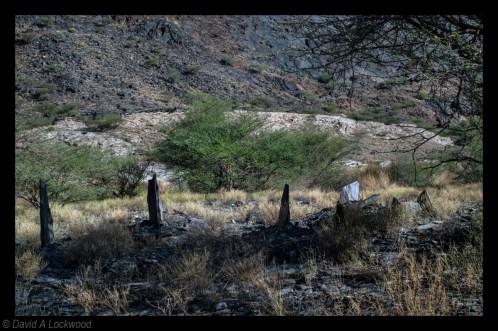
Abandoned grave site – Masirah.

Ancient grave site on Masirah Island with mostly a Nne. Ssw. orientation – I have no idea of age, but it has not been enclosed with a wall  by the government so almost certainly pre-Islamic, although there is a mixture of styles.
No indication of an adjoining settlement and so far nothing from my search on the internet.

Several have very old crumbly scallop shells placed on them & vary in size from child to adult.

Masirah – just another day at the office.

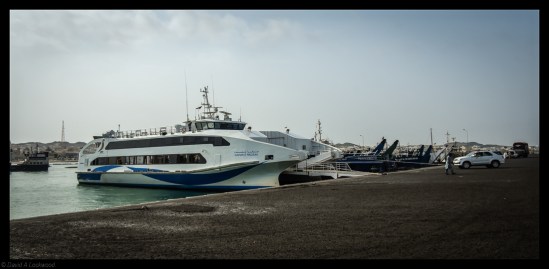
New Masirah ferryShock, horror – Masirah has a new ferry that actually goes when advertised !
In a previous post I mentioned how the Masirah ferry is disorganised and chaotic – the boats are not exactly following any health & safety rules (in fact European H&S would have an apoplectic fit !) they go when they feel like leaving (no time-table, that was tried and ignored) and boarding is a free for all.

Not any more – look at the above picture, a catamaran with a time table & tickets no less. Safety video, air-conditioned seating the whole nine yards  🙂

Wadi Samail (سمائل‎).

Wadi Samail from its largest fort: considered to be the biggest valley in Oman.


Note all the different ‘transliterations’ of the name – this can make it very difficult researching information, not to mention the total change in a village name over the years.

Samail, Sumail, Samaiyl, Semail…………..  سمائل

In 1845, Lieutenant C.S.D.Cole, one of the East India Company’s Surveying crew on the Brig Palinurus, made a journey overland from al-Ashkhara to Muscat via Bidyyah, Sinaw, Manah, Nizwa, the Green Mountain (Al Jabal Al Akhdar) and Samaiyl.
Despite being disguised under the name of ‘Salim’, Cole was always, during his journey, surrounded by immense crowds with great curiosity.
Wherever he went in Oman, he was accommodated and received courteously. In Jalan, he ‘was nearly suffocated with the great quantities of milk’ which the native ideas of hospitality compelled him to swallow.
Leaving Nizwa, on his final route to Muscat, Cole tells us that he halted for a night at a traveller’s bungalow in a village named Mettee (probably Muti or now Imti), noticing that most places in Oman had a building set apart solely for the use of travellers.
His comments on a visit to Sumaiyel (sic) were very complimentary:

I found the place of considerable extent and the most flourishing of any I had seen in Oman. Water was plentiful; the data groves, which are extensive, were in the best condition and everything about looked green and healthy.

Contrast this with an account by Lieut; Colonel S.B. Miles 1885.

In the month of March of this year 1885, a cyclone storm of unprecedented violence had burst over central Oman, causing widespread destruction and misery. It had been followed by a deluge of rain, which had swept down the valleys and poured a devastating flood of water through the villages & settlements and had done incalculable damage to houses and cultivation, while hundreds of thousands of date trees had perished.
Dashed by the cyclone against the precipitous walls of Jebel Akhdar, the clouds had broken and fallen in torrents of rain down the steep gorges and ravines, and had concentrated a mighty wave down the Semail valley, which had carried everything before it.
Makes Gonu (1st to 7th June 2007) sound like a pussy cat by comparison – having lived through it (just) I can tell you it was not good !! so this must have been absolutely dreadful.
In 1876 on a previous visit: Miles also noted that Semail ‘Fard’ dates, one of the finest varieties of this fruit produced anywhere. Is the kind most appreciated and esteemed by the Americans, who are good judges and a very large quantity of boxed Fard dates are annually shipped to New York & Boston markets.

Most of the above found from either the Royal Geographic or National Archives UK.

Afalaj in Misfat Al Abryeen.

Walking around with my new Fuji Xpro1 camera – a nice but frustrating experience.

I found that although it was nice not having a large SLR hanging from my shoulder, using the camera was less than intuitive. This is my fault not the cameras…….. I am so familiar with the layout of Nikon cameras that my fingers would not hit the right button unless I made a conscious effort and looked for which one I needed.

Another annoying problem was that I kept getting lost when it came to the display settings; I like grid lines (available) but they kept disappearing. The preview display would sometimes only show in the viewfinder and this seems to be why I lost the grid lines. I think I will need to re-read the instructions and stop making what for me (I thought) were intuitive selections – the old saying “when in doubt read the instructions !  🙂 ” is very apt.

Something I did find very good, was having a ‘proper’ viewfinder – none of this holding the camera at arms length and struggling with glare on the back screen.

That said, it was so nice being able to walk around and almost forget I had a camera with me, especially when negotiating difficult terrain.


Going back to the classic editor.

I was going to have a rant ! but just installed Greasemonkey and added a script that stops me ever seeing that childish new edit page that WordPress has foisted on us…….. now no need.  🙂

See these links:

http://diaryofdennis.com/2015/03/24/how-to-force-a-redirect-to-the-classic-wordpress-com-editor-interface/

https://tpenguinltg.github.io/wpcom-edit-post-redirect.user.js/index.html


Sometimes small things just make your day……….

New site address………

If you can’t beat them – change !!

I have a new site address and mapped my old address so we are back  🙂

Thanks for all the kind words.

I don’t think I can blame Oman – it seems to be the routing on land-line internet ISp’s

I am now:
davidalockwoodphotography.com

Ho & for those who were foxed by my earlier cryptic post:

It was written in ‘Z’ code that was & in an abbreviated form, still used by the military for short quick messages   🙂

Cable & Wireless developed it for rapid transmissions via Morse key or telegraphy.

ZNO  –  Not On the air.

ZTI    –  Transmission temporarily interrupted.

WordPress blocked in Oman.

WordPress sites are being blocked in Oman so no posting TFN.

P.s: update as of 22/03/15 it seems that some WiFi sites will allow WordPress hence me writing this additional info: no idea what is the reasoning for it.

Pp.s: 23/03/15 It seems that if I use Ooredoo (Nawras) WiFi, I can open wordpress sites. If I only look at sites that have a private domain name (dropping wordpress from the address)  all is happiness & light.

Ho well, knowing Omantel, it will all get sorted in the fullness of time……..


Bronze Age site of Salut.

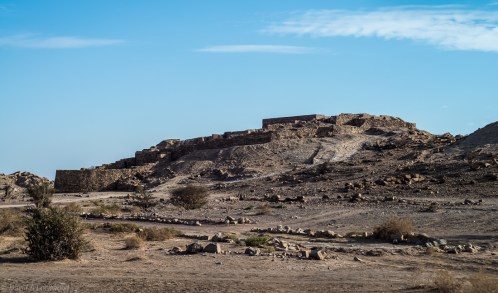
Archaeological site - SalutJust a quick image from my latest travels – the Archaeological site – Salut.

I have about 80 unprocessed images & 3 rolls of film, it will keep me out of mischief for a while.

Salut.

Off on my travels again – this time in search of the early Bronze Age site of Salut, some 20 kilometres south of Bahla & Jabrin fort.
A place I have known about for several years, but never visited until now; glad I left it so late because there has been extensive archaeological research carried out recently.
The site has been put forward for inclusion on the UNESCO world heritage list of sites with major historical interest.
It has had extensive human settlement in this area since at least the end of the fourth millennium BC to the present day. Observable by the large concentration of archaeological evidence that can still be seen. There are indications of very large settlements from the Bronze Age (c.3000-1300BC) and following Iron Age (c.1300-300 BC) probably through to the Middle Ages, with farming still carried on in 2015.

Wadi Mahram Archaeological site.

A very interesting visit, even though I got up at 0445 (time for coffee & toast) it also meant that I could avoid the early morning traffic.

Wadi Mahram has many archaeological sites – but as usual for Oman, very little published information (it can be found if one is willing to search the internet) I pity the tourists who may only have a short time here.

burial cairns No1

burial cairns No2

burial cairn  No4

burial cairn  No3All the above are (I think) Late Iron Age tombs,

Pre-Islamic gravesEarly Islamic or late pre-Islamic (I am not experienced enough for a certain date)  and as usual, very close-by the above cairns.

bulldozer tracksBulldozer damage – it is almost as if the driver does it deliberately !

Testing old film.

Busy day checking some old Ilford HP5 plus, which has been in the freezer for at least 10 years.
Used a ‘two bath’ development formula from The Film developing Cookbook – Anchell/Troop:

The negative was scanned and inverted in P/S then a selenium brown tone added – nearest colour I can get to the Kodak brown I use in the darkroom. Other than that, not much else done with the image. As I have about 20 6×6 rolls, I can now quite confidently use it with just a slight reduction in my normal speed of ISO 320.


Leitz formula:-
To make 1 litre.

Bath A.

Metol 5  grams.
Sodium Sulphite anhydrous 100 grams.

Bath B.

Sodium Carbonate anhydrous 15 grams.
Sodium Sulphite anhydrous 6 grams,

Each bath made by adding chemicals into 2/3 of the water in the order written (add pinch of the Sodium Sulphite with Metol because on its own it will not easily dissolve) top up, making 1 litre. Store in brown litre bottles and as long as bath A is not contaminated with B, both should do at least 15 35/6×6 films.
Do not ‘pre-soak’ film before development; other than that, it is 3 to 4 mins @ 20deg.C with constant agitation (adjust for desired density) in A. Drain but don’t rinse, add bath B and again agitate as before, drain, stop, fix & wash……… Print or scan – whichever is your preferred method.

I have some base fog (age of film most likely) which is no real problem, but I may try adding Potassium Bromide (10ml of 10% solution) to bath A.

As you can see the negative has a good range and scanned with the minimum of correction. Which is why I used the two bath method, it is almost fool-proof in that it uses the same time for most films and speeds.

All this can be done with the minimum of equipment: no excuse if anyone wanted to try film and thought they couldn’t because they do not have the necessary darkroom & enlarger.

Rosetta’s lander Philae.

Rosetta’s lander Philae has landed on Comet 67P/Churyumov-Gerasimenko.

Philae_s_primary_landing_site_mosaicPhilae’s primary landing site mosaic.

On 6 August 2014, the Rosetta mission achieved a significant milestone by becoming the first mission to rendezvous with a comet. During the coming months, Rosetta will orbit the comet, deploy the Philae lander and accompany the comet through perihelion (August 2015) until the nominal end of the mission. During its 10 year journey towards comet 67P/Churyumov-Gerasimenko, the spacecraft has passed by two asteroids: 2867 Steins (in 2008) and 21 Lutetia (in 2010). The spacecraft entered deep-space hibernation mode in June 2011, and ‘woke up’ on 20 January 2014.

Journey milestones:
1st Earth gravity assist: 4 March 2005
Mars gravity assist: 25 February 2007
2nd Earth gravity assist: 13 November 2007
Asteroid Steins flyby: 5 September 2008
3rd Earth gravity assist: 13 November 2009
Asteroid Lutetia flyby: 10 July 2010
Enter deep space hibernation: 8 June 2011
Exit deep space hibernation: 20 January 2014
Comet rendezvous manoeuvres: May – August 2014
Arrival at comet: 6 August 2014
Philae lander delivery: November 2014
Closest approach to Sun: 13 August 2015

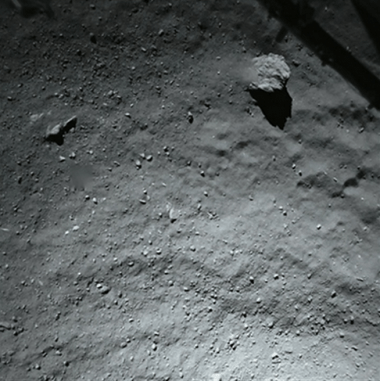
rolis_web_img5The comet seen by Philae from 40 metres above the surface. ESA/Rosetta/Philae/ROLIS/DLR

Touchdown was confirmed at ESA’s Space Operations Centre in Darmstadt, Germany at 16:03 GMT/17:03 CET on 12 November. Studying the first data returned from the lander, revealed the astonishing conclusion that the lander did not just touch down on Comet 67P/Churyumov–Gerasimenko once, but three times.

ESA_Rosetta_OSIRIS_FirstTouchdown-1024x702The mosaic comprises a series of images captured by Rosetta’s OSIRIS camera over a 30 minute period spanning the first touchdown. The time of each of image is marked on the corresponding insets and is in GMT. A comparison of the touchdown area shortly before and after first contact with the surface is also provided.

The images were taken with Rosetta’s OSIRIS narrow-angle camera when the spacecraft was 17.5 km from the comet centre, or roughly 15.5 km from the surface. They have a resolution of 28 cm/pixel and the enlarged inserts are 17 x 17 m.

Above images and information obtained from ESA web site.

A fantastic achievement: I wonder what discoveries are going to be made in the coming months ?

This is as important as watching the first moon landings. I still have lots of news clippings & magazine articles, not to mention that famous Earth image. I could never have believed that a mission landing an object on a comet would be achieved in my lifetime. Moore’s Law has a lot to answer for  🙂

Old Door Fittings.

Old door fittingsOld Door Fittings.

Just a small addition – I was going to Masirah on Thursday (work, yes I do sometimes 🙂 )   BUT !!

See the island just above 20 deg Nth – well that is Masirah and maybe I will just wait & see (The gods were with me once but twice is pushing my luck) it may die in he next few days, we shall see.

na201404_5dayImage from Wunderground.com

In search of the dead – Wadi Bani Auf.

Bee-hive type tombs Auf damageBeehive type tomb archaeological site in wadi Bani Auf.

Damage carried out by road (dirt track) maintainers or the electricity contractors – either way very sad.

Bee-hive type tombs AufAbout six tombs further along the track from those above (the pile of almost black rocks centre of image)

Very early Islamic gravesProbably early Islamic – directly across the track from those above.

I find this continuous use of the same burial site quite common – time span can be 2 or 3 thousand years.

Saqrah – Jebel Akhdar.

Saqrah - Jebel Akhdar

Saqrah - Jebel Akhdar 2

Saqrah - Jebel Akhdar 3Saqrah

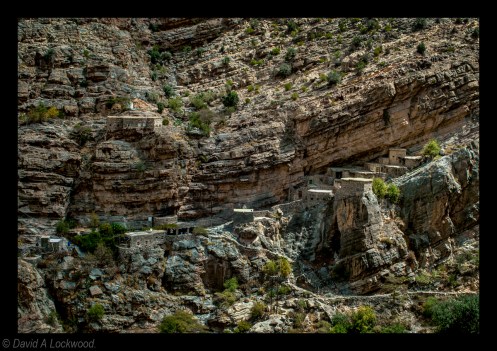
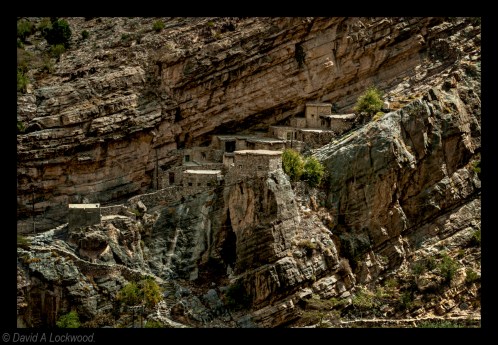
Hidden village on Jebel Akhdar that gets a mention on my Ordinance Survey map of 1968/75 but not on the 1961/63 version.
Said to have been occupied for at least a 1000 years; the existing families giving their occupation at about 300/350 years.
It is only reached by a somewhat precipitous path from one side of the gorge to the other: supplies are taken over by a cable slung between both sides.

Note: the electricity poles – even in these remote areas, power has been recently supplied (at great cost I would imagine ) giving quite a transformation, from what must have been a very tough existence.

Remote places like this gave water and security, which was of paramount concern until the middle 70’s

Muttrah.

Muttrah – a visit made because I should have gone into the jebel but was lazy, hit the alarm off button and then overslept…………

The place is only like this early in the morning,  by later in the day it will be a busy crowded area full of  merchants, customers and these days, tourists and one cannot move!

Muttrah or Al Dhalam (Darkness) Souk in probably one of the oldest market places in this part of the Middle East.
The city was walled, with two gates; Bab Kabir & Bab Mathaib, they were always guarded & by royal decree, all camels were left outside the gates, thus avoiding traffic jams ! 🙂 the best way in & out was boat.
Trade has gone on here for centuries with everything from dates, dried fish, limes, spices, coffee, cloth, and luxuries such as gold and silver: the list today is endless and all cards taken thank you very much…..!
In the past payment would be mostly the Maria Theresa silver thaler (first minted in 1751) and used right upto the beginning of the 1970’s. For larger transaction gold, along with the gradual introduction of all major middle eastern currencies and of course the Indian rupee.
The method of transaction/transportation tax was complicated; it depended on the item, quantity, quality and production area – actually it seems that at some time or other, just about anything one could dream up to justify tax, was !
Muttrah had the first hospital in the whole country…….. set-up initially in Muscat but almost immediately moved to Muttrah in 1893 ( a mission hospital by the Dutch Reform Church of America) it was fully functioning by 1909 and only closed once during the First World War.
There are many fine old merchants’ houses and at least one area (the Liwatiya quarter) that as a stranger one is always looked on with some suspicion even today: not in any hostile way, but if not accompanied by a resident one is usually kindly asked to leave.

From Wiki:

The size of the Al-Lawati population cannot be determined precisely, but is estimated to be approximately 80,000 people Most Lawatis reside in Muttrah, but some live on the coast of Al-Batina. Some Lawati families reside elsewhere in the Persian Gulf region such as U.A.E, Qatar, Bahrain and Kuwait.
Traditionally, Al-Lawatia have been known as prominent merchants on the coasts of Muttrah which lies 2 kilometers from Muscat. They have worked in the incense, jewelry and clothes business as well as in general trade. The community occupies a gated quarter of Muttrah known as Sur al-Lawatia. The quarter still boasts attractive houses with a unique Islamic architectural view and a large mosque known as Al-Rasul Al-Aadam Mosque or The Greatest Prophets Mosque.. The Sur has seen a major exodus in recent decades as Lawatis have moved to more modern neighbourhoods as a result of increasing development, the availability of facilities and growing wealth and business of the community.

Muttrah Souk No1All made with Nikon D200 & Tokina 35-70 f2.8 Ais AT-x lens.

Click on any image below for gallery view.

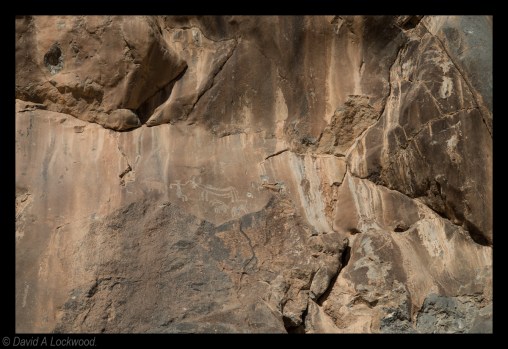
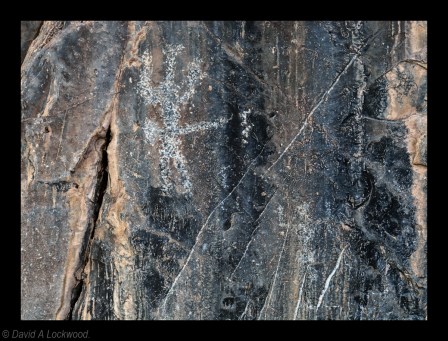
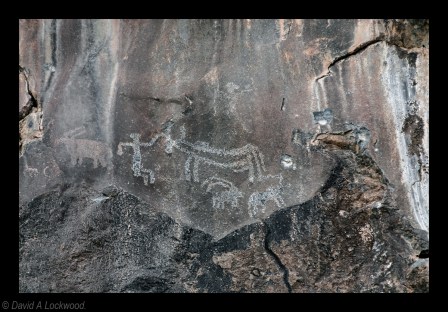
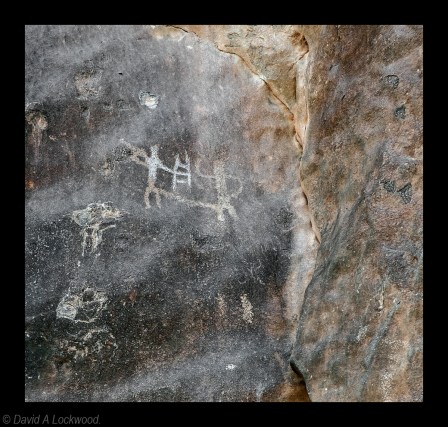
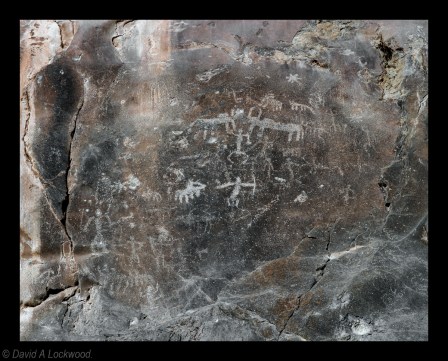
Newly discovered rock art in Wadi Tanuf.

Newly discovered rock art in Wadi Tanuf.

Rock Art TanufThe above image gives some idea of the erosion these images suffer – this has lost a large portion of the rock due to weather damage over many hundreds of years.

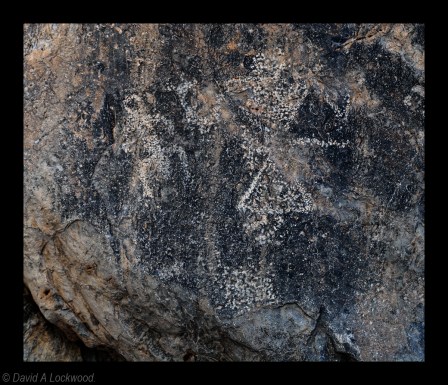
The images below have been colour shifted so that the subject is more defined. The first two from a rock about a third of the way in and the last three near where the wadi branches in two directions.

Several other rock faces have images but they were very faint and will need technical image manipulation.

Rock Art Tanuf No1The above triangular clothed Anthromorph is almost a mirror image of one found on a rock in a wadi near Nakhal, about 50km away as the crow flies: I wonder if it was made by the same person?

Rock Art Tanuf No2

Rock Art Tanuf No3

Rock Art Tanuf No4

Rock Art Tanuf No5

WordPress Loading problems.

I think I have found a way around the problems of loading WordPress sites here in Oman thanks to a Firefox Add-on   🙂

A happy bunny again:  it means I do not need to keep pasting https as a prefix on every site I read.

Firefox – I am sorry for all the nasty things I have said sometimes when updates make my  life hard.


Problems opening theme page: Episode 2.

I am still not able to open WordPress pages without adding (https) in front of every page: a real pain when I wish to view others sites.
My provider has not been much help as it is only WordPress  that has the problem ??!! – very strange: the only consolation is that I am not alone with this issue,  others here in Oman have the same problem and it started on the same day.  Now the worm in the back of my mind says “WordPress new edit page was started about this time ??”
The WordPress ‘Happiness Engineer “rachelmcr” has been a great help – found things in Firefox programme I didn’t know existed  🙂

Quote from: The Restaurant at the End of the Universe – Douglas Adams.

Replace the word Universe with computer…………

There is a theory which states that if ever anyone discovers exactly what the Universe is for and why it is here, it will instantly disappear and be replaced by something even more bizarre and inexplicable.
There is another theory which states that this has already happened.

 Normality will resume I hope.

Cannon detail from Al hazm fort.

Work in progress.

Steps (3)


Playing again – actually I am experimenting with making digital negatives that I can contact print in the darkroom using conventional gelatin silver paper.

For those that don’t know this technique;  it involves printing an image onto ‘overhead projection film’ as a negative, then contact printing this ‘negative’ onto traditional photographic paper by sandwiching both under a sheet of glass and exposing under the enlarger.

The negative is created in Photoshop by inverting a fully processed curves adjusted image; this adjustment is needed to compensate for the difference in tonal range between the screen image and the printing paper being used. The image is then printed onto OHP film at any size one chooses and can then be used like any other large format negative.

It has been used by some for a number of years now, but new for me – I am always slow catching up with these things 🙂


Wadi Bani Habib.

Village ruin Bani Habib No 2Another part  of the Wadi Bani Habib abandoned village complex – less often photographed as it is further along the ridge; it sustained less damage during the 1950’s campaign.

Although Shackleton bombers of the RAF bombed the Jebel Akhdar plateau, this bombing was largely ineffective as the RAF had orders only to bomb caves and water systems, not villages.  So although there are several caves in this area, how much damage was done by the bombers is hard to determine. The construction of this type of building needs constant maintenance otherwise it soon succumbs to storm damage; so a lot of what can be seen could be age related.