
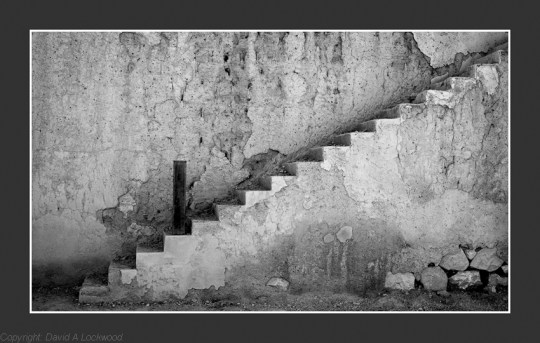
 Steps Nizwa Fort.
Tag: History of Oman
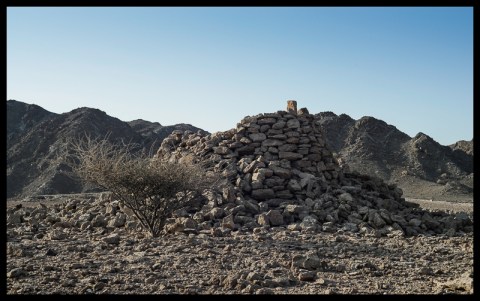
Tombs near Al Ayn No2.
 Tombs from the 3rd millennium BC.
Tombs at Al Ayn.
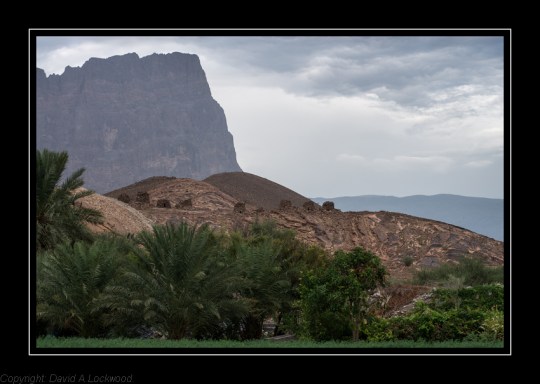 Nikon D800: 80-200 f2.8 Af Nikkor D with mono-pod.
Tombs near Al Ayn (not to be confused with the oasis village of Al Ain in the UAE) Jebel Misht in the background.
A Rock Art page added.
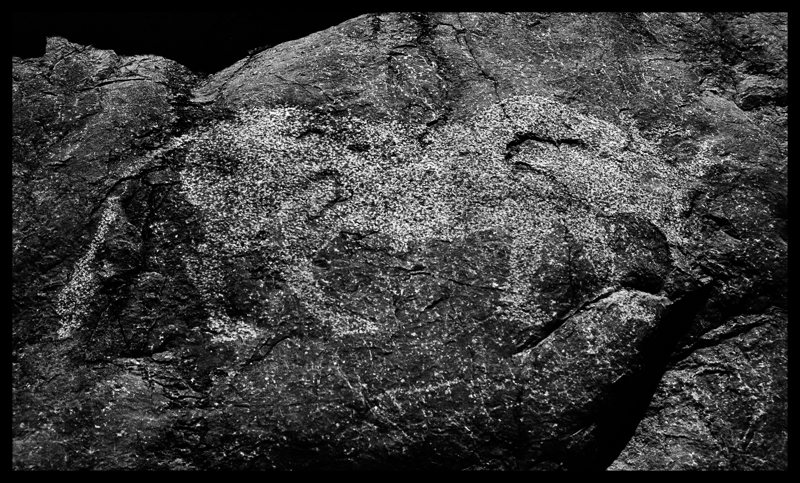 I have added a link to some of my ‘Rock Art’ images – see this link Rock Art or go to the page link just below the site title.
Today’s impromptu trip…… Halban.
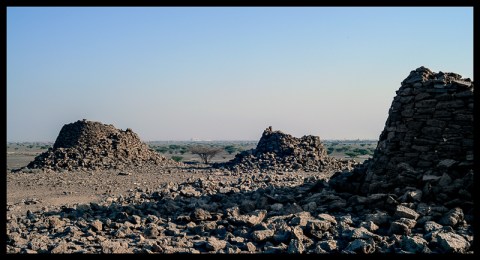
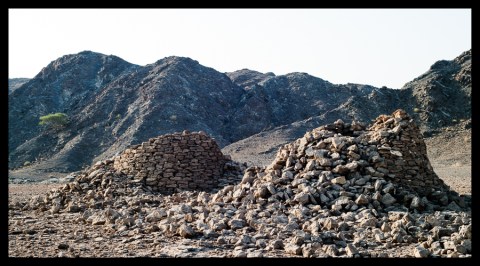
Tombs at Halban: an impromptu trip that I took this morning (early 06:30 ish) well that’s early for me 🙂
Halban is about 40 mins. drive from where I live, I was awake (don’t know why – especially on a day off ! ) so thought I would beat the heat of the day.
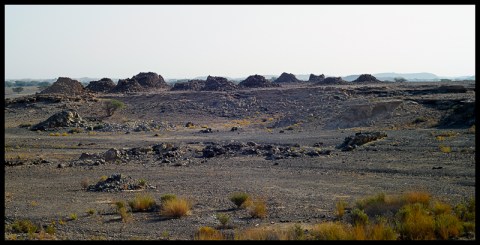




A little about the tombs at Halban.
The small tombs (there are lots!) found in Oman are generally assumed to date from around the Hafit Period of (3200-2600 BC). They originally had a similar appearance to a beehive, enclosing a small chamber for burial.
Archaeologists believe that the larger tombs found at such sites as Halban, date from the Umm al Nar period in the Bronze age, circ; 2700-2000 BC.. The Umm An-Nar Culture is one of the most important periods in neighbouring UAE, notably Bahrain.
See this link for more:
From archaeological evidence it is suggested that trade in copper with Mesopotamia and the Indus Valley gave rise to the wealthy land known as Dilmun, thought to be in Bahrain. Obtaining copper from the Land of Magan, now largely identified with the ancient copper mining areas in Oman and the adjoining area of UAE. The presence of copper ore in the hills near Halban again points to the link with copper and an Umm Al Nar period.
During the early 1950s, Danish archaeologists excavating grave mounds in Bahrain, found 4,000-year-old settlements and temples thought to be Dilmun, known as the city of the gods in ancient Sumerian literature. Their 1959 discovery on the island of Umm an-Nar near Abu Dhabi of another, previously unknown culture contemporary with Dilmun was unexpected. At this site an outer wall enclosed circular graves, between 15 & 40 feet in diameter with a tower like appearance; in which as many as 25 to 30 people could be buried.
Encouraged by the discoveries at Dilmun and Umm an-Nar; Danish archaeologists excavated 200 single-chambered burial cairns near Jebel Hafit on the Oman-United Arab Emirates border. Here they discovered a culture earlier than both Dilmun and Umm an-Nar. Excavations yielded jars with geometric designs painted in black, white, and dark red, copper and bronze pins along with stone beads. The jars were the same type as used in southern Mesopotamia around 3000 B.C. One problem though; unfortunately there seems to be little trace of the ancient settlements that should accompany these tombs.
The Umm al-Nar tombs are circular and their outer walls were faced with well-shaped smooth stones in a spiral construction. Internally they were mostly divided into a number of chambers, these being used for collective burial. Probably by a family group or members of the same community; who would use them for several generations. In some, archaeologists found the remains of more than 100 people buried in one tomb.
In Oman these tombs have only recently been ‘investigated’ by the outside world (1991 or there about) although when one asks the locals, they will tell you they have always been there and if lucky, will follow this up with “would you like to see some more”………
Obtained from the Web and various publications I have; therefore any errors in the above are down to me………
More links:
Wadi Bani Habib Village.
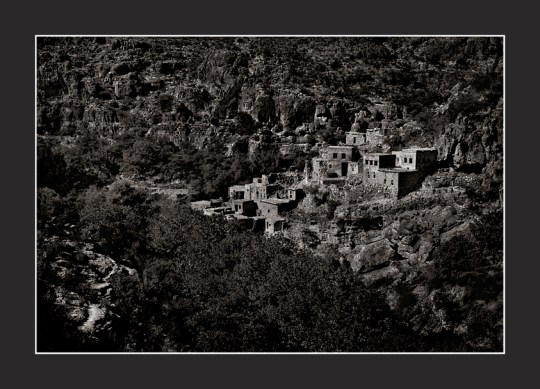 Another from the ‘Jebel Village’ series I am printing at the moment. (Nikon F4 – Ilford HP5 plus in D76 @ 1+3) Print on Ilford FB Matt & toned in brown toner.
Bani Habib Village Jebel Akhdar – there are remains of at least three villages along this stretch of wadi, with the fourth (newish) being further along on the right from where this image was made.
The village depicted, along with another unseen on the left of this one, had prominence during the Jebel Akhdar War in Oman between 1954-1959. Remains of 1950’s ammunition boxes can still be found; along with 303 rounds and other odd bits of detritus left over from that campaign.
Door at Jabrin Castle.
 Nikon F2sb. Tokina AIs 35-70 AT-X f2.8
Husn Al Heem (Nakhal Fort) No2.
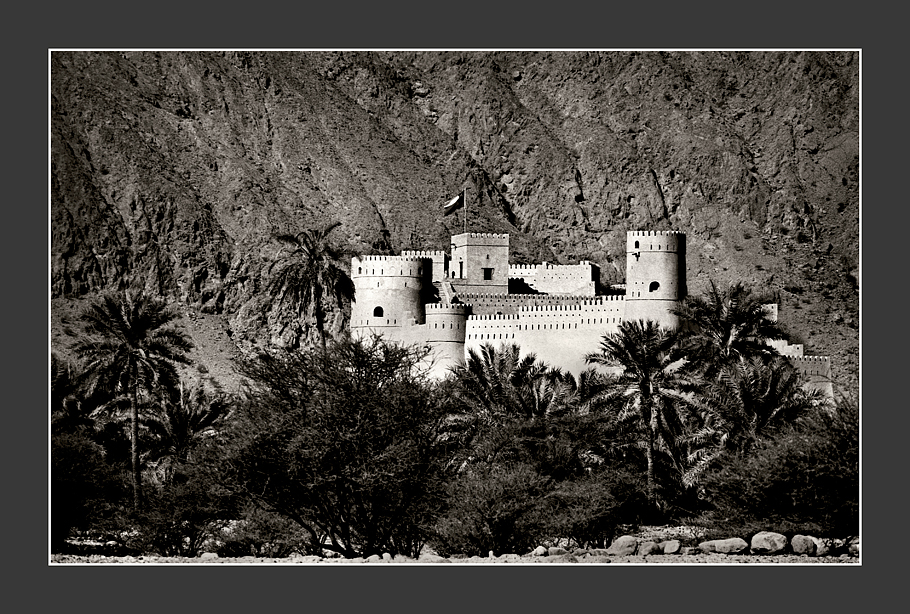 A slight change to the crop & framing from the previous one, I also burned in the fort a little more.
Husn Al Heem (Nakhal Fort)
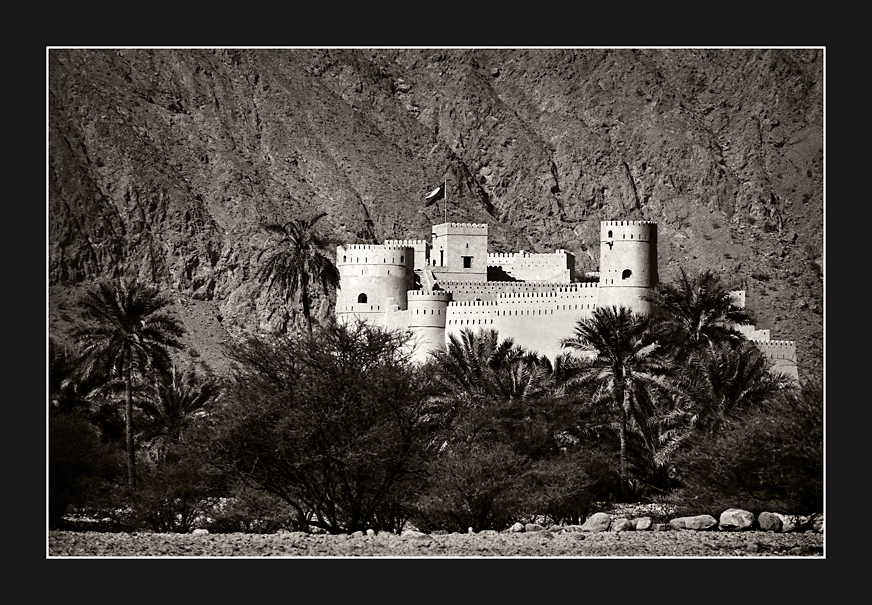
Husn Al Heem (Nakhal Fort)
Nikon F4 & Micro-Nikkor f 4 AI 200 mm lens (That is not a misprint, it functions very well as a telephoto lens as well as a macro) T-max 400 @ 320 in T-max developer 1+4.
Husn Al Heem (Nakhal Fort) The origins of which probably date to pre-Islamic times, the structure being continuously remodelled over the centuries; this included a substantial rebuild in the mid-seventeenth century. The present gateway and towers were apparently added about 1834 during the reign of imam Said bin Sultan.
It would seem debatable when Nakhal (or Nakhl ) had its first fort at this location, but there is growing evidence that there has been some sort of fortified structure on the rocky outcrop for a very long time. So it is not inconceivable that it was strengthened or remodelled during the Ya’aruba Dynasty.
The Ya’aruba Dynasty (1624 – 1744): Ya’aruba Imams introduced a period of renaissance in Oman’s fortunes both at home and abroad, by uniting the country and bringing it a great deal of prosperity. It was under the Ya’aruba dynasty that many of the imposing castles in Oman were built.
This is what some of the fort looked like before the substantial refurbishment was started in about 1990.
 The above is made from a similar position to the one in the previous post – Traditional Omani Fort.
 Unfortunately this has a slight colour cast in the sky: this is an old Kodak C41 negative processed by a local shop as I did not have the means to do it my self in those days. could probably remove in Photoshop but hay-ho……..
I am not sure why there is this desire for what is substantially a rebuild; even if all the materials and building practises follow the old traditional ways. but it does generate a lot of interest from visitors so maybe it is just me.
I tend to think castles should be stabilised and left as they are, such as is the case in the UK with the ones mostly built by that ‘Jumped-up Norman’
Traditional Omani Fort.
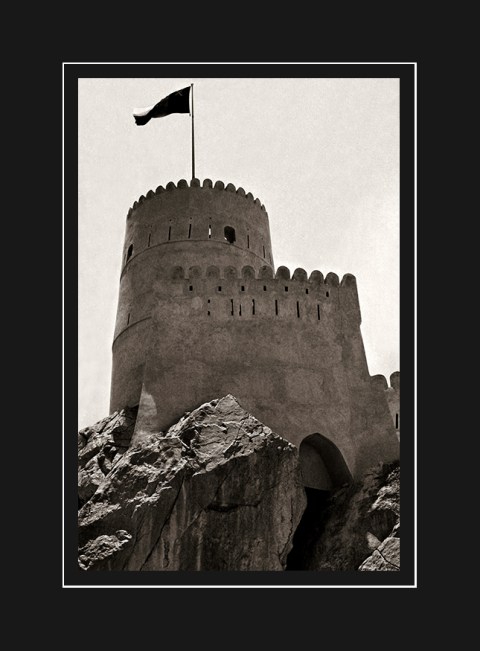 Nikon F4: Ilford Xp2 normal C41 process.
Jabrin Fort.

Nikon F2sb – Tokina 35-70 f2.8 AIS AT-x and Kodak E100vs.
Antique Weapons found in Oman.

Oman’s historical military arms from Matchlock muskets of Portuguese origin (although some experts now think that many are of European-German origin: open to debate) along with Martini-Henry lever-action types. Combined with muzzle-loading cannon from the Iberian Peninsula and at least one that may have come from the English Commonwealth era, circa 1649 to 1660. Not to mention the vast number of ‘sharp pointy’ weapons; makes Oman a treasure trove for military historians.
Falaj.

Arched Doorway.
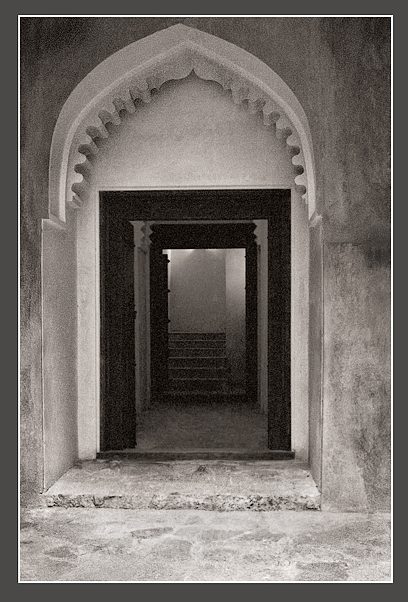 I wanted this to look like some of the old Near East images that I have come across, so I really messed up some Tri-x in old D76 developer.
Nikon F2SB with Nikkor 55mm f2.8 Micro.
Door with Studs.
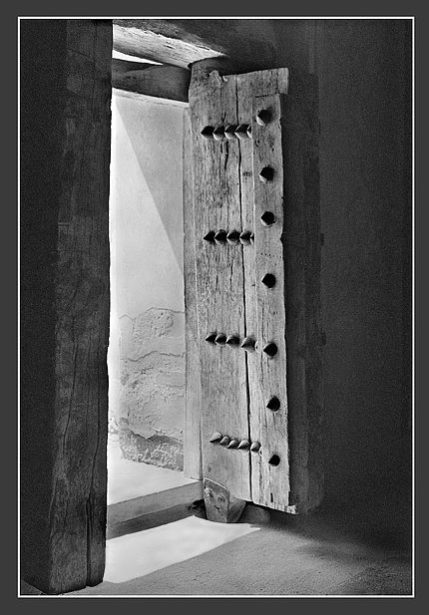 Nikon F2SB with Nikon Nikkor 55mm f2.8 AIs Micro Lens.
Rock Art.

An example of what I mean when I said – ‘even with extreme side light the images can be quite faint’
I refuse to chalk them in as has been done by some!
Rock Art.

The above image shows what is almost certainly a Wusum found at a number of rock art sites and camping places: it gave the tribe a method of transmitting information about land and animal ownership.
The other interesting feature about the above depiction is the very obvious sign of someone’s attempt at adding their bit to an early image. (In many it is not so obvious and therein shows some of the difficulties ageing this art)
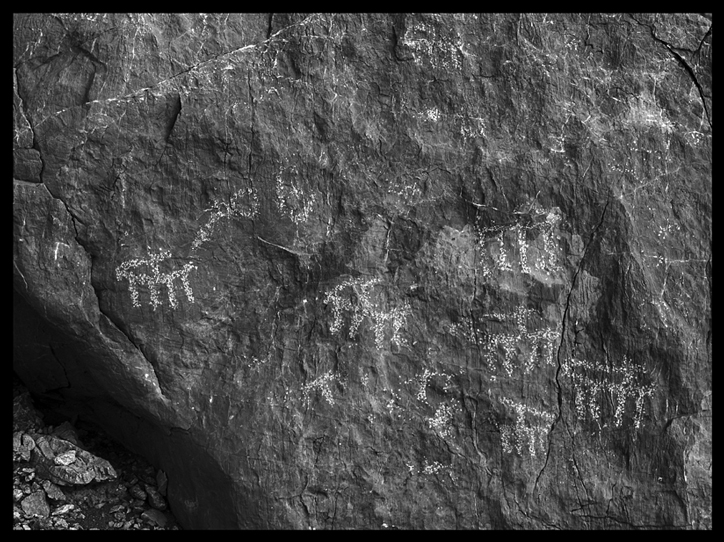
Another difficulty with these images is age, they can be very faint and so extreme side lighting is often required – for that read a ‘early start in the morning’ one thing I am not good at……..!
Jabrin Fort.

Jabrin Fort: built-in 1670 with tower walls two metres thick.
Kodak TriX in D76 (1+3)
Abandoned Fortified House.
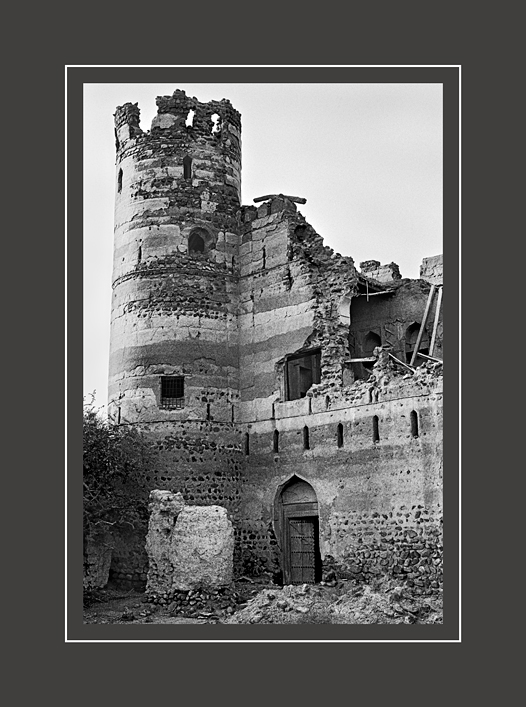
Old style Kodak T-Max 400 in T-Max developer (1+4)
Ubar. (Sultanate of Oman)
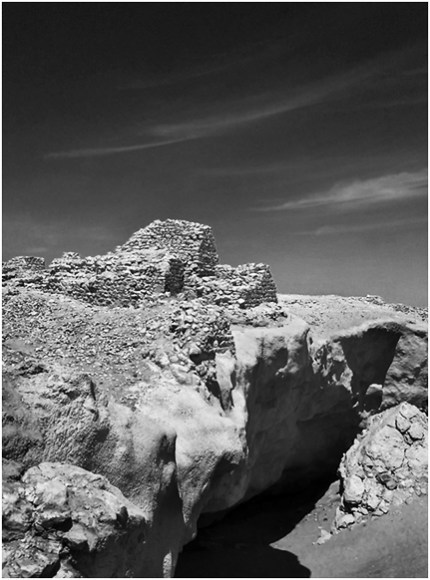
Taken with my ‘cheap Nokia phone’ and tinkered with in Photoshop – no camera !
The lost City of Ubar; known by various other names (Wubar, Wabar, Iram of the Pillars and Atlantis of the Sands mentioned by Lawrence of Arabia)
Ubar was a processing and transportation centre for frankincense, an aromatic resin used in religious ceremonies as well as perfumes and medicines, it was as valuable as gold.
Shis’r (Shisr or then again Shasar) being the modern name of this location in Oman. [Even today, names change or most often the spelling used for transliteration can be quite imaginative]
The ancient structure found here from satellite images (Landsat) was partly excavated by Dr. Juris Zarins (Missouri State University) starting in 1992. Others involved were Nicolas Clapp, Sir Ranulph Fiennes, and an archaeologist Dr. Juris Zarins.
There is some considerable doubt !
From that well-known on-line encyclopædia:
When the explorer Freya Stark consulted the works of Arab geographers, she found a wide range of opinions as to the location of Wabar: “Yaqut says: “In Yemen is the qaria of Wabar.” El-Laith, quoted by Yaqut, puts it between the sands of Yabrin and Yemen. Ibn Ishaq… places it between “Sabub (unknown to Yaqut and Hamdani) and the Hadhramaut. Hamdani, a very reliable man, places it between Najran, Hadhramaut, Shihr and Mahra. Yaqut, presumably citing Hamdani, puts it between the boundaries of Shihr and San’a, and then, on the authority of Abu Mundhir between the sands of B.Sa’d (near Yabrin) and Shihr and Mahra. Abu Mundhir puts it between Hadhramaut and Najran.”
“With such evidence,” Stark concluded, “it seems quite possible for Mr Thomas and Mr Philby each to find Wabar in an opposite corner of Arabia.”
See these two links for more detailed information:
Tomb – from around the Chalcolithic period.
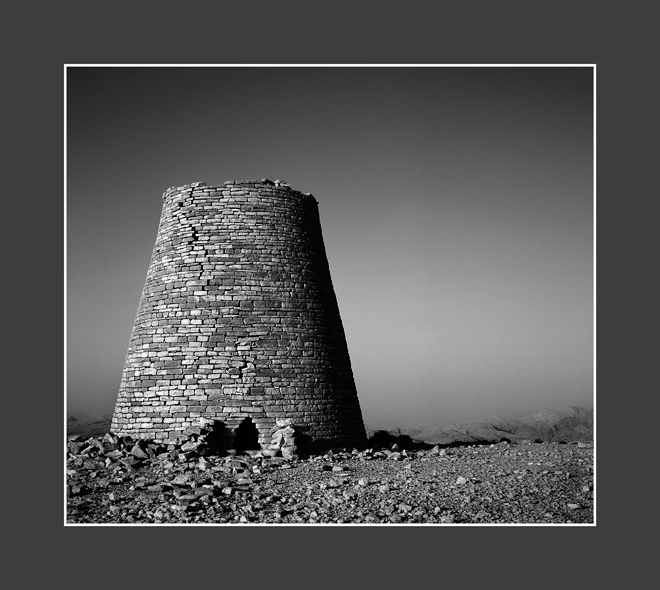
Another image from a few years back; but this time printed with a slightly more dramatic interpretation.
Omani Watchtower No2.
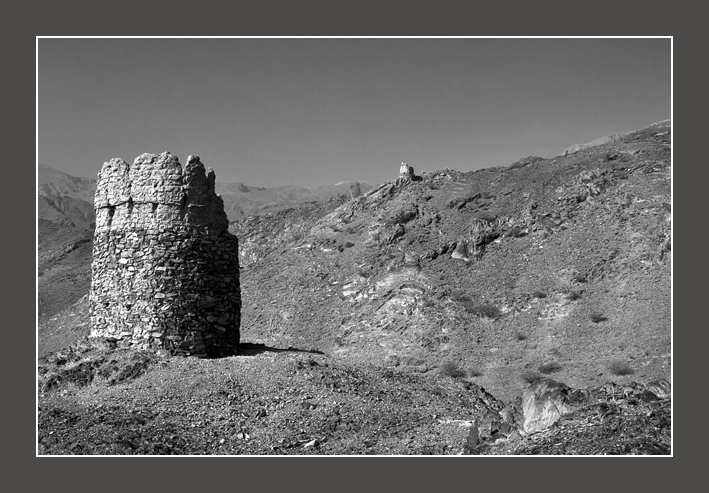
Traditional Omani Watchtower.
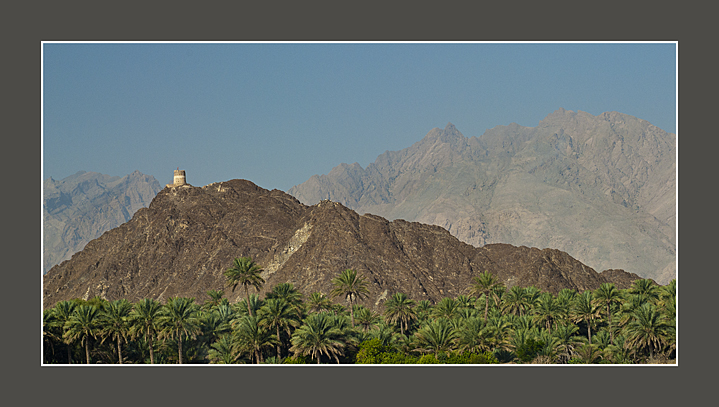
Jabrin Fort.
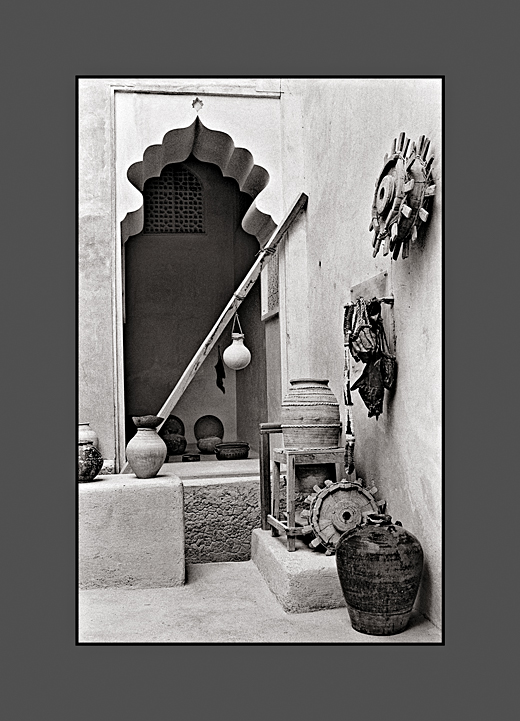
Another one of those that I struggled to find an upright – gave up!
Sap Bani Khamis…..


 David A Lockwood